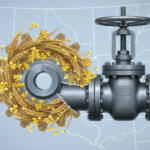


The global energy transition has placed a massive spotlight on the Canadian prairies, positioning the province of Alberta—and specifically the Edmonton region—as a potential superpower in the emerging low-carbon economy. For decades, the Edmonton Industrial Heartland has served as the hydrocarbon engine of Western Canada, processing vast quantities of natural gas, bitumen, and petrochemicals. Today, a new molecule is capturing the attention of venture capitalists, policymakers, and technical engineers alike: hydrogen. The promise is intoxicating. With abundant natural gas reserves and world-class geological formations for carbon capture and storage, Alberta is theoretically perfectly positioned to produce millions of tonnes of “blue” hydrogen at globally competitive prices.
However, moving from geopolitical ambition to operational reality requires a sobering look at the mechanics of industrial growth. The initial hype focused almost entirely on production capacity—the “greenfield” announcements of massive autothermal reforming plants. Yet, as the dust settles on these multi-billion-dollar announcements, the true economic bottlenecks are emerging. The realization of Alberta’s hydrogen ambition will not be decided by how much we can produce, but by how efficiently we can move it and how quickly end-users can adopt it.
The following economic facts are based on current Alberta provincial data and market trends.
From Hype to Hardware: Understanding the Hydrogen Economy
To understand the economic complexities of the Edmonton Heartland Hub, one must first deconstruct the hydrogen supply chain. The hydrogen economy is not a single, monolithic industry; it is a complex sequence of interconnected technological and economic phases.
The primary phase—production—is where Alberta currently holds a distinct competitive advantage. Utilizing existing natural gas infrastructure, producers in the Heartland can strip hydrogen atoms from methane molecules, capturing the resulting carbon dioxide and sequestering it deep underground in saline aquifers. This process creates low-carbon “blue” hydrogen. Because the region already possesses the feedstock, the workforce, and the geological advantages, scaling up production is largely an exercise in traditional project execution.
The secondary phase, however, is where the narrative shifts from straightforward industrial expansion to a complex puzzle of infrastructure gaps. This secondary phase encompasses the distribution networks (moving the molecule from the plant to the consumer) and end-use adoption (retrofitting or replacing existing machinery to run on a new fuel).
For potential investors, business owners, and technical engineers looking at the Alberta market, understanding this secondary phase is critical. The capital expenditure required to build the connective tissue of the hydrogen economy is staggering, and the engineering challenges are non-trivial.
The Secondary Phase: Where the Bottlenecks Emerge
The transition from a hydrocarbon-based economy to a hydrogen-based economy is fundamentally constrained by physics and chemistry. Hydrogen is the lightest element in the universe. While it boasts exceptional gravimetric energy density (energy per unit of mass), it suffers from incredibly poor volumetric energy density (energy per unit of volume). To make hydrogen economically viable for transport and storage, it must be heavily compressed or liquefied, both of which require immense amounts of energy and specialized infrastructure.
This physical reality dictates the economic challenges of the secondary phase. The bottlenecks currently facing the Edmonton Heartland Hub can be categorized into two distinct areas:
- The capital-intensive nature of specialized distribution networks.
- The slow, economically risky adoption cycle in heavy-duty transport.
The High Cost of Distribution Networks
When analyzing the distribution of hydrogen, the immediate assumption by many casual observers is that Alberta can simply utilize its vast, existing network of natural gas pipelines. The engineering reality is far more complicated, presenting a significant hurdle for long-term growth mechanics.
The Metallurgical Challenge of Embrittlement
Hydrogen molecules are small enough to permeate the crystalline structure of standard carbon steel used in legacy pipelines. Over time, this causes “hydrogen embrittlement,” a phenomenon where the steel loses its ductility and becomes brittle, significantly increasing the risk of microscopic cracks and catastrophic failure. While blending low percentages of hydrogen (typically between five and fifteen percent) into existing natural gas streams is technically feasible and currently being piloted in regions near Edmonton, pure hydrogen transport requires entirely new infrastructure or incredibly expensive retrofits.
Compression and Pipeline Economics
To move pure hydrogen at scale, technical engineers must design pipelines utilizing specialized steel alloys or advanced polymer composites. The cost per kilometer of laying a dedicated hydrogen pipeline is substantially higher than that of a traditional natural gas line. Furthermore, because hydrogen is so light, it requires roughly three times the compressor horsepower to move the same amount of energy through a pipe compared to natural gas.
For investors and business owners, this creates a classic “chicken-and-egg” economic dilemma. Producers are hesitant to commit final investment decisions on massive hydrogen plants without a guaranteed distribution network to off-takers. Conversely, infrastructure companies cannot justify the immense capital expenditure of building dedicated hydrogen pipelines without guaranteed, long-term supply and demand contracts.
Liquefaction vs. Compression
Beyond pipelines, the alternative for distribution is trucking or railing the hydrogen. Here, the economics are equally challenging. Transporting hydrogen as a compressed gas via tube trailers is highly inefficient due to the low volume of energy each truck can carry. Liquefying hydrogen allows for much denser transport, but it requires cooling the gas to near absolute zero (minus 253 degrees Celsius). The energy required to liquefy hydrogen can consume up to a third of the energy content of the hydrogen itself, drastically impacting the overall economic efficiency and carbon intensity of the supply chain.
Heavy-Duty Transport: A Potholed Road to Adoption
One of the most touted end-use cases for Edmonton’s hydrogen is the decarbonization of the heavy-duty transport sector. Alberta relies heavily on Class 8 transport trucks and freight rail to move agricultural products, timber, and oilfield equipment across vast, unforgiving terrains. While battery-electric vehicles are rapidly conquering the passenger car market, they face severe limitations in the heavy-duty sector.
The Payload Penalty and Range Anxiety
For a long-haul truck operating in the harsh Alberta winter, the battery mass required to achieve an acceptable range is immense. This battery weight directly subtracts from the truck’s allowable freight payload, severely hurting the fleet operator’s profit margins. Hydrogen fuel cell electric vehicles (FCEVs) offer a compelling alternative: they provide the torque of an electric motor but can be refueled in minutes and offer ranges comparable to diesel trucks without the crippling weight penalty of massive battery packs.
However, the educational reality of adopting this technology reveals significant infrastructural gaps.
The Refueling Station Bottleneck
Currently, a commercial-scale hydrogen refueling station capable of servicing heavy-duty trucks requires a capital investment ranging from two million to over five million dollars. These stations must handle extreme pressures—often dispensing hydrogen at 350 or 700 bar (approximately 5,000 to 10,000 psi). The compressors, chilling units, and high-pressure storage tanks required to safely dispense fuel at these pressures are highly specialized pieces of equipment.
For a fleet operator in Alberta to transition from diesel to hydrogen, they need absolute certainty that their trucks can refuel along major corridors like the Queen Elizabeth II Highway connecting Edmonton and Calgary. Yet, fuel retailers cannot justify building a multi-million-dollar station without a critical mass of hydrogen trucks on the road.
Vehicle Capital Costs and Maintenance
Furthermore, the upfront capital cost of a hydrogen fuel cell truck remains significantly higher than its diesel counterpart. While the total cost of ownership is projected to reach parity in the coming decade as manufacturing scales up, early adopters face steep premiums. Technical engineers and mechanics must also be entirely retrained to service fuel cell stacks, high-pressure lines, and electric drivetrains, requiring a parallel investment in human capital.
Bridging the Infrastructure Gap: Mechanics of Long-Term Growth
Despite these sobering realities, the Edmonton Heartland Hub is not a stranded asset. The infrastructure gaps are significant, but they are not insurmountable. For potential residents, investors, and business owners, the current landscape represents a transition from speculative hype to pragmatic, engineered problem-solving.

The “Hub and Spoke” Deployment Model
To overcome the distribution and refueling bottlenecks, economic planners in Alberta are focusing on localized “hub and spoke” models. Rather than attempting to build a province-wide hydrogen pipeline network on day one, the strategy involves co-locating hydrogen production directly adjacent to major industrial consumers. For example, piping hydrogen “across the fence” to a neighboring fertilizer plant or oil refinery eliminates the need for extensive, long-haul distribution networks.
Return-to-Base Fleet Operations
In the transport sector, early adoption is being targeted at “return-to-base” fleets. Municipal transit buses, garbage trucks, and regional delivery vehicles that operate on predictable routes and return to a central depot every night are ideal candidates. This eliminates the need for a widespread network of public refueling stations; a single, centralized, high-capacity refueling depot can service an entire fleet, drastically improving the return on investment for the infrastructure.
Dual-Fuel Bridging Technologies
Technical engineers are also developing pragmatic bridging technologies, such as dual-fuel engines that can burn a mixture of diesel and hydrogen in traditional internal combustion engines. While not perfectly zero-emission, these systems allow fleet operators to begin utilizing hydrogen and building demand for the fuel without waiting for the cost of pure fuel cell vehicles to drop. This incremental approach creates a baseline of demand that justifies the construction of initial refueling infrastructure.
Policy and De-risking Capital
Finally, bridging the gap requires strategic policy intervention. The long-term growth mechanics of the Edmonton Heartland Hub depend on government mechanisms that de-risk early-stage infrastructure investments. Carbon pricing, investment tax credits for clean technology manufacturing, and direct funding for pilot refueling corridors are essential tools to absorb the “first-mover penalty” that currently deters private capital.
The hydrogen economy in Alberta is moving out of the boardroom and into the field. The hype of endless production potential is being replaced by the rigorous, unglamorous work of metallurgy, thermodynamics, and supply chain logistics. For those willing to understand the complex realities of the secondary phase, the Edmonton Heartland Hub remains one of the most compelling industrial laboratories in the world—a place where the future of energy is being painstakingly built, one specialized pipe and high-pressure valve at a time.
Sources and References
- Alberta Energy Regulator (AER): Data regarding natural gas reserves, existing pipeline infrastructure, and carbon capture utilization and storage (CCUS) capacity.
- Edmonton Global: Reports on the Edmonton Region Hydrogen HUB, strategic economic roadmaps, and foreign direct investment targets.
- The Transition Accelerator: Research on the economics of hydrogen corridors, heavy-duty transport adoption, and the “hub and spoke” deployment models in Western Canada.
- Government of Alberta: The Alberta Hydrogen Roadmap, detailing policy frameworks, blending thresholds, and long-term economic diversification strategies.