


To the untrained eye, the province of Alberta appears as an expanse of infinite space. From the rolling prairies of the south to the dense boreal forests of the north, land seems to be the one resource that is entirely inexhaustible. However, for logistics engineers, commercial real estate investors, and supply chain managers, this perception is a dangerous illusion. Along the critical Edmonton-Calgary corridor—the economic spine of the province—a silent crisis is unfolding. The explosion of e-commerce, combined with a paradigm shift in global inventory management, has transformed zoned, serviced industrial land into one of the most fiercely contested commodities in Western Canada.
This dramatic tightening of the industrial real estate market threatens to erode one of Alberta’s most historically significant economic pillars: the “Alberta Advantage.” For decades, businesses fleeing the exorbitant land costs and gridlock of Vancouver and Toronto found refuge in Alberta’s affordable, easily accessible industrial parks. Today, surging demand has created a severe supply chain bottleneck, driving up lease rates and forcing businesses into fierce bidding wars for logistics space. This article serves as a comprehensive educational guide to understanding the mechanics of this land grab, the historical context of the corridor’s development, and the strategic maneuvers required for investors and business owners to navigate this high-stakes environment.
The following economic facts are based on current Alberta provincial data and market trends.
The Anatomy of the Edmonton-Calgary Corridor
To understand the current industrial land bottleneck, one must first understand the fundamental mechanics and historical context of the Edmonton-Calgary corridor. Stretching approximately 300 kilometers along Highway 2 (commonly known as the Queen Elizabeth II Highway, or QEII), this linear economic zone is the beating heart of Western Canadian commerce.
Demographic and Economic Gravity
The corridor is not merely a transportation route; it is a massive demographic and economic gravity well.
- Population Density: The corridor houses more than 70 percent of Alberta’s total population.
- Economic Output: It generates nearly 75 percent of the province’s Gross Domestic Product (GDP).
- Logistics Hub: It serves as the primary distribution gateway not just for Alberta, but for the entire Prairie region and parts of the Canadian North.
Historically, the development of this corridor was driven by the energy sector and traditional agriculture. Heavy manufacturing, oilfield services, and agricultural processing required large tracts of land, which municipalities readily supplied. The land was cheap, the regulations were minimal, and the infrastructure was built to handle heavy, slow-moving freight. However, the modern economy demands a completely different logistical architecture.
The E-Commerce Catalyst and the Logistics Explosion
The current scarcity of industrial land is not a random anomaly; it is the direct result of a structural shift in consumer behavior and supply chain methodology.
From “Just-in-Time” to “Just-in-Case”
For decades, global supply chains operated on a “just-in-time” model. Warehouses were viewed as temporary holding areas, and inventory was kept as lean as possible to reduce overhead costs. The disruptions of the early 2020s shattered this model. Manufacturers and retailers realized the fragility of lean inventories and rapidly shifted to a “just-in-case” model, stockpiling goods to buffer against global shipping delays. This sudden accumulation of inventory required massive amounts of physical space.
The Spatial Demands of E-Commerce
Simultaneously, the acceleration of e-commerce fundamentally altered the mathematical formula of retail space.
- The 3x Multiplier: Economic data consistently shows that e-commerce requires up to three times the logistical space of traditional brick-and-mortar retail.
- Processing Requirements: Unlike a traditional retail store where consumers pick items off a shelf, an e-commerce fulfillment center requires extensive space for automated sorting machinery, massive return-processing departments, and complex packaging stations.
- Last-Mile Proximity: To meet consumer expectations for next-day or same-day delivery, these massive fulfillment centers cannot be located in remote, cheap locations. They must be situated immediately adjacent to major population centers—specifically, right on the edges of Edmonton and Calgary along the QEII.
This dual shock—the need for higher baseline inventories and the spatially intensive nature of e-commerce—sparked an unprecedented land grab. Retail giants, third-party logistics (3PL) providers, and courier services began absorbing every available square foot of Class A industrial space, driving vacancy rates in both major cities to historic lows.
The Mechanics of Industrial Zoning: Why We Can’t Just “Build More”
A common question from outside investors and the general public is simple: “If there is so much empty land between Edmonton and Calgary, why don’t developers just build more warehouses?”
Answering this requires an educational deep dive into the complex mechanics of municipal zoning, land servicing, and heavy civil engineering. Turning a raw farmer’s field into a functioning, modern logistics park is a process that typically takes five to ten years. The bottleneck is not a lack of dirt; it is a lack of serviced, shovel-ready land.
The Timeline of Land Development
The journey from agricultural land to an e-commerce fulfillment center involves multiple complex phases:
- Annexation and Area Structure Plans (ASPs): Municipalities must first annex land and draft comprehensive ASPs. This involves years of environmental assessments, traffic impact studies, and public consultations.
- Deep Utility Servicing: Modern logistics centers require massive infrastructure. Developers must install oversized water mains for industrial fire suppression systems, high-capacity sanitary sewers, and complex stormwater management ponds to handle the runoff from millions of square feet of impermeable warehouse roofs.
- Power and Telecommunications: The automation and robotics used in modern e-commerce require immense electrical loads and redundant, high-speed fiber optic networks. Extending this infrastructure to raw land is incredibly expensive and time-consuming.
- Heavy-Haul Transportation Infrastructure: A modern distribution center generates thousands of daily truck trips. Adjacent roads must be engineered with deep, heavy-duty asphalt bases, widened turning lanes, and reinforced intersections to prevent the rapid degradation of municipal infrastructure.
The Engineering Specifications of Modern Logistics
Furthermore, technical engineers and developers are no longer building simple metal sheds. The architectural and engineering requirements for Class A industrial space have become highly specialized:
- Clear Heights: Warehouses now require 36-foot to 40-foot clear heights to accommodate advanced vertical racking and automated storage and retrieval systems (ASRS).
- Floor Load Capacity: The concrete slabs must be engineered to withstand immense point-loads from heavy racking and constant forklift traffic, requiring specialized pouring and curing techniques.
- Turning Radiuses: The site plan must accommodate the massive turning radiuses of 53-foot transport trailers, requiring vast amounts of paved exterior land, which further reduces the actual buildable footprint of a parcel.
Because of these extreme capital and time requirements, the supply of new industrial land is highly inelastic. It simply cannot respond quickly to sudden spikes in demand, creating the severe bottleneck we see today.
The Erosion of the “Alberta Advantage”
For generations, the “Alberta Advantage” was defined by a combination of low taxes, a business-friendly regulatory environment, and, crucially, cheap real estate. A manufacturing firm or logistics company could acquire land in Alberta for a fraction of the cost of comparable land in the Greater Toronto Area (GTA) or the Lower Mainland of British Columbia.
This cost arbitrage was a primary driver of interprovincial corporate migration. However, the current supply chain bottleneck is rapidly eroding this specific advantage.
The Financial Impact on Business Owners
The scarcity of serviced industrial land has triggered a dramatic escalation in costs across the board.
- Surging Land Values: The price per acre for serviced industrial land in prime nodes (such as Balzac, Acheson, and southeast Calgary) has seen exponential growth, pricing many small-to-medium enterprises (SMEs) out of the market entirely.
- Record Lease Rates: With vacancy rates hovering near historic lows, landlords possess immense pricing power. Net lease rates per square foot have climbed steadily, cutting directly into the profit margins of logistics providers and manufacturers.
- Construction Cost Inflation: Even if a business secures land, the cost to build has skyrocketed due to global supply chain issues affecting steel, concrete, and roofing materials, compounded by a severe shortage of skilled trades labor in Alberta.
If a company is looking to set up a new manufacturing facility or distribution hub today, the financial calculus looks vastly different than it did in 2018. While Alberta still maintains a tax advantage over other provinces, the narrowing gap in real estate costs means that economic development agencies must work harder to attract foreign direct investment. The province can no longer rely solely on the promise of “cheap dirt.”
Strategies for Investors and Business Owners
Understanding the mechanics of this bottleneck is only the first step. For commercial investors, supply chain managers, and business owners looking to expand or establish a footprint in the Edmonton-Calgary corridor, navigating this scarcity requires highly strategic planning.
1. Targeting Secondary and Tertiary Nodes
The days of easily securing prime land directly inside the city limits of Calgary or Edmonton are largely over. Strategic investors must look to the municipalities immediately adjacent to the major cities, which are aggressively positioning themselves as logistics hubs.
- The Calgary Periphery: Rocky View County (specifically the Balzac area) has become a logistics powerhouse, offering lower property taxes and immediate access to the QEII. To the south, municipalities like High River and Okotoks are beginning to attract industrial attention.
- The Edmonton Periphery: Leduc County, Nisku, and Parkland County (Acheson) are absorbing the massive overflow from Edmonton. These areas offer proximity to the Edmonton International Airport, a critical asset for high-value, time-sensitive e-commerce freight.
- The Central Hub: The city of Red Deer, located exactly halfway between Edmonton and Calgary, represents a massive strategic opportunity. For companies that need to service both major markets with a single facility, Red Deer offers a compelling geographic advantage and slightly less constrained land availability.
2. The Rise of Brownfield Redevelopment
As greenfield development (building on raw, undeveloped land) becomes too slow or expensive, investors should look toward brownfield redevelopment. This involves purchasing older, obsolete industrial sites—perhaps former manufacturing plants or older oilfield service yards—and demolishing the existing structures to build modern Class A logistics facilities. While environmentally complex and requiring careful engineering assessments, brownfield sites already possess the critical deep utility servicing and heavy road access that raw land lacks, significantly accelerating the development timeline.
3. Vertical Warehousing and Densification
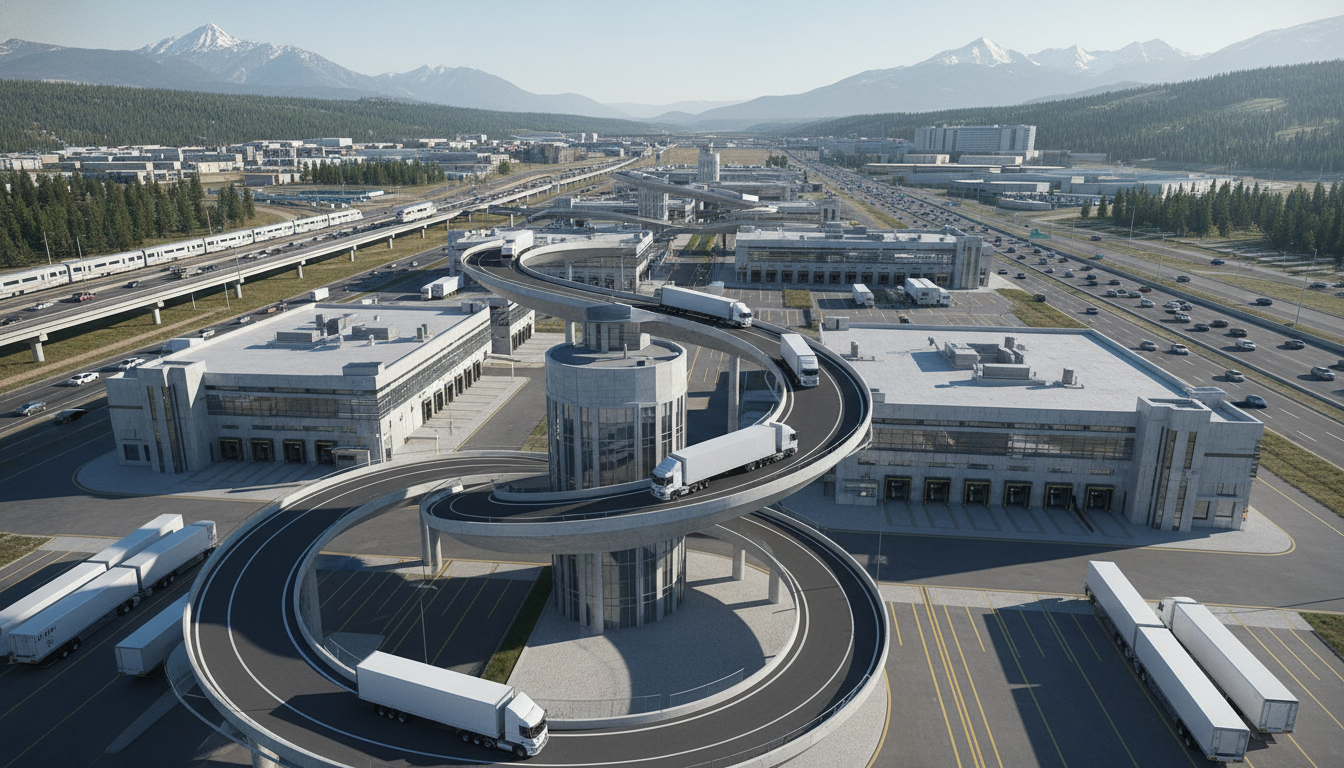
While not yet common in Alberta due to historical land abundance, technical engineers and developers must begin planning for industrial densification. In markets like Vancouver and Tokyo, multi-story warehouses with heavy-duty truck ramps are becoming standard. As land prices along the QEII continue to rise, the economic tipping point where vertical warehousing becomes viable in Alberta is rapidly approaching. Investors who pioneer multi-level logistics facilities in this corridor will possess a massive competitive advantage.
4. Pre-Leasing and Build-to-Suit Strategies
For business owners, the strategy of waiting for a building to be completed before signing a lease is no longer viable. Companies must engage in aggressive pre-leasing, often signing long-term commitments before the foundation is even poured. Alternatively, partnering directly with developers on “build-to-suit” projects allows businesses to customize the engineering specifications—such as precise floor load capacities and power requirements—while securing long-term cost certainty in a volatile market.
Long-Term Growth Mechanics and Solutions
The industrial land grab along the Edmonton-Calgary corridor is not a temporary bubble; it is a structural realignment of the province’s physical economy. E-commerce is not retreating, and the demand for robust, localized supply chains will only intensify.
To prevent this bottleneck from permanently strangling economic growth, a coordinated effort is required. Municipalities must streamline the incredibly slow Area Structure Plan and annexation processes, reducing the bureaucratic friction that delays land servicing. The provincial government must invest heavily in utility infrastructure grants to help smaller municipalities along the QEII build the water, power, and road networks required to host modern logistics parks.
For technical engineers, the challenge is to design more efficient, denser facilities that maximize the utility of every square foot of available land. For investors and business owners, success will belong to those who understand the deep mechanics of land development, anticipate the eastward and outward spread of the logistics nodes, and secure their positions before the corridor reaches total capacity. Alberta’s economy is evolving rapidly, and the new “Alberta Advantage” will not be defined by infinite space, but by the intelligent, highly engineered utilization of the space we have.
Sources and References
- Alberta Ministry of Jobs, Economy and Trade: Economic Indicators and GDP Data.
- Commercial Real Estate Brokerage Reports (CBRE, Colliers, JLL): Industrial Market Overviews for Calgary and Edmonton.
- Municipal Area Structure Plans: Rocky View County, Leduc County, and Parkland County.
- Supply Chain Canada: Post-pandemic inventory management and logistics analysis.