

The modern Alberta industrial landscape is no longer defined merely by the size of its machinery, but by the density of the data that machinery produces. A wrench is no longer just a wrench; it is a sensor-laden, data-collection node integrated into a province-wide digital grid. As the energy sector transitions from legacy extraction methods to advanced, diversified energy technologies, a critical fault line has emerged in the workforce. Industry experts call it the “Mechanic’s Tech Gap”—the widening chasm between traditional mechanical skills and the advanced software, hardware, and diagnostic capabilities required on the modern job site. In response, Alberta’s premier technical institutions are executing a massive pedagogical shift. The traditional four-year university degree, long considered the gold standard of professional preparation, is suddenly facing an existential threat from agile, highly targeted six-month intensive certifications. This is the Polytechnic Pivot, and it is fundamentally rewiring how potential residents, technical engineers, and business owners approach human capital in the 2026 labor market.
The following economic facts are based on current Alberta provincial data and market trends.
The Mechanic’s Tech Gap: Understanding the Crisis
To understand the mechanics of the Polytechnic Pivot, one must first examine the historical context of Alberta’s labor market and the root causes of the current skills deficit. For decades, the Alberta economic engine was powered by heavy-duty mechanics, power engineers, and petroleum technicians. The educational pipeline was straightforward: learn the physical mechanics of diesel engines, hydraulics, and high-pressure steam systems, and you were guaranteed a lucrative career in the oil sands or the supporting logistics networks.
However, the rapid digitization of heavy industry has fundamentally altered the baseline requirements for these roles. Today, an autonomous haulage truck operating in Fort McMurray generates terabytes of data per day. Diagnosing a fault in these vehicles requires less physical torque and more algorithmic comprehension. The “Mechanic’s Tech Gap” represents the delta between the legacy training provided by traditional educational models and the immediate, highly technical needs of modern employers.
Key Drivers of the Tech Gap:
- Fleet Electrification: The transition of commercial and industrial fleets to electric vehicles (EVs) requires mechanics to understand high-voltage systems, battery thermal management, and complex power inverters, rather than just internal combustion engines.
- Sensor Integration and Telematics: Heavy machinery is now equipped with sophisticated LiDAR, radar, and IoT (Internet of Things) sensors. Maintenance now requires advanced networking and software troubleshooting skills.
- Automation and Robotics: The deployment of automated drilling rigs and robotic pipeline inspection tools demands technicians who can interface with proprietary software systems and perform field-level coding adjustments.
The traditional four-year engineering or science degree is struggling to keep pace with these rapid technological advancements. By the time a university curriculum is drafted, approved by academic senates, and delivered to a graduating class, the underlying technology has often evolved two or three times over. This pedagogical lag creates a massive inefficiency in the labor market, leaving business owners with unfilled vacancies and graduates with outdated theoretical knowledge.
SAIT and NAIT: The Architects of the Polytechnic Pivot
Recognizing the urgent need for a more responsive educational model, the Southern Alberta Institute of Technology (SAIT) in Calgary and the Northern Alberta Institute of Technology (NAIT) in Edmonton are completely overhauling their curricula. These institutions are abandoning the rigid, time-based progression of traditional academia in favor of a competency-based, rapid-deployment model.
Historically, academic institutions operated on a “push” model: universities decided what knowledge was valuable, pushed it onto students over four years, and then pushed those students into the labor market. SAIT and NAIT have inverted this paradigm to a “pull” model. Through deeply integrated industry advisory boards, companies directly communicate their immediate technological pain points to the polytechnics. The schools then rapidly prototype and deploy targeted training programs to fill those specific gaps.
Mechanics of the Curriculum Overhaul:
- Industry Co-Creation: Syllabi are no longer written exclusively by tenured academics. They are co-authored by active field engineers and corporate technical directors who dictate the exact competencies required on the job site today.
- Modular Learning Architectures: Programs are broken down into modular blocks. Instead of committing to a multi-year diploma, a student can complete a highly specific module, enter the workforce, and return later to stack additional modules as their career progresses.
- Simulated Field Environments: Investment has shifted away from traditional lecture halls toward immersive, mixed-reality simulation labs. Students learn by interacting with digital digital-twins of actual operational facilities in Alberta, drastically reducing the onboarding time required by employers.
The Rise of the Micro-Credential
At the heart of this educational revolution is the “micro-credential.” A micro-credential is a short, intensive, highly focused certification designed to impart a specific, market-ready skill in a fraction of the time required for a traditional degree.
For potential residents and technical engineers looking to capitalize on Alberta’s economic diversification, the micro-credential offers a superior return on investment (ROI). The mathematics of this shift are compelling. A traditional four-year degree requires significant tuition expenditure and, more importantly, four years of lost wage-earning potential. In contrast, a six-month intensive certification minimizes opportunity cost and accelerates entry into high-paying technical roles.
Furthermore, micro-credentials allow mid-career professionals to pivot without abandoning their current livelihoods. A legacy diesel mechanic can complete a targeted micro-credential in high-voltage EV systems during evenings and weekends, effectively bridging their personal “Tech Gap” and instantly increasing their market value. This agility is why 6-month intensives are aggressively outcompeting 4-year degrees for the demographic of workers that Alberta desperately needs to attract and retain.

The Big Three: Skills for the 2026 Economy
The Polytechnic Pivot is not a generalized shift; it is highly targeted toward the specific industries that will dominate Alberta’s economic landscape by 2026. SAIT and NAIT have identified three critical vectors for micro-credential development: Hydrogen Safety, Small Modular Reactor (SMR) Maintenance, and Advanced Commercial Drone Piloting.
Hydrogen Safety and Infrastructure
Alberta is aggressively positioning itself as a global leader in both blue and green hydrogen production. However, hydrogen is a notoriously difficult molecule to manage. It is the smallest element on the periodic table, making it highly prone to leakage, and it causes embrittlement in traditional steel pipelines.
The micro-credentials developed for the hydrogen sector focus heavily on the unique physics and safety protocols required to handle this fuel.
Educational Focus Areas:
- Cryogenic Fluid Management: Training on the thermodynamics of super-cooled liquid hydrogen and the specialized materials required for its storage and transport.
- Advanced Leak Detection: Instruction on utilizing specialized optical gas imaging cameras and acoustic sensors to detect microscopic hydrogen leaks that are invisible to the naked eye.
- Material Science for Embrittlement: Educating technicians on how hydrogen interacts with various alloys at a molecular level, enabling them to safely inspect and maintain high-pressure infrastructure.
By compressing this highly specialized knowledge into a six-month intensive, polytechnics are ensuring that as multi-billion-dollar hydrogen facilities come online near Edmonton and Calgary, the workforce is already trained and waiting.
Small Modular Reactor (SMR) Maintenance
As the push for zero-emission baseload power intensifies, Alberta has signed multiple Memorandums of Understanding (MoUs) to explore the deployment of Small Modular Reactors. SMRs represent a paradigm shift in nuclear technology; they are built in factories, transported to the site, and are designed to be intrinsically safe, relying on passive cooling systems rather than complex active pumps.
However, maintaining a nuclear reactor, even a small modular one, requires a level of precision and regulatory compliance far beyond traditional thermal power generation. The traditional power engineer requires a significant knowledge upgrade to operate in this space.
Educational Focus Areas:
- Nuclear Regulatory Compliance: Intensive instruction on the stringent safety and reporting protocols mandated by federal nuclear regulators.
- Passive Safety System Diagnostics: Training on the thermodynamics and fluid mechanics of passive gravity-fed and convection-based cooling systems.
- Radiation Protection and Monitoring: Practical, hands-on experience with modern dosimetry, contamination control, and the deployment of robotic inspection tools in irradiated environments.
The SMR micro-credential acts as a bridge, allowing Alberta’s existing, highly skilled power engineers to transition their expertise from natural gas and coal facilities directly into the next generation of nuclear technology.
Advanced Commercial Drone Piloting
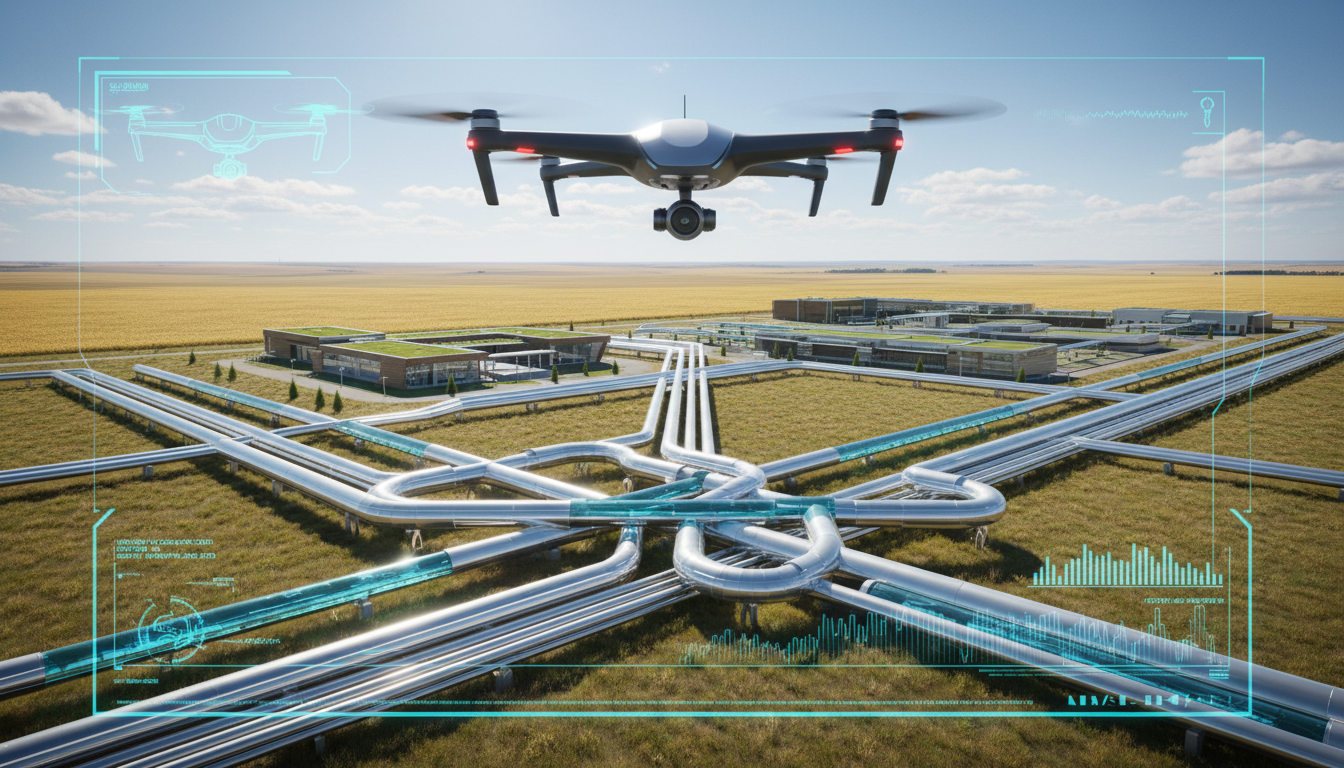
The image of a drone as a simple flying camera is entirely obsolete in the Alberta industrial sector. Today, commercial drones are heavy-lift, autonomous data-gathering platforms essential for pipeline inspection, agricultural surveying, and environmental monitoring. The role of the “pilot” has evolved into that of an airborne data analyst.
Educational Focus Areas:
- LiDAR and Thermal Imaging Integration: Teaching students how to interpret complex topographical data and thermal signatures to identify pipeline stress, soil degradation, or equipment overheating.
- Beyond Visual Line of Sight (BVLOS) Operations: Navigating the complex Transport Canada regulations and the automated flight planning software required to fly drones over vast distances without direct visual contact.
- AI-Assisted Data Processing: Training operators to use machine learning algorithms to sift through terabytes of aerial data to automatically identify anomalies, drastically reducing inspection times.
A four-year degree in aviation or geography is vastly over-engineered for this role. A six-month micro-credential provides the exact blend of regulatory knowledge, flight mechanics, and data analysis required to deploy these assets effectively.
The ROI of the Pivot: Why Investors and Residents Should Care
The economic implications of the Polytechnic Pivot extend far beyond the walls of the classroom. For potential residents looking to relocate to Alberta, this educational model completely alters the risk-reward calculation of career transition. The barrier to entry for high-paying, future-proof careers has been significantly lowered in terms of time and upfront capital. A newcomer can arrive in Alberta, enroll in a targeted micro-credential, and be integrated into the high-tech energy sector within a single calendar year. This velocity of human capital deployment is unparalleled in North America.
For business owners and investors, the shift is equally transformative. The greatest bottleneck to scaling advanced technology operations in Alberta has historically been the availability of skilled labor. When a company decides to build a new hydrogen facility or deploy an automated fleet, they cannot wait four years for the local university to produce qualified graduates. The agile, competency-based model of SAIT and NAIT means that corporate investors can partner directly with educational institutions to custom-build their workforce in real-time.
This educational agility reduces onboarding costs, accelerates project timelines, and fundamentally de-risks large-scale capital investments in the province. It signals to global tech-heavy industries that Alberta is not just a place with abundant natural resources, but a jurisdiction with a highly responsive, surgically trained workforce ready to execute complex operational mandates.
Conclusion
The “Mechanic’s Tech Gap” is not an insurmountable crisis; it is an economic catalyst. By recognizing the limitations of the traditional four-year degree and aggressively pivoting toward modular, industry-integrated micro-credentials, Alberta’s polytechnic institutions are engineering a more resilient and adaptable labor force. Whether it is managing the volatile physics of hydrogen, maintaining the passive cooling systems of an SMR, or interpreting LiDAR data from a commercial drone, the skills of the 2026 economy require precision, speed, and continuous adaptation. The Polytechnic Pivot ensures that Alberta remains at the bleeding edge of industrial innovation, providing a clear, actionable blueprint for long-term economic growth and human capital development.
Sources and References
- Alberta Ministry of Advanced Education (2024): The Micro-Credential Framework: Accelerating Human Capital in a Diversified Economy.
- Southern Alberta Institute of Technology (SAIT) (2024): Curriculum Evolution Report: Competency-Based Learning for the Energy Transition.
- Northern Alberta Institute of Technology (NAIT) (2024): Industry Advisory Board Outcomes: Bridging the Digital Divide in Heavy Trades.
- Alberta Labor Market Information (ALMI) (2024): Projected Skills Deficits in Advanced Manufacturing and Alternative Energy Sectors (2024-2030).
- Transport Canada & Alberta Aviation Council (2024): BVLOS Commercial Drone Operations and Workforce Readiness.