
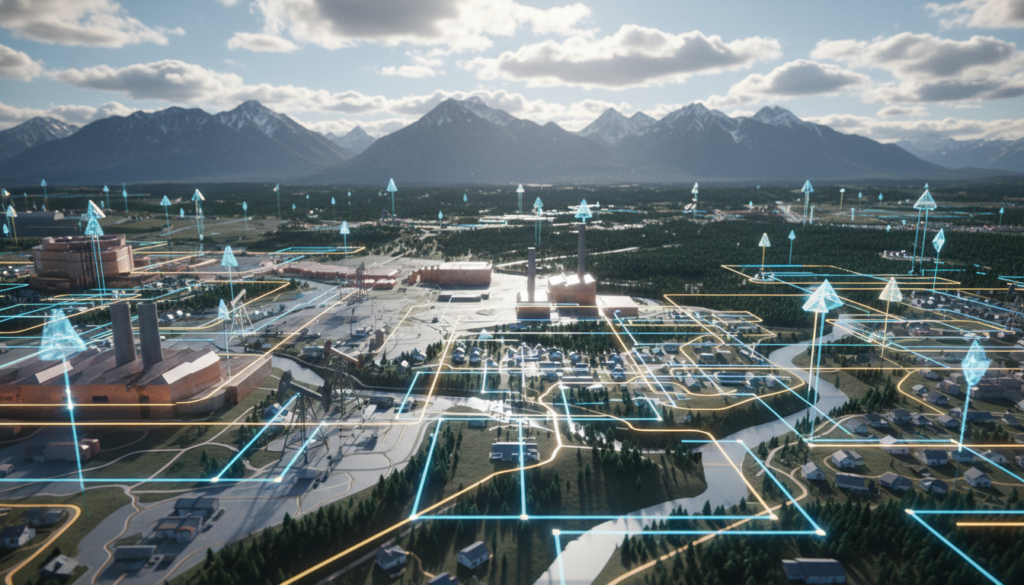

The image of the Alberta electrician has long been synonymous with the heavily loaded, diesel-guzzling cargo van. For decades, these rolling warehouses have crisscrossed the expansive highways of the province, serving as mobile offices, supply depots, and billboards for skilled tradespeople. However, a silent but profound economic transformation is currently rewriting the operational playbook for local trades. In places like Strathcona County—a region defined by its unique juxtaposition of dense suburban neighborhoods in Sherwood Park and sprawling rural industrial zones—the traditional fleet model is buckling under the weight of modern economic pressures.
Today, forward-thinking business owners, technical engineers, and investors are looking past the sheet metal of commercial vehicles and focusing entirely on silicon and code. Driven by a tightening supply of master electricians, surging overhead costs, and rapid advancements in software adoption, the skilled trades sector is undergoing a digital renaissance. Tradespeople are abandoning the heavy capital expenditures of massive physical fleets in favor of launching lean, algorithm-optimized on-demand service platforms. This transition is not merely a technological upgrade; it is a fundamental restructuring of how trade services are dispatched, executed, and monetized in Alberta.
The following economic facts are based on current Alberta provincial data and market trends.
The Traditional Fleet Model vs. The Digital Paradigm
To understand the magnitude of this shift, one must first examine the historical context of Alberta’s trades and the economic mechanics that sustained the traditional fleet model for so long.
Historical Context of Alberta Trades
Historically, the Alberta economy has been characterized by periods of rapid expansion driven by the energy sector. During these boom cycles, capital was abundant, and the primary constraint on a trade business was the physical ability to get a technician to a job site. The traditional cargo van evolved as a brute-force solution to logistical challenges. By carrying every conceivable part, tool, and piece of equipment, electricians could handle any situation upon arrival. This "warehouse on wheels" approach maximized readiness but completely ignored operational efficiency.
As the province’s economic landscape has matured, the tolerance for operational inefficiency has vanished. Inflationary pressures on physical goods, combined with volatile fuel markets, have turned the fully stocked cargo van from a competitive advantage into a massive financial liability.
The Overhead Squeeze
The economics of maintaining a traditional electrical fleet in Alberta today present a stark reality for business owners. The core drivers of this overhead squeeze include:
- Capital Expenditure (CAPEX): The upfront cost of a commercial vehicle outfitted with custom shelving, roof racks, and specialized tool storage has skyrocketed. When factoring in financing costs at current interest rates, the barrier to entry for scaling a physical fleet is prohibitive.
- Fuel and Maintenance: Alberta’s vast geography requires significant drive time. The compounding costs of diesel or gasoline, routine maintenance, WCB premiums tied to driving risks, and commercial fleet insurance create a massive recurring operational expense (OPEX).
- Administrative Friction: Traditional models rely on centralized dispatchers, manual invoicing, and physical paperwork. This creates a bottleneck where highly paid master electricians spend non-billable hours managing logistics rather than executing technical work.
[IMAGE: A clean isometric view. Foreground: an abstract, transparent wireframe of a commercial cargo van slowly dissolving into digital data streams. Background: a topographical representation of Strathcona County with distinct urban and rural zones. Lighting: bright natural lighting.]
The Economics of Software Adoption in Skilled Trades
The alternative to the traditional fleet is the algorithm-optimized service platform. By treating electrical services as a dynamic logistical challenge rather than a static fleet management issue, business owners can drastically alter their profit margins.
From Depreciating Assets to Scalable Code
When an electrical contracting firm pivots from buying vans to developing or licensing an app-based platform, they are fundamentally changing their capital allocation strategy. Vehicles are depreciating assets; the moment a van drives off the lot, it loses value, and it requires constant capital injection to remain operational.
Conversely, software is infinitely scalable. An algorithm designed to optimize the routing of three electricians can easily scale to manage thirty electricians with negligible marginal cost. This shift allows business owners to redirect capital from physical assets into digital infrastructure, marketing, and talent acquisition.
Algorithm-Optimized Dispatch
The core economic engine of the electrician app is the dispatch algorithm. Traditional dispatch relies on geographical proximity and human intuition, which often fails to account for traffic patterns, job complexity, and inventory requirements. An algorithm-optimized platform solves the "Traveling Salesman Problem" in real-time.
By analyzing historical data, predictive job durations, and live traffic updates, the app ensures that the right technician—with the exact right parts—is sent to the job site via the most fuel-efficient route. The economic benefits are measurable and immediate:
- Increased Billable Utilization: Technicians spend less time driving and more time executing billable work. A reduction in windshield time directly correlates to an increase in daily revenue capacity per technician.
- Drastic Reductions in Fuel Consumption: Optimized routing algorithms can reduce total fleet mileage by significant margins, insulating the business from volatile fuel prices.
- Just-In-Time (JIT) Inventory: Instead of stocking vans with thousands of dollars of idle inventory, apps integrate with local supply houses. Algorithms predict required materials based on the customer’s digital intake form, allowing technicians to pick up exact supplies en route to the job, thereby freeing up working capital.
Why Strathcona County is the Epicenter of Trade Tech
Strathcona County serves as the perfect microcosm for this technological evolution. The region’s unique demographics and geography create specific economic pressures that make software adoption not just advantageous, but strictly necessary for long-term survival.
Demographics and Geographic Complexity
Strathcona County is characterized by a dense urban core in Sherwood Park surrounded by a vast expanse of rural hamlets, agricultural properties, and heavy industrial facilities like Refinery Row. This extreme variance in geography makes traditional dispatch highly inefficient. An electrician might finish a residential panel upgrade in dense Sherwood Park and then be dispatched to a rural agricultural facility forty kilometers away.
An app-based platform thrives in this complex environment. By utilizing dynamic pricing models and algorithmic batching, the platform can group rural service calls together, ensuring that a technician only travels to the county’s outer edges when multiple billable jobs guarantee profitability.
The Master Electrician Shortage
Perhaps the most pressing economic catalyst for the app-based model is the tightening supply of highly qualified labor. Alberta is currently facing a demographic cliff in the skilled trades. A significant portion of seasoned master electricians are nearing retirement age, and the pipeline of new apprentices is not filling the gap fast enough to meet the demands of a growing population and a rapidly electrifying grid.
In a traditional model, a master electrician is physically bound to one location at a time. The app-based model leverages technology to decouple the master’s expertise from their physical location.
Through the platform, a single master electrician can oversee multiple journeymen and apprentices across Strathcona County simultaneously. By utilizing high-definition video triage, augmented reality (AR) diagnostics, and digital sign-offs, the master electrician becomes a centralized hub of technical authority. This dramatically increases the economic output of the most expensive and scarce labor resource in the company.
How-To: Transitioning from the Van to the App
For local business owners, technical engineers, and investors looking to capitalize on this shift, transitioning an electrical contracting business into a lean, algorithm-optimized platform requires a systematic approach. The following steps outline the economic mechanics of this transition.
Step 1: Dismantling Administrative Friction
The first phase of digital transformation involves eliminating manual data entry and centralizing all customer interactions through a digital portal.
- Automated Intake: Customers utilize the app or web portal to request service, upload photos of their electrical issues, and provide diagnostic context before a technician is even dispatched.
- API Integration: The platform must integrate directly with accounting software, local municipal permitting databases, and supply house inventory systems. This creates a seamless flow of data from the initial customer click to the final invoice.
- Digital Quoting and Invoicing: By automating the financial workflow, businesses eliminate the need for dedicated administrative staff, drastically reducing fixed overhead costs.
Step 2: Implementing Lean Inventory and Just-In-Time Supply
The transition away from the "warehouse on wheels" requires a sophisticated approach to material procurement.
- Predictive Diagnostics: By analyzing the photos and data submitted by the customer during the intake process, the platform’s algorithms can predict the necessary parts with a high degree of accuracy.
- Supply House Synchronization: The app communicates directly with local electrical wholesalers in Strathcona County. When a job is confirmed, the required materials are automatically reserved and packaged at the supply house nearest to the job site or the technician’s current location.
- Micro-Vehicles: Because technicians no longer need to carry extensive inventory, businesses can replace massive, expensive cargo vans with smaller, highly fuel-efficient vehicles or even electric vehicles (EVs), further driving down OPEX.
[IMAGE: A clean isometric view. Foreground: a minimalist digital tablet displaying a glowing, perfectly balanced supply chain matrix. Background: abstract representations of modern residential homes and local supply warehouses. Lighting: bright natural lighting.]
Step 3: Algorithm-Driven Routing and Dynamic Pricing
The final step in the transition is fully surrendering dispatch control to the algorithm.
- Real-Time Optimization: The software continuously recalculates routes based on job completions, cancellations, and traffic conditions, ensuring maximum efficiency throughout the day.
- Dynamic Pricing Mechanics: Much like ride-sharing applications, the platform can implement dynamic pricing. During periods of peak demand or extreme weather events—common in Alberta—the algorithm can adjust pricing to reflect the scarcity of available technicians, optimizing revenue capture.
- Performance Analytics: The app generates massive amounts of data, allowing business owners to analyze technician efficiency, profitable service zones, and seasonal demand trends, enabling highly informed capital allocation decisions.
Long-Term Growth Mechanics for Alberta’s Trade Tech
The shift from physical fleets to digital platforms in Strathcona County is an early indicator of a much broader economic trend that will sweep across Alberta. As the province continues to diversify its economy and foster a growing technology sector, the intersection of skilled trades and software engineering will become a major growth engine.
The Multiplier Effect of Local Tech Investment
When an electrical company invests in software development rather than purchasing imported commercial vehicles, the economic multiplier effect remains within the province. Capital flows to local software engineers, data analysts, and cloud infrastructure providers in nearby Edmonton and Calgary. This creates a symbiotic relationship between Alberta’s traditional blue-collar strengths and its emerging white-collar tech sector.
Grid Electrification and Future Demand
The long-term macroeconomic outlook for the electrical trade in Alberta is overwhelmingly positive. The global push toward electrification—including the mass adoption of electric vehicles, the installation of residential solar arrays, and the upgrading of aging electrical panels—guarantees decades of sustained demand.
However, only those businesses that have optimized their operations through software will be able to capture this demand profitably. Companies burdened by the heavy overhead and inefficiencies of the traditional fleet model will find themselves outpriced and outmaneuvered by lean, app-based competitors.
[IMAGE: A minimalist vector illustration. Foreground: a stylized glowing lightbulb seamlessly merging with a precisely engineered microchip. Background: geometric patterns representing a stable, interconnected economic grid. Lighting: bright natural lighting.]
The Future of Trade Entrepreneurship
For potential residents and young entrepreneurs looking at the Alberta economy, the message is clear. The barrier to entry in the skilled trades is no longer defined by the ability to secure a massive commercial loan for a fleet of trucks. Instead, the new barrier to entry is technical literacy, algorithmic understanding, and the ability to design frictionless customer experiences.
Strathcona County is proving that the future of the skilled trades does not look like a mechanic turning a wrench on a broken-down cargo van. It looks like a data scientist and a master electrician analyzing a digital dashboard, deploying resources with surgical precision across the province. By embracing the economics of software adoption, Alberta’s tradespeople are not just replacing the traditional van; they are completely rewriting the blueprint for industrial success in the 21st century.
Sources and References
- Government of Alberta: Ministry of Skilled Trades and Professions, Apprenticeship and Industry Training Data.
- Alberta Enterprise Corporation: Technology Sector Growth and SaaS Adoption Reports.
- Statistics Canada: Commercial Vehicle Depreciation Schedules and Fuel Price Indices for Western Canada.
- Workers’ Compensation Board (WCB) Alberta: Industry Premium Rate Manuals for Electrical Contractors.
- Economic Development Strathcona County: Regional Demographic and Industrial Sector Analysis.