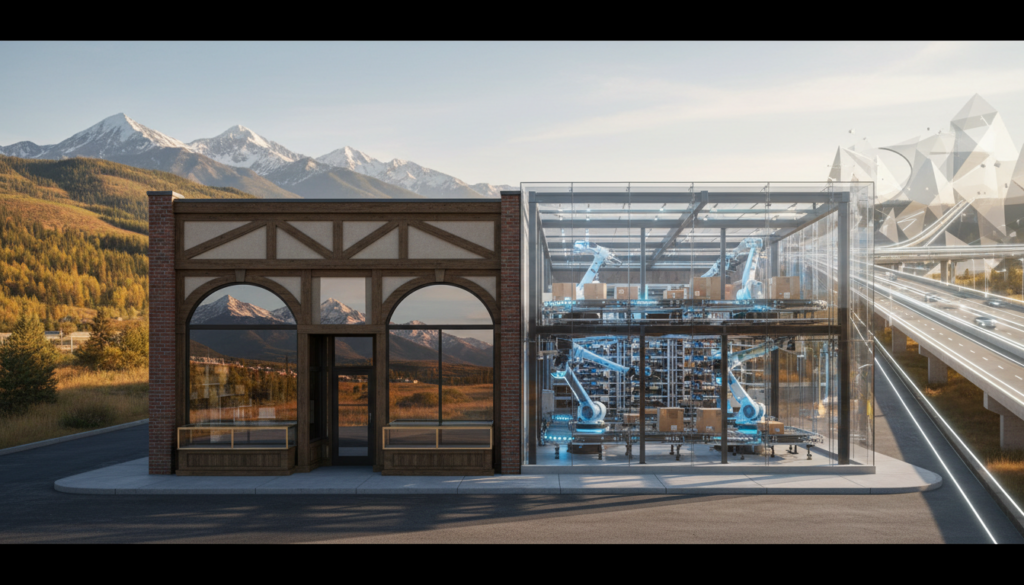

If you were to walk through the echoing corridors of a struggling suburban shopping center today, you might hear the faint, nostalgic echoes of a bygone economic era. The sprawling footprints of these mid-century commercial palaces, once the beating heart of Albertan consumerism, are increasingly falling silent. However, beneath the faded neon signs and empty food courts lies a massive, untapped economic potential. We are witnessing a radical architectural and economic metamorphosis. The dead mall is not a graveyard; it is the chrysalis for the next generation of industrial infrastructure. Welcome to the era of the logistics fortress.
For potential residents, investors, business owners, and technical engineers looking at the Alberta landscape, this transformation represents a critical shift in how land, labor, and capital are deployed. Expanding on the “Inland Empire” logistics trend originally pioneered in Southern California, Alberta is rapidly becoming the premier distribution hub of Western Canada. This article explores the intricate process of converting struggling suburban malls into high-tech, last-mile fulfillment centers, examining the engineering hurdles, the complex municipal zoning battles, and the profound economic trade-offs of replacing traditional retail jobs with advanced warehouse roles.
The following economic facts are based on current Alberta provincial data and market trends.
The Fall of the Suburban Retail Empire: Historical Context
To understand the future of Alberta’s commercial real estate, we must first dissect its past. During the economic booms of the late twentieth century, fueled largely by the province’s robust energy sector, retail development expanded at an unprecedented rate. Developers built massive enclosed malls across Calgary, Edmonton, and secondary markets like Red Deer and Lethbridge. These structures were designed around a specific economic model: the anchor tenant system, where massive department stores drove foot traffic to smaller, specialized retailers.
However, the long-term growth mechanics of the retail sector began to fracture long before the global disruptions of the 2020s. A confluence of factors led to the steady decline of the traditional suburban mall:
- The Acceleration of E-Commerce: The convenience of digital shopping fundamentally altered consumer expectations, shifting the point of sale from a physical cash register to a digital cart.
- The Collapse of Anchor Tenants: As legacy department stores filed for bankruptcy or drastically reduced their footprints, the symbiotic ecosystem of the mall collapsed, leaving massive, unleaseable voids.
- Over-Retailization: North America, and Alberta specifically, developed significantly more retail square footage per capita than other global markets, creating an unsustainable supply-demand imbalance.
- Changing Demographics: Suburban populations aged, and younger generations gravitated toward mixed-use urban centers or open-air lifestyle centers rather than enclosed malls.
This decline left municipalities and real estate investment trusts (REITs) holding massive, underperforming assets. These structures occupied prime real estate, often situated directly adjacent to major arterial roads and residential neighborhoods—exactly the geographic profile required for a modern logistical network.
Alberta as the Northern “Inland Empire”
In Southern California, the “Inland Empire” refers to a massive region of logistics, warehousing, and supply chain infrastructure that serves the coastal ports and the broader American West. Alberta is rapidly engineering its own version of this phenomenon, capitalizing on its unique geographic and economic advantages to serve as the primary distribution node for Western Canada and the Pacific Northwest.
The Geographic and Infrastructure Advantage
Alberta’s positioning is not accidental; it is a highly calculated advantage for supply chain management. The province sits at the nexus of the CANAMEX corridor, a critical trade route linking Canada, the United States, and Mexico. Furthermore, the internal infrastructure of Alberta makes it an ideal laboratory for the logistics fortress concept:
- The QEII Highway: The Queen Elizabeth II Highway connects Calgary and Edmonton, forming a high-speed commercial artery that allows for rapid movement of goods between the province’s two major population centers.
- Ring Road Completion: The completion of Stoney Trail in Calgary and Anthony Henday Drive in Edmonton has drastically reduced transit times for heavy freight, allowing trucks to bypass urban congestion while remaining close to residential delivery zones.
- Proximity to Airports and Rail: Both major cities boast international airports with expanding cargo capacities, alongside major intermodal rail yards operated by CPKC and CN Rail.
Because dead malls were historically built near major intersections and highways to maximize consumer accessibility, their physical locations perfectly mirror the geographic requirements of last-mile delivery networks. The “last mile”—the final leg of a product’s journey from a fulfillment center to the consumer’s doorstep—is the most expensive and complex part of the supply chain. By placing logistics fortresses in the heart of the suburbs, companies can drastically cut transportation costs and delivery times.
The Anatomy of a Logistics Fortress: Engineering the Conversion
For technical engineers, architects, and commercial developers, converting a mall into a logistics facility is not a simple matter of swapping out shelving units for pallets. It requires a fundamental re-engineering of the building’s physical anatomy to handle the heavy, relentless demands of modern supply chain operations.
While greenfield development (building from scratch on empty land) is straightforward, adaptive reuse of a retail space presents unique, complex challenges that require innovative engineering solutions.
Structural Load and Spatial Requirements
The core differences between retail architecture and industrial architecture dictate the scope of the conversion:
- Clear Heights: Modern warehouses require massive vertical space to accommodate high-density racking systems and automated storage and retrieval systems (AS/RS). A typical mall has a clear ceiling height of fifteen to twenty feet. A modern logistics fortress requires thirty-two to forty feet. Engineers must often execute complex roof-raising procedures or excavate the existing floor to achieve the necessary volume.
- Floor Load Capacity: Retail floors are designed to support foot traffic and lightweight displays—typically engineered for a live load of seventy-five to one hundred pounds per square foot. High-tech warehouses, utilizing heavy forklifts, robotics, and dense inventory, require concrete slabs capable of supporting two hundred and fifty to five hundred pounds per square foot. This often necessitates ripping out the existing foundation and pouring heavily reinforced, specialized concrete slabs.
- Column Spacing: Malls feature tight column grids designed to break up retail spaces. Logistics facilities require wide, open bays to allow for the unobstructed movement of autonomous guided vehicles (AGVs) and massive conveyor networks. Structural engineers must carefully remove and redistribute load-bearing columns without compromising the building’s integrity.
Electrification and Automation Infrastructure
The modern logistics fortress is a massive consumer of electricity. As fulfillment centers shift toward heavy automation, the power requirements of a converted mall must be drastically upgraded.
- Power Grids: The facility must support miles of automated conveyor belts, robotic sorting arms, and massive HVAC systems required to keep temperature-sensitive goods viable.
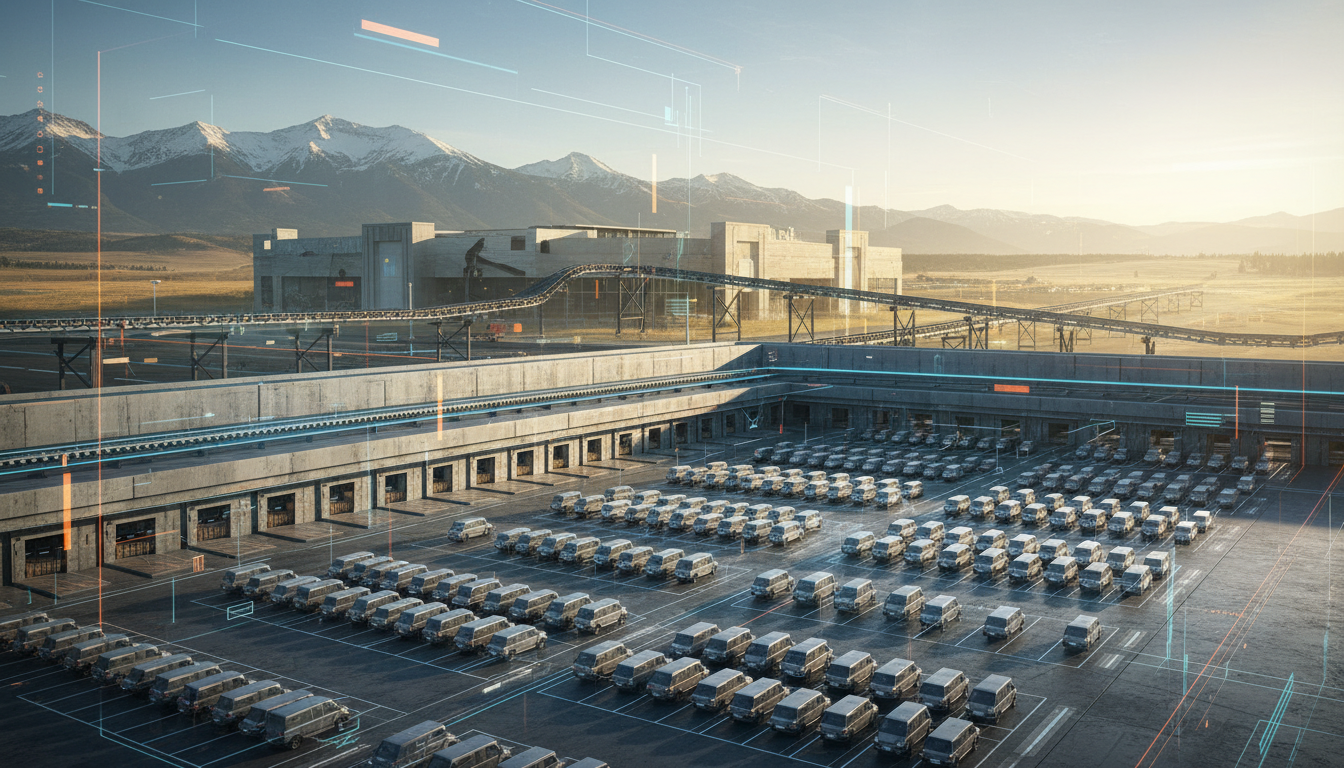
- Fleet Charging: As logistics companies transition to electric vehicle (EV) fleets for last-mile delivery, the exterior parking lots—once filled with minivans and sedans—must be retrofitted with high-capacity commercial charging stations.
- Data Density: A logistics fortress is as much a data center as it is a warehouse. The building requires dense fiber-optic networks to support the artificial intelligence algorithms tracking millions of inventory units in real-time.
Zoning Battles and Municipal Chess: The Policy Framework
While the engineering challenges are steep, the most complex hurdles in transforming dead malls often occur in the halls of municipal government. For business owners and developers, navigating the regulatory landscape of zoning laws is a high-stakes game of municipal chess.
The Clash of Commercial and Industrial Zoning
Urban planners rely on strict zoning bylaws to separate incompatible land uses. Malls are zoned for commercial use, designed to integrate smoothly with surrounding residential neighborhoods. Warehouses are zoned for industrial use, typically relegated to the outskirts of a city due to noise, traffic, and aesthetic concerns.
To convert a mall into a fulfillment center, developers must apply for rezoning or specific use variances. This process frequently triggers intense zoning battles.
- Traffic and Infrastructure Impact: The most significant point of friction is traffic. Malls generate passenger vehicle traffic with predictable peaks during evenings and weekends. Logistics fortresses generate heavy, continuous commercial traffic—eighteen-wheelers, delivery vans, and heavy freight—operating twenty-four hours a day. Municipalities must conduct extensive traffic impact assessments to determine if the local arterial roads can withstand the increased wear and tear.
- NIMBYism (Not In My Back Yard): Local residents frequently oppose these conversions. Concerns range from increased noise pollution (backup alarms, heavy engines) to light pollution from around-the-clock operations, and the perceived aesthetic degradation of the neighborhood. Developers must engage in extensive community outreach, often compromising by adding significant landscaping buffers, noise-canceling walls, and restricting heavy truck movements during nighttime hours.
The Property Tax Equation
For Alberta’s municipalities, the conversion of a mall fundamentally alters the civic tax base. Historically, massive retail centers were the golden geese of municipal property taxes, generating immense revenue based on high commercial property valuations.
When a mall dies, its assessed value plummets, creating a hole in the municipal budget. While converting the site into a logistics fortress revitalizes the property, industrial tax rates and valuations are often calculated differently than prime retail space. Municipalities must carefully weigh the economic trade-offs: accept a potentially lower, but stable, industrial tax yield, or leave a massive, decaying commercial property empty, yielding nothing.
Economic Trade-Offs: The Shift from Retail to Robotics
The transformation of physical space is inextricably linked to the transformation of the labor market. When a mall becomes a logistics fortress, the nature of employment within that space changes dramatically. For potential residents and job seekers in Alberta, understanding this shift is vital for long-term career planning.
The Displacement of Traditional Retail
The traditional mall ecosystem was a massive employer, but the nature of the work was specific. Retail jobs are heavily skewed toward customer service, sales, and localized inventory management.
- Wage Structures: Retail employment frequently relies on minimum wage or near-minimum wage structures.
- Employment Types: A significant portion of mall-based retail jobs are part-time, seasonal, or lack comprehensive benefits, making them highly sensitive to consumer spending fluctuations and economic downturns.
- Skill Requirements: These roles prioritize interpersonal skills, point-of-sale operation, and basic merchandising.
When a mall closes, hundreds of these localized, entry-level positions are eliminated, creating a short-term shock to the immediate suburban labor pool.
The Rise of the High-Tech Warehouse Worker
The roles that replace retail jobs in a logistics fortress are fundamentally different in scope, compensation, and required expertise. The modern fulfillment center is not a dark, dusty warehouse of the past; it is a highly synchronized technological environment.
While some traditional manual labor (like forklift operation and manual sorting) remains, the integration of robotics has shifted the labor demand toward specialized, technical roles. The new skills matrix in Alberta’s warehouses includes:
- Mechatronics and Robotics Technicians: As automated storage and retrieval systems handle the heavy lifting, companies require highly trained technicians to maintain, program, and repair the robotic fleets. These are high-paying, specialized roles that require post-secondary education or advanced technical diplomas.
- Supply Chain Analysts and Data Scientists: Logistics fortresses operate on efficiency. Analysts are required to monitor the flow of goods, optimize delivery routes using complex algorithms, and predict inventory demands based on consumer data.
- Fleet Management and Dispatch: Coordinating the movement of hundreds of autonomous and human-driven delivery vehicles requires advanced logistical coordination and software management.
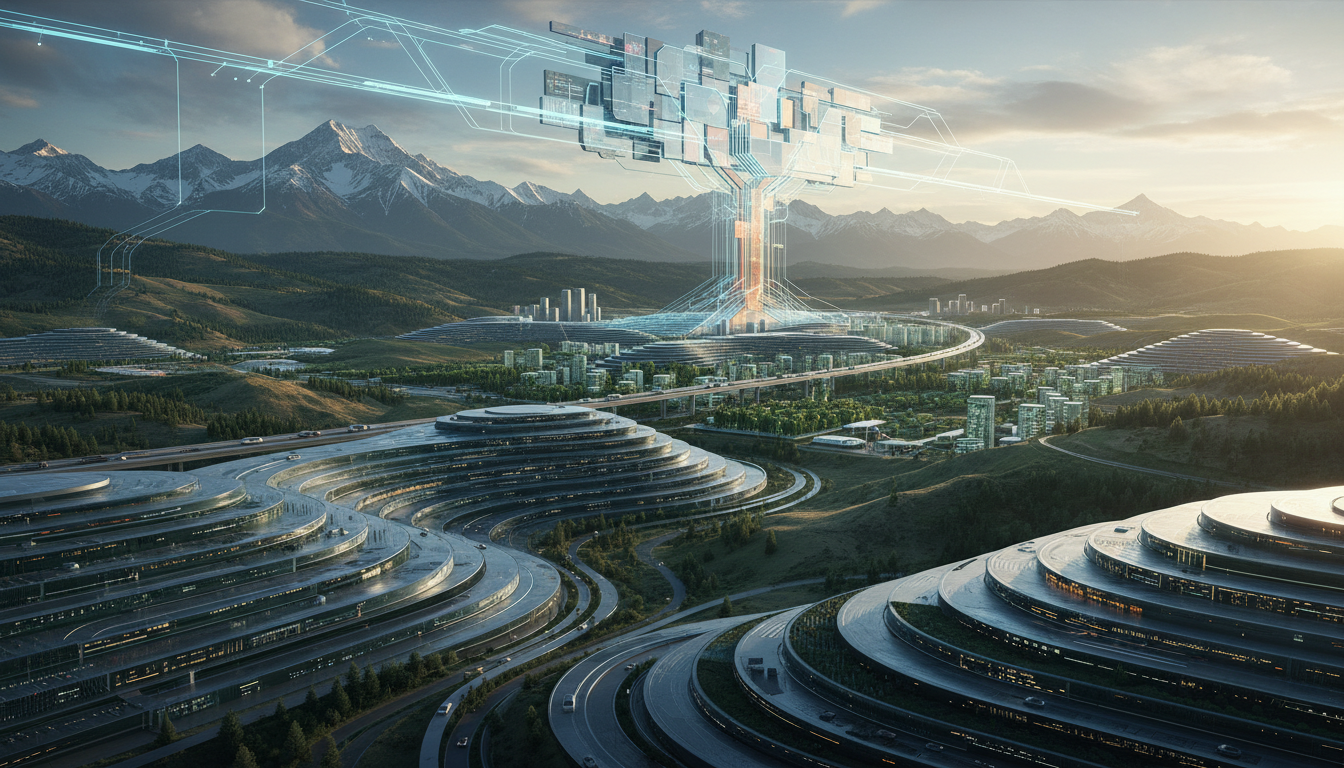
The Economic Net Result: The transition from retail to logistics often results in a lower total headcount of employees within the building, but a significantly higher average wage and a shift toward full-time, benefited positions. For Alberta’s economy, this represents an upskilling of the workforce, aligning perfectly with the province’s broader push to diversify into technology and advanced manufacturing sectors.
Long-Term Growth Mechanics for Investors and Business Owners
For commercial real estate (CRE) investors and business owners looking at the Alberta market, the adaptive reuse of retail space into industrial logistics offers a compelling, albeit complex, investment thesis.
The long-term growth mechanics are driven by the persistent, structural shift in consumer behavior. E-commerce penetration is not retreating; it is stabilizing at a permanently higher plateau. Consequently, the demand for last-mile distribution space near population centers will remain robust.
- Cap Rates and Yields: Industrial real estate has historically offered tighter capitalization (cap) rates than struggling retail, reflecting lower perceived risk and higher demand. Investors who can successfully navigate the zoning and engineering hurdles of a mall conversion can unlock immense value, transforming a distressed asset into a premium, triple-net-leased logistics hub.
- Tenant Stability: Unlike mall operators who must manage dozens of volatile, short-term leases with small retailers, logistics fortresses are typically leased to massive, well-capitalized multinational corporations (e.g., major e-commerce giants, national courier services) on long-term, ten-to-fifteen-year leases. This provides highly predictable, stable cash flows for investors.
- ESG Considerations: Environmental, Social, and Governance (ESG) factors are increasingly driving investment capital. Adaptive reuse—repurposing an existing structure rather than demolishing it or paving over virgin agricultural land for a new warehouse—significantly reduces the embodied carbon footprint of the development. This makes mall conversions highly attractive to institutional investors with strict ESG mandates.
Conclusion: The Future Blueprint of Alberta’s Urban Landscape
The ghost of retail past is not something to be mourned; it is a foundation to be built upon. As Alberta continues to evolve its economic engine beyond its historical reliance on natural resources, the optimization of its physical infrastructure will be paramount.
Transforming dead suburban malls into high-tech logistics fortresses is a masterclass in economic adaptation. It requires brilliant structural engineering to handle the physical demands of automation, deft political maneuvering to align municipal zoning with modern commercial realities, and a forward-looking approach to workforce development.
For the potential resident, the investor, and the technical engineer, these monolithic structures represent the physical manifestation of the new economy. They are the intricate, beating hearts of the supply chain, ensuring that Alberta remains a dominant, hyper-connected hub in the global marketplace. The malls of the twentieth century taught us how to consume; the logistics fortresses of the twenty-first century are teaching us how to efficiently sustain that consumption in a technologically advanced world.
Sources and References
- Alberta Real Estate Association (AREA): Commercial Real Estate Adaptive Reuse Reports.
- Statistics Canada: E-commerce Penetration and Retail Trade Data for Western Provinces.
- Colliers International: Western Canada Industrial Market Overviews and Last-Mile Logistics Analysis.
- Supply Chain Canada: Labor Market Intelligence and Upskilling in the Logistics Sector.
- Municipal Government Act (Alberta): Zoning and Land Use Bylaw Frameworks.