
In 1947, the Leduc No. 1 oil discovery forever altered the economic trajectory of Alberta, transforming a predominantly agrarian province into a global energy powerhouse. Today, deep beneath those exact same historic oilfields, a new resource rush is quietly gathering momentum. The ancient, subterranean oceans of the Leduc aquifer are saturated not just with hydrocarbons, but with highly concentrated lithium brine. As the global transition toward electric vehicles accelerates, the demand for battery-grade lithium is projected to outstrip conventional supply within the decade. Alberta is uniquely positioned to capitalize on this shortfall, but the transition from laboratory science to commercial reality is a monumental engineering and financial challenge. The race to unlock what industry insiders are calling the “$1T Brine” is underway, centered around the town of Olds, Alberta. However, extracting this critical mineral requires navigating complex subsurface geology, pioneering unproven commercial-scale extraction technologies, and securing massive capital investments exceeding $2.5 billion.
The following economic facts are based on current Alberta provincial data and market trends.
The Geology of the Leduc Aquifer: Alberta’s Subsurface Ocean
To understand the mechanics of Alberta’s lithium potential, one must first understand the geological history of the Western Canadian Sedimentary Basin. Approximately 380 million years ago, during the Late Devonian period, much of what is now Alberta was covered by a warm, shallow tropical sea. Massive reef structures, built by extinct marine organisms called stromatoporoids, formed along the ocean floor. Over millions of years, these reefs were buried under thousands of meters of sediment, compressing them into highly porous and permeable limestone and dolomite rock formations.
These porous formations act like colossal, rigid sponges. While the upper layers trapped the oil and natural gas that fueled Alberta’s 20th-century boom, the vast underlying volumes of these reefs are filled with formation water—highly saline brine. Over eons, water interacting with surrounding volcanic ash and sedimentary rock leached trace elements, including lithium, into the brine.
For decades, the oil and gas industry viewed this brine as a nuisance—a byproduct of hydrocarbon extraction that had to be separated and pumped back underground. Today, this “wastewater” is recognized as a strategic asset. The Leduc formation, particularly the corridor stretching near Olds, Alberta, contains billions of liters of brine with lithium concentrations ranging from 50 to 120 milligrams per liter (mg/L). While this concentration is lower than the salars of South America, the sheer volume of the aquifer, combined with high flow rates and high subsurface temperatures, makes it an ideal candidate for next-generation extraction techniques.
Decoding Direct Lithium Extraction (DLE)
The traditional methods of lithium production are largely incompatible with Alberta’s geography and environmental standards. Hard rock mining, common in Australia, requires massive open-pit mines, crushing facilities, and energy-intensive roasting. Brine evaporation, utilized in the “Lithium Triangle” of South America, relies on pumping brine into massive surface ponds and waiting 18 to 24 months for the sun to evaporate the water, a process that consumes vast tracts of land and permanently depletes local water tables.
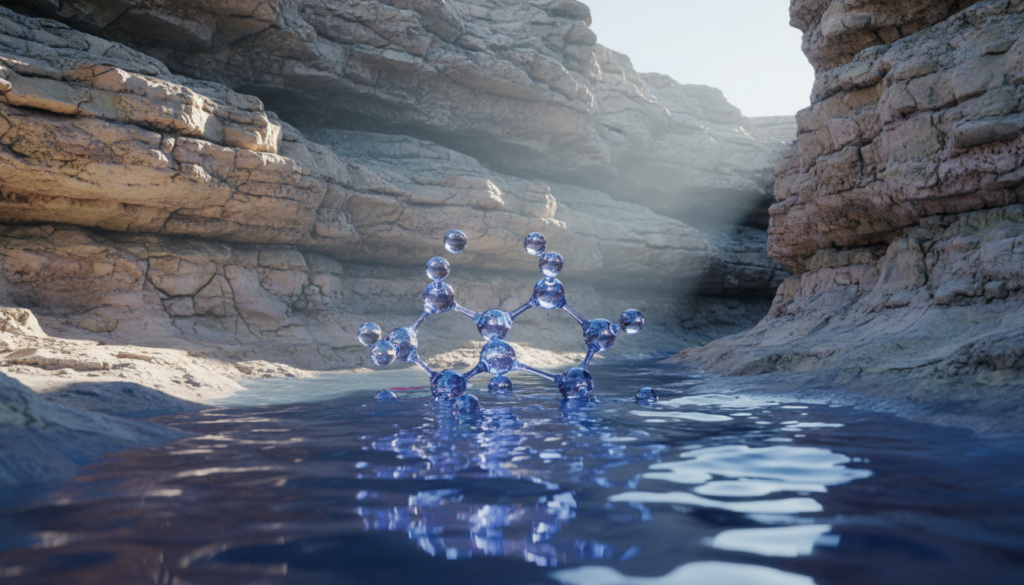
Alberta’s solution is Direct Lithium Extraction (DLE). DLE is not a single technology, but rather a class of chemical engineering processes designed to rapidly and selectively extract lithium ions from complex brines, returning the lithium-depleted water back to the aquifer.
How DLE Works
While several proprietary DLE technologies exist, the projects advancing near Olds predominantly utilize Ion Exchange or Adsorption methodologies. The mechanics of this process can be broken down into specific operational phases:
- Brine Production: Deep wells, often utilizing existing oilfield drilling techniques, pump hot brine from the Leduc formation to the surface.
- Pre-Treatment: The brine is filtered to remove remaining trace hydrocarbons, hydrogen sulfide, and other suspended solids that could foul the extraction equipment.
- Selective Extraction: The clean brine flows through massive columns packed with a proprietary sorbent material. This sorbent acts like a chemical sieve, specifically designed to bind only to lithium ions while allowing sodium, calcium, and magnesium to pass through freely.
- Elution (Washing): Once the sorbent is saturated with lithium, the brine flow is diverted. A chemical wash—often a weak acid or fresh water—is flushed through the column to strip the lithium from the sorbent, creating a highly concentrated lithium chloride solution.
- Reinjection: The lithium-depleted brine is immediately pumped back down into the Leduc aquifer via separate injection wells, maintaining reservoir pressure and ensuring zero net loss to the water table.
The Transition from Pilot to Commercial Scale
The fundamental science of DLE is proven. Several companies operating in the Olds region have successfully built and operated pilot plants, proving that their sorbents can extract lithium at high recovery rates (often exceeding 90%) from Leduc brine. However, the current challenge is scale. Transitioning from a pilot plant processing a few cubic meters of brine per day to a commercial facility processing tens of thousands of cubic meters daily introduces non-linear engineering complexities. Fluid dynamics, sorbent degradation rates, and thermal management all behave differently at a massive commercial scale.
The Economics of Extraction: Breaking Down the $2.5B+ Capital Requirement
The barrier to entry for commercial lithium production in Alberta is extraordinarily high. Unlike a software startup or a light manufacturing facility, a commercial DLE operation is a heavy industrial megaproject. Economic models and preliminary feasibility studies for a commercial facility producing 20,000 to 30,000 tonnes of Lithium Hydroxide Monohydrate (LHM) annually indicate capital expenditure (CapEx) requirements exceeding $2.5 billion CAD.
Understanding this capital requirement is crucial for investors and engineers evaluating the viability of Alberta’s lithium sector. The costs are distributed across several massive infrastructure domains:
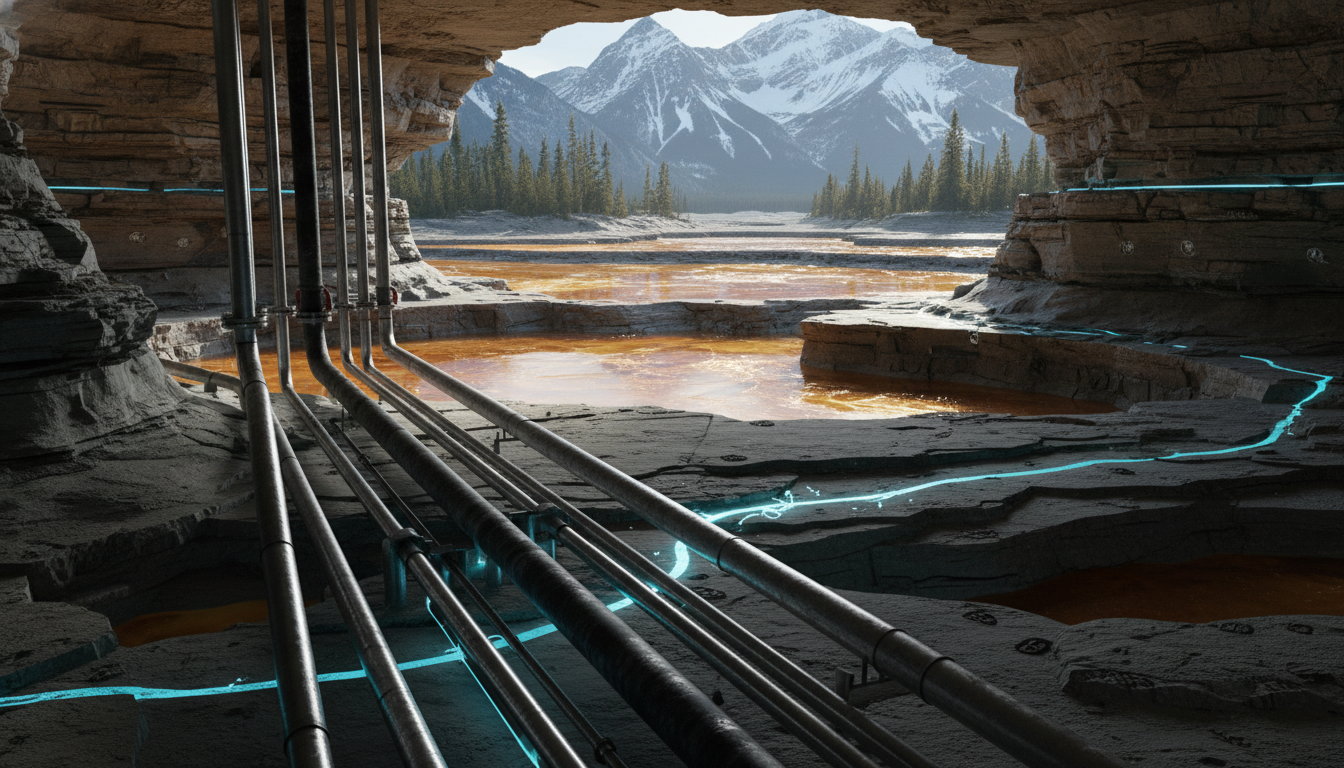
- The Wellfield and Gathering System (~25% of CapEx): A commercial facility requires an extensive network of large-diameter production and injection wells. Because the lithium concentration in Alberta brine is relatively low compared to South American salars, operators must move astronomical volumes of water to yield commercial quantities of lithium. This requires drilling dozens of deep wells, installing high-capacity submersible pumps, and building a sprawling network of insulated, corrosion-resistant pipelines to transport the hot brine to the central processing facility.
- The Direct Lithium Extraction (DLE) Plant (~35% of CapEx): This is the technological heart of the operation. The capital is required for the massive contactor columns, the proprietary sorbent inventory (which represents a significant upfront cost), and the complex piping, valving, and control systems required to manage the continuous flow of corrosive brine.
- Refining and Upgrading Facilities (~25% of CapEx): The output of a DLE plant is typically a lithium chloride solution. To sell to battery manufacturers, this must be upgraded and refined into battery-grade Lithium Carbonate or Lithium Hydroxide. This requires building a sophisticated chemical plant on-site, involving reverse osmosis, mechanical vapor recompression (MVR) evaporators, crystallizers, and drying equipment.
- Infrastructure, Utilities, and Contingency (~15% of CapEx): These facilities require massive amounts of firm electrical power and natural gas. Upgrading local power grids, building substations, and constructing water management facilities add significant costs. Furthermore, given the novel nature of commercial DLE, a heavy financial contingency must be maintained to address unforeseen engineering challenges during construction.
The “Clean Premium”: Why Alberta Lithium Commands Attention
Given the massive capital requirements and the lower grade of the brine, why is billions of dollars of investment capital targeting Alberta? The answer lies in the evolving economics of the global supply chain and the emergence of the “Clean Premium.”
Automakers and battery manufacturers are under intense regulatory and consumer pressure to decarbonize their entire supply chains. A battery is only as “green” as the minerals inside it. Traditional lithium extraction carries heavy environmental baggage. Hard rock mining is carbon-intensive and scars the landscape, while evaporation ponds consume critical freshwater resources in arid regions.
Alberta’s DLE projects offer a fundamentally different environmental profile, which educational analysts refer to as ESG (Environmental, Social, and Governance) superiority:
- Minimal Land Footprint: A commercial DLE facility and its associated wellpads utilize roughly 3% of the land required for an equivalent-yield evaporation pond operation.
- Water Conservation: Because the brine is drawn from deep, non-potable saline aquifers and 100% of the depleted brine is reinjected, DLE has virtually zero impact on freshwater tables or agricultural water supplies.
- Lower Carbon Intensity: By utilizing Alberta’s increasingly decarbonized electrical grid, integrating carbon capture technologies, and utilizing the natural geothermal heat of the brine to offset heating costs, the carbon footprint per tonne of lithium produced can be significantly lower than global averages.
Furthermore, under the United States’ Inflation Reduction Act (IRA), electric vehicles are only eligible for massive consumer tax credits if a certain percentage of the battery’s critical minerals are extracted or processed in the US or a country with which the US has a free trade agreement. As a tightly integrated free-trade partner, Alberta lithium is highly strategic for the North American auto industry. This geopolitical advantage, combined with the superior environmental profile, allows Alberta operators to negotiate long-term offtake agreements with automakers at a premium price, insulating them against the volatile spot-market fluctuations of global commodity prices.
Technical Risks in Subsurface Extraction
While the economic thesis is strong, the educational mandate of this analysis requires a rigorous assessment of the technical risks. The $2.5 billion capital requirement is entirely dependent on the long-term, uninterrupted performance of both the surface technology and the subsurface geology.
Reservoir Management and Brine Dilution
The most significant long-term risk to Olds-based DLE projects is reservoir performance. To produce 20,000 tonnes of lithium annually, operators must pump hundreds of thousands of cubic meters of brine every day. The depleted brine is reinjected to maintain the immense pressure of the aquifer.
The critical engineering challenge is preventing “short-circuiting.” If the reinjection wells are placed too close to the production wells, or if the subsurface rock features highly permeable fracture corridors, the lithium-depleted brine could flow directly back to the production wells. Over a 20-year project lifespan, this would progressively dilute the concentration of the incoming brine, drastically reducing the efficiency of the DLE plant and destroying the project’s economics. Rigorous 3D seismic modeling, tracer testing, and dynamic reservoir simulation are required to design wellfields that sweep the aquifer efficiently without premature breakthrough.
Scaling Up Sorbent Durability
The proprietary sorbents used in DLE are chemical marvels, but they must operate in a brutal environment. Leduc brine is hot (often exceeding 70 degrees Celsius), highly saline, and contains trace amounts of heavy metals and dissolved gases. Over thousands of extraction and elution cycles, the sorbent beads can physically degrade, foul, or lose their binding capacity.
In a laboratory, replacing a few kilograms of degraded sorbent is trivial. In a commercial facility, the sorbent inventory represents tens of millions of dollars of capital. If the sorbent degrades 5% faster than modeled, the operational expenditures (OpEx) of the facility will skyrocket. Engineers must design robust pre-treatment systems to protect the sorbent and develop regeneration protocols to extend its operational lifespan.
The Road Ahead for Investors and Engineers
The development of the Leduc aquifer represents a generational pivot for the Alberta economy. It is an opportunity to leverage a century of world-class drilling, pipeline, and fluid management expertise toward the critical minerals sector. The transition from pilot testing to $2.5 billion commercial operations near Olds will not be without technical hurdles or financial friction.
However, the mechanics of long-term growth are firmly established. By mastering Direct Lithium Extraction, managing the complexities of deep saline reservoirs, and capitalizing on the “Clean Premium” demanded by the North American supply chain, Alberta is engineering a blueprint for the future of sustainable mining. For the technical engineers designing the wellfields and the investors underwriting the capital, the “$1T Brine” is no longer just a geological curiosity; it is the foundation of Alberta’s next great industrial era.
Sources and References
- Alberta Energy Regulator (AER): Subsurface Data and Leduc Formation Geological Reports.
- Government of Alberta: Critical Minerals Strategy and Economic Diversification Framework.
- Natural Resources Canada (NRCan): Direct Lithium Extraction (DLE) Technology Assessments.
- International Energy Agency (IEA): Global EV Outlook and Critical Mineral Supply Chain Analysis.