


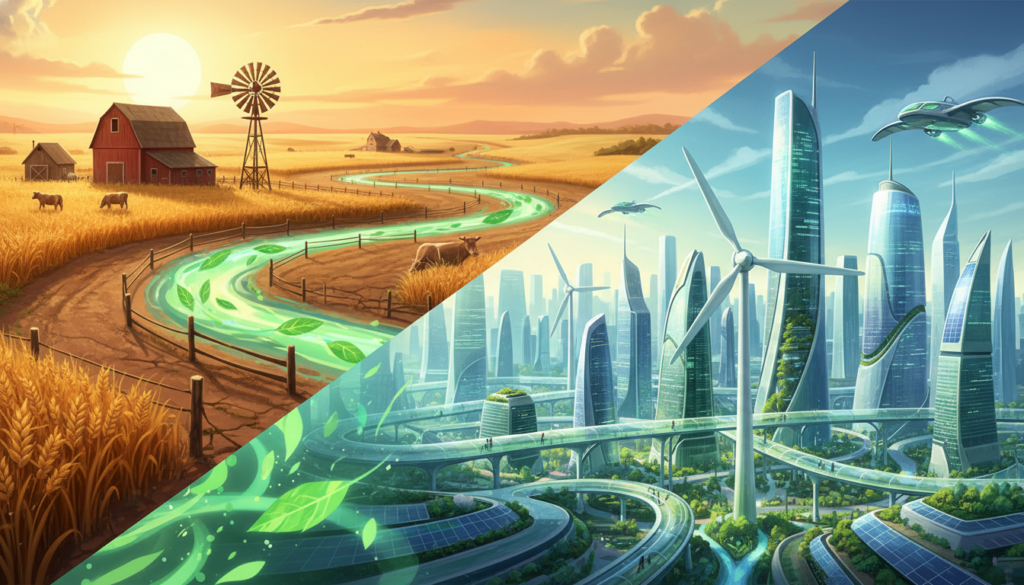
For generations, the visual identity of Alberta has been defined by two distinct, parallel horizons: the endless oceans of vivid yellow canola swaying in the prairie wind, and the towering metal infrastructure of the energy sector reaching into the sky. Historically, these two worlds operated independently. Agriculture fed the world, while the energy sector powered it. However, an unprecedented economic and technological convergence is currently underway across the Canadian Prairies. Driven by global decarbonization mandates and a pressing need to future-proof the provincial economy, Alberta is aggressively pioneering the development of Sustainable Aviation Fuel, colloquially known as SAF.
This is not merely an environmental initiative; it is a massive industrial pivot. By leveraging its deeply rooted agricultural heritage and combining it with decades of world-class petrochemical engineering expertise, Alberta is positioning itself as a premier global hub for bio-aviation fuels. The transition from extracting subterranean hydrocarbons to harvesting biological lipids for jet propulsion represents a masterclass in economic evolution. For potential investors, technical engineers, business owners, and future residents, understanding the mechanics of this transformation is crucial. This comprehensive analysis will explore the chemical processes, the agricultural economics, the infrastructural investments, and the strategic corporate partnerships that are actively turning prairie crops into low-carbon jet fuel, ensuring that the aviation hubs of Calgary and beyond can meet their stringent 2030 emission targets.
The following economic facts are based on current Alberta provincial data and market trends.
The Mechanics of Sustainable Aviation Fuel (SAF)
To fully grasp the economic potential of Alberta’s aerospace pivot, one must first understand the fundamental science and engineering behind Sustainable Aviation Fuel. For the technical engineers and energy investors observing this space, SAF is not a theoretical concept; it is a highly engineered, commercially viable reality.
What Exactly is SAF?
Sustainable Aviation Fuel is a liquid, clean substitute for conventional fossil-based jet fuel (Jet A/Jet A-1). Unlike traditional aviation fuel, which is refined from crude oil extracted from the ground, SAF is produced from sustainable resources, known as feedstocks. These feedstocks can include waste oils, agricultural residues, municipal solid waste, and, crucially for Alberta, purpose-grown lipid-rich crops like canola and camelina.
The most critical characteristic of SAF is that it is a drop-in fuel. This means it is chemically identical to conventional jet fuel. It can be blended with traditional jet fuel, transported through existing pipeline infrastructure, stored in the same airport fuel farms, and pumped into the same aircraft engines without requiring any modifications to the aircraft or the fueling infrastructure. This drop-in capability is the linchpin of its economic viability, as it circumvents the need for trillions of dollars in global infrastructure overhauls.
The HEFA Process Explained
While there are several technological pathways to produce SAF, the most commercially mature and relevant process for Alberta’s current agricultural landscape is the Hydroprocessed Esters and Fatty Acids pathway, commonly referred to as the HEFA process. Understanding this process illuminates why Alberta’s specific blend of agricultural and refining expertise is so highly advantageous.
The HEFA process involves several highly technical steps:
- Feedstock Pre-treatment: Raw canola oil contains impurities, water, and free fatty acids that can damage refining equipment. The oil must first be rigorously cleaned and purified.
- Deoxygenation: The purified biological oil (triglycerides) is introduced to a reactor alongside hydrogen gas and a proprietary catalyst. Under high heat and pressure, the oxygen atoms are stripped from the biological molecules, producing water, carbon dioxide, and straight-chain hydrocarbons (paraffins).
- Isomerization and Cracking: The resulting straight-chain hydrocarbons have poor cold-flow properties; they would freeze at the high altitudes where commercial jets operate. Through a secondary catalytic process called isomerization, these straight chains are branched, significantly lowering their freezing point. Simultaneously, hydrocracking breaks longer carbon chains into the specific lengths required for jet fuel (typically C8 to C16).
- Fractionation: Finally, the mixture is distilled, separating the sustainable aviation fuel from lighter byproducts like renewable diesel and renewable naphtha.
This complex chemical ballet requires vast amounts of hydrogen, sophisticated catalytic reactors, and deep engineering knowledge—assets that Alberta’s existing energy sector possesses in abundance.
Alberta’s Agricultural Advantage: The Canola Powerhouse
The foundation of Alberta’s SAF ambitions rests in the fertile soil of the prairies. To produce biological jet fuel at a commercial scale, a massive, reliable, and sustainable source of feedstock is required. This is where Alberta’s historical agricultural strength becomes its greatest future asset.
Historical Context of Prairie Agriculture
Since the late nineteenth century, the Canadian Prairies have been recognized as one of the world’s most productive agricultural regions. The unique combination of long summer daylight hours, fertile topsoils, and a climate that naturally suppresses many agricultural pests has made Alberta a global leader in grain and oilseed production. While wheat was the historical king of the prairies, the latter half of the twentieth century saw the meteoric rise of canola—a crop specifically bred in Canada for its high oil content and nutritional profile. Today, canola is the economic engine of prairie agriculture, and it is the primary feedstock driving the initial wave of SAF production in the region.
Yield Economics and Feedstock Availability
For business owners and investors analyzing the supply chain, the sheer volume of Alberta’s agricultural output is staggering. The province consistently produces millions of metric tonnes of canola annually. However, raw canola seed cannot be pumped into a refinery; it must first be crushed to extract the oil.
Recognizing the impending boom in renewable fuels, the agricultural sector is undergoing a massive expansion in its crushing capacity.
- Capital Influx in Ag-Processing: Billions of dollars are currently being deployed to build state-of-the-art canola crushing facilities across Saskatchewan and Alberta.
- Volume Expansion: These new facilities are designed to process millions of additional tonnes of seed, dramatically increasing the regional supply of raw canola oil.
- Strategic Proximity: By co-locating crushing facilities near major rail lines and future bio-refineries, the logistics costs and the carbon footprint of transporting the feedstock are minimized, improving the overall economic efficiency of the supply chain.
The “Food vs. Fuel” Debate and Sustainable Farming
A critical educational component of understanding the SAF economy is addressing the “food versus fuel” debate. Skeptics often question whether diverting agricultural land to fuel production will inflate global food prices. Alberta’s approach to this challenge is multifaceted and deeply rooted in modern agronomy.
Firstly, the processing of canola yields two primary products: canola oil and canola meal. While the oil is increasingly directed toward renewable fuel production, the protein-rich canola meal remains a vital component of the global livestock feed supply chain. Therefore, increased crushing for fuel simultaneously increases the supply of animal feed, supporting the broader agricultural ecosystem.
Secondly, Alberta’s farmers are global pioneers in sustainable and regenerative agricultural practices. To maximize the value of their crops in the SAF market, farmers are adopting techniques that lower the carbon footprint of their operations:
- Zero-Till Farming: By eliminating traditional plowing, farmers leave the soil structure intact, preventing the release of sequestered carbon into the atmosphere and improving moisture retention.
- Precision Agriculture: Utilizing GPS-guided tractors and satellite imagery, farmers apply fertilizers and pesticides only exactly where and when they are needed, drastically reducing the chemical input and the associated greenhouse gas emissions.
- Cover Cropping and Novel Oilseeds: Beyond traditional canola, agricultural researchers are developing novel, non-food oilseed crops, such as camelina and carinata. These crops can often be grown on marginal lands or used as cover crops during off-seasons, generating additional feedstock for SAF without displacing primary food crops.
The Refining Renaissance: Building the Infrastructure
Having secured the agricultural feedstock, the next phase in the economic value chain is refining. Alberta’s Industrial Heartland, situated just outside of Edmonton, is the epicenter of this refining renaissance. This region, traditionally known for upgrading bitumen from the oil sands, is rapidly transforming into a globally significant hub for low-carbon fuel manufacturing.
Transitioning from Fossil Fuels to Bio-Refineries
The transition from fossil fuels to bio-fuels is not a simple switch; it requires monumental feats of engineering and massive capital deployment. Alberta is witnessing two distinct strategies in this infrastructure build-out: retrofitting and greenfield development.
Retrofitting Existing Assets: Some traditional petroleum refiners are adapting their existing infrastructure to co-process biological feedstocks alongside crude oil. By modifying their hydrotreaters and adjusting their catalytic processes, these refineries can produce a blended fuel that lowers their overall carbon output. This approach allows for a faster time-to-market and leverages billions of dollars of already sunk capital.
Greenfield Bio-Refineries: More significantly, entirely new, purpose-built renewable diesel and SAF refineries are being constructed from the ground up. These greenfield projects are optimized exclusively for biological feedstocks. They are marvels of modern engineering, designed to maximize the yield of aviation fuel from every drop of canola oil while capturing and recycling waste heat and water to ensure the lowest possible environmental impact.
Capital Expenditures and Investment Landscape
For the investment community, the development of SAF infrastructure represents one of the most capital-intensive growth sectors in the Canadian economy. The construction of a commercial-scale SAF refinery requires capital expenditures (CAPEX) routinely exceeding one billion dollars.
This level of investment is driving a profound economic multiplier effect across the province:
- Engineering and Construction Jobs: Thousands of highly skilled tradespeople, pipefitters, electricians, and civil engineers are required to construct these facilities, providing a massive boost to the local labor market.
- Technology and Innovation Hubs: The demand for advanced process control systems, safety monitoring, and environmental compliance software is stimulating the growth of local technology firms and specialized engineering consultancies.
- Long-Term Operational Employment: Once operational, these refineries provide stable, high-paying, long-term employment for chemical engineers, plant operators, and logistics coordinators.
Engineering Challenges in Scaling SAF Production
Despite the momentum, the educational narrative must acknowledge the profound engineering challenges inherent in scaling SAF production.
The primary bottleneck is the immense requirement for hydrogen. In the HEFA process, hydrogen is the active agent that strips oxygen from the biological oils. Currently, most industrial hydrogen is “grey hydrogen,” produced from natural gas in a process that emits significant carbon dioxide. If a SAF refinery uses grey hydrogen, the carbon footprint of the resulting jet fuel remains unacceptably high.
Therefore, the success of Alberta’s SAF industry is inextricably linked to the simultaneous development of a clean hydrogen economy. Refineries must secure access to “blue hydrogen” (where carbon emissions from production are captured and stored underground) or “green hydrogen” (produced via the electrolysis of water using renewable electricity). Alberta’s parallel investments in carbon capture, utilization, and storage (CCUS) infrastructure are thus not separate initiatives, but vital prerequisites for the economic viability of the SAF sector.
Calgary’s Aviation Hub: The Demand Side of the Equation
While agriculture provides the supply and engineering provides the transformation, the economic equation of SAF is ultimately driven by demand. Calgary, Alberta’s largest city and a major North American corporate hub, is the demand epicenter. As the headquarters for major Canadian airlines, Calgary is where the global mandates for decarbonization meet the local realities of fleet management and fuel procurement.
The 2030 Emission Targets
The global aviation industry is under immense pressure to decarbonize. The International Civil Aviation Organization (ICAO) has established the Carbon Offsetting and Reduction Scheme for International Aviation (CORSIA), which mandates airlines to offset growth in emissions. Furthermore, major airlines headquartered in Calgary, alongside their global peers, have made aggressive, public pledges to achieve net-zero carbon emissions by 2050, with critical interim targets set for 2030.
Given that commercial battery-electric aircraft and hydrogen-combustion engines remain decades away from viability for long-haul flights, SAF is currently the only technologically feasible pathway for airlines to meaningfully reduce their carbon emissions within the 2030 timeframe. This creates a massive, guaranteed, and inelastic demand for low-carbon jet fuel.
Strategic Partnerships: Airlines and Agri-Business
The capital required to build a billion-dollar bio-refinery cannot be secured on speculation alone. Lenders and institutional investors require certainty that the fuel produced will be purchased at a profitable price. This necessity has birthed a new era of strategic corporate partnerships that bridge the historical divide between the boardroom and the barnyard.
Airlines are entering into massive, multi-year offtake agreements with SAF producers. An offtake agreement is a binding contract in which an airline agrees to purchase a specific volume of SAF at a predetermined pricing structure over a long period, often five to ten years.
The mechanics of these agreements are vital to the long-term growth of the sector:
- De-risking Investment: By guaranteeing a buyer for the fuel, offtake agreements provide the revenue certainty required for energy companies to secure project financing from major banks.
- Price Discovery: These contracts help establish a market price for the “green premium”—the cost difference between traditional fossil jet fuel and SAF.
- Supply Chain Integration: We are witnessing unprecedented collaboration where airlines, fuel refiners, and agricultural cooperatives are sharing data to optimize the entire lifecycle of the fuel, from the specific seed varieties planted by farmers to the fuel efficiency protocols used by pilots.
The Economic Multiplier Effect on the Local Economy
The integration of Calgary’s aviation demand with northern Alberta’s refining capacity and rural Alberta’s agricultural output creates a closed-loop economic ecosystem.
When a Calgary-based airline purchases conventional jet fuel imported from overseas, the economic value leaves the province. Conversely, when that same airline purchases SAF refined in Edmonton from canola grown in Lethbridge, the capital circulates internally. It pays the wages of the refinery operator, it supports the equipment purchases of the local farmer, and it generates tax revenue that funds provincial infrastructure. This localization of the aviation fuel supply chain represents a profound structural strengthening of the Alberta economy, insulating it from global oil price shocks and geopolitical supply chain disruptions.
Policy, Carbon Markets, and Long-Term Growth Mechanics
The final, and perhaps most complex, pillar of the SAF economy is the regulatory environment. For business owners and economic analysts, understanding the policy frameworks and carbon markets is essential, as these mechanisms are what ultimately bridge the price gap between expensive SAF and cheap conventional jet fuel.
Navigating the Regulatory Framework
Governments play a vital role in creating the initial market conditions for nascent technologies. In Canada, the primary regulatory driver is the Clean Fuel Regulations (CFR). The CFR mandates that producers and importers of liquid fossil fuels must gradually reduce the carbon intensity of the fuels they sell.
To achieve compliance, traditional fuel suppliers must either blend low-carbon fuels (like SAF and renewable diesel) into their product mix or purchase compliance credits from companies that produce these clean fuels. This regulatory architecture effectively creates a secondary revenue stream for SAF producers. They earn money not only by selling the physical liquid fuel to airlines but also by selling the environmental attributes (the carbon credits) to traditional fossil fuel companies that need to meet their regulatory obligations.
Furthermore, capital investment is heavily influenced by federal and provincial tax policy. Investment Tax Credits (ITCs) specifically targeted at clean technology manufacturing and carbon capture are crucial levers that improve the return on investment for building bio-refineries in Alberta, ensuring the province remains competitive against heavily subsidized jurisdictions like the United States under its Inflation Reduction Act.
Carbon Intensity (CI) Scoring and Pricing Economics
To understand how carbon credits are generated, one must understand Carbon Intensity (CI) scoring. This is a vital concept for the educational audience, as it dictates the underlying economics of the entire industry.
Carbon Intensity is a measure of the total greenhouse gas emissions associated with producing and consuming a fuel, measured across its entire lifecycle—from the moment the seed is planted to the moment the fuel is burned in the jet engine. This is known as a “well-to-wake” or “field-to-wake” analysis.
The lower the CI score of the final SAF, the more carbon credits it generates, and therefore, the more valuable it is. This creates a powerful economic incentive to optimize every single step of the supply chain:
- The Farmer’s Role: If a farmer uses a solar-powered irrigation system and practices zero-till agriculture, the canola they produce has a lower CI score.
- The Transporter’s Role: If the canola is transported to the refinery via a hydrogen-powered locomotive rather than a diesel truck, the CI score drops further.
- The Refiner’s Role: If the refinery is powered by wind energy and utilizes blue hydrogen with carbon capture, the final jet fuel achieves an exceptionally low CI score.
This meticulous accounting of carbon forces total system efficiency and rewards innovation at every level of the Alberta economy.
The Future Pathway: E-Fuels and Power-to-Liquid
While the current narrative is dominated by the “Canola to Cockpit” pathway, forward-looking engineers and investors are already analyzing the next horizon: synthetic fuels, also known as e-fuels or Power-to-Liquid (PtL) technologies.
Looking beyond 2040, there are physical limits to how much agricultural land can be dedicated to fuel feedstock. E-fuels bypass biology entirely. By taking captured carbon dioxide (from industrial emissions or direct air capture) and combining it with green hydrogen (produced via renewable electricity), engineers can synthesize jet fuel out of thin air and water.
Alberta is uniquely positioned to lead this future phase as well. The province possesses vast, untapped wind and solar potential, alongside the geological formations required for massive carbon sequestration. The engineering expertise currently being honed on biological SAF refineries will seamlessly transfer to the synthetic fuel plants of the future, ensuring that Alberta’s aerospace pivot is not a temporary boom, but a permanent, multi-generational economic foundation.
Conclusion: A Unified Horizon
The development of Sustainable Aviation Fuel in the Canadian Prairies is a testament to the power of industrial evolution. By weaving together the historical strength of its agricultural sector, the unmatched engineering prowess of its energy industry, and the forward-looking demands of its aviation hub, Alberta is crafting a resilient, future-proof economy.
This transition from canola fields to commercial cockpits is not without its engineering hurdles and massive capital requirements. Yet, the mechanics of long-term growth are firmly in place. Through strategic corporate partnerships, rigorous carbon intensity tracking, and a commitment to sustainable agronomy, the province is successfully transforming biological potential into aeronautical reality. For those looking to invest, work, or build businesses in the new energy economy, the skies over Alberta have never looked more promising.
Sources and References
- Alberta Ministry of Agriculture and Irrigation: Data regarding historical canola yields, oilseed crushing capacity expansion forecasts, and provincial agricultural land utilization metrics.
- International Air Transport Association (IATA): Global aviation emission reduction targets, Sustainable Aviation Fuel (SAF) technical specifications, and drop-in fuel integration guidelines.
- Government of Canada – Environment and Climate Change: Regulatory frameworks surrounding the Clean Fuel Regulations (CFR), carbon pricing mechanisms, and lifecycle carbon intensity (CI) scoring methodologies.
- Alberta Industrial Heartland Association: Capital expenditure reports, greenfield and brownfield refinery development updates, and regional hydrogen infrastructure planning.
- Aviation Environment Federation: Analysis of corporate offtake agreements, airline net-zero pledges, and the economic modeling of the green premium in aviation fuels.