


The vast, rugged landscapes of Alberta have long been defined by their untamed beauty and their extraction economies. Historically, to live in the deep foothills of the Rocky Mountains or beside a secluded, crystalline northern lake meant accepting a life of isolation. It meant trading connectivity and modern convenience for the serenity of nature. However, a profound technological paradigm shift has rewritten the geographical rules of economic productivity. The wilderness is no longer a place to disconnect; for a growing class of high-earning professionals, it has become the ultimate place to log in.
Welcome to the era of the “Work-from-Lodge” effect. Driven by the unprecedented ubiquity of low-earth-orbit satellite internet, remote regions across Alberta are undergoing a rapid and fascinating economic metamorphosis. The rustic cabins and off-grid retreats that once served as weekend hunting lodges or summer getaways are being retrofitted into high-tech, hyper-connected command centers. This transformation is giving rise to a new demographic: the rural elite. These tech nomads, remote executives, and digital entrepreneurs are bringing high-density urban capital into low-density rural environments, fundamentally altering local service industries, real estate markets, and the very fabric of Alberta’s rural communities. This comprehensive analysis will explore the mechanics, the economic multipliers, and the long-term implications of this digital migration.
The following economic facts are based on current Alberta provincial data and market trends.
The Technological Catalyst: The Low-Earth-Orbit Revolution
To understand the economic shifts occurring in rural Alberta, one must first understand the underlying infrastructure that made it possible. The concept of satellite internet is not new, but the technology delivering it has undergone a revolutionary upgrade, fundamentally changing its utility for professional applications.
Legacy Systems vs. The Low-Earth-Orbit Advantage
Historically, rural internet in Alberta relied on geostationary satellites. These legacy systems orbit the Earth at an altitude of approximately 35,000 kilometers. While they provide wide coverage, the sheer physical distance the signal must travel creates significant latency—often exceeding 600 milliseconds. For a professional attempting to conduct a seamless video conference, execute high-frequency financial trades, or collaborate on complex cloud-based engineering models, this delay was an insurmountable barrier. Geostationary internet relegated remote workers to basic email and slow web browsing.
Low-earth-orbit networks operate on a completely different physical principle. By deploying constellations of thousands of small satellites at altitudes ranging from 300 to 1,200 kilometers, the signal distance is drastically reduced.
Key Technical Advantages of Low-Earth-Orbit Networks:
- Ultra-Low Latency: Ping times have dropped from 600 milliseconds to between 20 and 40 milliseconds, rivaling urban fiber-optic connections.
- High Bandwidth Capacity: Download speeds routinely exceed 150 megabits per second, with commercial tiers offering gigabit speeds, enabling massive data transfers required by tech and media professionals.
- Unobstructed Line of Sight: Because these constellations consist of thousands of moving nodes, a user in a deep Alberta valley or surrounded by dense boreal forest can maintain a stable connection, provided they have a relatively clear view of the sky overhead.
The 2026 Ubiquity Milestone
By the year 2026, the deployment of these satellite constellations reached a critical mass. The infrastructure transitioned from a novel beta-testing phase to an ubiquitous, reliable utility. For the Alberta economy, this was a watershed moment. The geographical tether that bound high-earning knowledge workers to urban centers like Calgary, Edmonton, Toronto, or even Silicon Valley was completely severed.
Defining the “Zoom Town”: Alberta’s New Demographics
The immediate consequence of ubiquitous, high-speed remote connectivity was the birth of the “Zoom town.” Unlike traditional boomtowns built around a localized resource like an oil deposit or a coal mine, a Zoom town is built around lifestyle and landscape, powered by decentralized digital incomes.
The Anatomy of the “Work-from-Lodge” Phenomenon
The “Work-from-Lodge” effect describes the socioeconomic process where high-income professionals relocate to highly desirable, remote natural environments without sacrificing their urban earning power. These individuals are not seeking local employment; they are importing external wealth into the local economy.
They are purchasing large acreages in the foothills, upgrading lakeside cabins, and demanding urban-level amenities in environments that previously only supported basic rural services. The lodge is no longer a place of leisure; it is a primary residence and a corporate outpost.
Profiling the New Rural Elite
Understanding the economic impact requires profiling the demographic driving it. The new rural elite are distinct from previous generations of wealthy rural landowners who were typically tied to legacy agriculture or resource extraction.
Primary Demographics of the Tech Nomad:
- Senior Technology Professionals: Software architects, cybersecurity experts, and data scientists who require massive bandwidth but zero physical office presence.
- Financial and Market Analysts: Day traders, venture capitalists, and private equity managers who rely on ultra-low latency connections to monitor global markets from the tranquility of the Rockies.
- Creative and Media Executives: Film editors, digital marketers, and content creators who transfer terabytes of data daily.
- Consultants and Remote Executives: C-suite leaders who manage global teams via high-definition video conferencing.
Regional Transformations: Case Studies in Gentrification
The impact of this demographic shift is not uniform across the province; it is highly concentrated in areas offering premium natural amenities.
The Crowsnest Pass Renaissance:
Historically a coal-mining region, the Crowsnest Pass has seen a massive influx of remote workers. Drawn by the rugged mountains and lower initial property prices compared to Canmore or Banff, tech nomads have transformed the area. Historic miner cottages have been gutted and retrofitted with smart-home technology, solar arrays, and satellite uplinks.
The Sylvan Lake and Gull Lake Year-Round Shift:
Previously defined by massive seasonal population swings, central Alberta lakes are becoming year-round tech hubs. Summer cabins are being winterized and expanded. The local economy, once reliant on a brief three-month summer tourist window, is now supported by a permanent, high-income tax base.
The Deep Foothills (Nordegg and Bragg Creek):
Areas that border Crown land and offer immediate access to backcountry trails are experiencing unprecedented demand. Here, the “Work-from-Lodge” aesthetic is most pronounced, with multi-million-dollar modern rustic estates being constructed entirely off the traditional power grid, utilizing advanced battery storage and satellite connectivity.
Economic Mechanics: The Multiplier Effect in Rural Alberta
When a software engineer earning a Silicon Valley salary relocates to a remote Alberta town of 800 people, the economic ripples are profound. This is known as the local multiplier effect, and in the context of the “Work-from-Lodge” trend, it is reshaping rural service industries.
The Influx of High-Earning Capital
The fundamental economic driver is the importation of external capital. Traditional rural economies circulate money internally or rely on exporting physical goods (beef, timber, oil). The Zoom town economy imports digital salaries. This capital is then injected directly into the local micro-economy through consumption, renovation, and services.
The Transformation of Local Service Industries
The presence of the new rural elite creates a sudden and intense demand for goods and services that previously had no market in these remote areas. Local entrepreneurs who adapt to these new demands are experiencing unprecedented growth.
Key Sectors Experiencing Hyper-Growth:
- High-End Construction and Contracting: The demand for custom renovations, winterization of seasonal cabins, and the construction of high-end modular homes has skyrocketed. Contractors who specialize in modern, energy-efficient designs and smart-home integrations are booked years in advance.
- Off-Grid Infrastructure Specialists: With many new residents purchasing raw land outside municipal utility zones, there is a massive market for businesses installing commercial-grade solar arrays, advanced lithium-ion battery banks, geothermal heating systems, and, crucially, satellite mounting and networking hardware.
- Artisanal and Premium Retail: The local general store is evolving. While still selling basic hardware and groceries, these spaces are expanding to include artisanal coffee, organic produce, premium imported wines, and high-end outdoor gear.
- Specialized Health and Wellness: The influx of urbanites brings urban wellness expectations. Remote towns are seeing the opening of specialized yoga studios, massage therapy clinics, and high-end fitness centers.
- Concierge and Logistics Services: Remote living comes with logistical challenges. A new industry of rural concierge services has emerged, offering grocery delivery from distant urban centers, property management for when the owners travel, and specialized winter road clearing.

The “Latte and Lumber” Economic Indicator
Economic analysts monitoring Alberta’s rural transition have playfully coined the “Latte and Lumber” indicator. This metric tracks the simultaneous rise in demand for premium consumer goods (represented by the artisanal latte) and high-end building materials (represented by premium lumber and composite decking). When a remote hardware store begins stocking espresso machines alongside chainsaws, it is a definitive signal that the “Work-from-Lodge” gentrification is fully underway.
Infrastructure and Real Estate: The Gentrification of the Wilderness
The collision between high-tech wealth and limited rural real estate has created a volatile and highly lucrative property market. However, this rapid gentrification brings significant infrastructural and social challenges.
Property Value Surges and the “Cabin Premium”
Real estate valuation in rural Alberta has been fundamentally rewritten. Historically, the value of remote land was calculated based on its agricultural yield, timber potential, or proximity to paved highways. Today, a new metric dominates: the “Cabin Premium.”
The Cabin Premium is the exponential increase in property value driven by natural aesthetics, privacy, and a clear view of the sky for satellite connectivity. A parcel of land situated on a rocky outcrop with no agricultural value but boasting a panoramic view of the Rockies and seamless low-earth-orbit connectivity is now worth significantly more than prime, flat farmland.
Real Estate Market Dynamics:
- Inventory Scarcity: Because the most desirable land is often bordered by protected provincial or national parks, the supply of prime “lodge” real estate is strictly capped, driving bidding wars.
- Cash Purchases: Many tech nomads, having sold highly appreciated urban real estate in markets like Vancouver or Toronto, are purchasing rural Alberta properties entirely in cash, bypassing local mortgage friction and accelerating price increases.
- The Death of the “Starter Cabin”: The rustic, uninsulated hunting shack that once served as an affordable entry point for local recreation is disappearing, bought up solely for the land value and replaced with multi-million-dollar eco-lodges.
Upgrading the Grid: Power, Water, and Roads
While satellite internet solves the data problem, physical infrastructure remains a critical bottleneck. The new rural elite expect reliable power, clean water, and accessible roads, placing immense pressure on rural municipalities.
Infrastructural Challenges:
- The Power Deficit: High-tech lodges require significant electricity to power server racks, multiple high-definition monitors, electric vehicle chargers, and smart-home climate control. Traditional rural power grids, designed for low-draw agricultural use, are struggling to meet this demand, leading to a surge in private micro-grid installations.
- Road Maintenance: Remote workers still require physical deliveries—Amazon packages, specialized groceries, and construction materials. The increased traffic on rural gravel roads necessitates higher municipal maintenance budgets, particularly for winter snow clearing.
- Emergency Services: As populations in remote areas increase and age, the strain on rural volunteer fire departments and remote emergency medical services grows. A tech executive having a cardiac event in a deep-woods lodge expects rapid medevac, a service that rural tax bases struggle to fund.
The Challenge of Affordable Housing for Locals
The most pressing negative externality of the “Work-from-Lodge” effect is the displacement of the local workforce. As property values and property taxes surge, multi-generational locals, agricultural workers, and the very service workers required to support the new elite are being priced out of their own communities.
When a local barista, carpenter, or snowplow operator can no longer afford to live within a one-hour drive of the Zoom town, the local service economy faces a critical labor shortage. This paradox—where the wealthy create demand for services but destroy the housing affordability for the service providers—is the central policy challenge for Alberta’s rural municipalities in the 2020s.
Investment Opportunities and Business Strategies
For those looking to capitalize on this macroeconomic shift, the “Work-from-Lodge” trend offers diverse and highly lucrative avenues for investment and entrepreneurship. The key to success is understanding the specific, elevated needs of the new rural elite.
Strategies for Real Estate Investors
The traditional model of buying rural land and waiting for urban sprawl to reach it is outdated. The new strategy involves identifying “hidden gem” locations that possess high natural beauty but were previously ignored due to a lack of legacy infrastructure.
Actionable Investment Avenues:
- Turnkey Off-Grid Development: Investors who purchase raw land, install commercial-grade solar/battery systems, secure low-earth-orbit satellite hardware, and construct high-end, modern-rustic modular homes can command massive premiums. The target buyer wants the wilderness experience immediately, without the multi-year headache of remote construction.
- Luxury Short-Term Rentals: For tech nomads who prefer to test a region before committing, there is a high demand for luxury, hyper-connected short-term rentals. These are not standard vacation homes; they must feature dedicated, soundproofed office spaces, ergonomic furniture, and guaranteed, redundant internet connections.
Strategies for Local Entrepreneurs and Business Owners
Local business owners must pivot from serving a purely local, resource-based demographic to serving a highly educated, globally connected clientele with high disposable income.
Business Pivot Examples:
- The Hardware Store Evolution: Transition from stocking only basic lumber and farm implements to offering smart-home security systems, automated backup generators, and premium architectural hardware.
- Gourmet Food Logistics: Establish supply chains to import high-quality, specialized dietary foods (gluten-free, organic, specialized coffee roasts) that tech nomads are accustomed to purchasing in urban centers.
- Property Management and Security: Create comprehensive property management firms that offer winterization, remote security monitoring (utilizing the high-speed internet), and pre-arrival stocking of the lodge for executives who split their time between the wilderness and the city.
Strategies for Technical Engineers and Infrastructure Developers
The backbone of this entire economic movement is technology. Engineers and technical specialists have a unique opportunity to build the localized infrastructure that supports these Zoom towns.
Technical Opportunities:
- Redundant Network Architecture: While low-earth-orbit satellite internet is highly reliable, high-earning professionals cannot afford a single hour of downtime. Engineers who can design and install localized failover systems—combining satellite, long-range cellular LTE/5G, and localized mesh networks—will find a wealthy client base.
- Energy Independence Engineering: Designing bespoke, climate-resilient micro-grids that integrate solar, wind, and advanced battery storage to ensure these high-tech lodges remain operational during severe Alberta winter storms.
The Long-Term Outlook: Sustainable Growth or Passing Trend?
As we analyze the “Work-from-Lodge” effect, a critical question emerges: Is this a permanent restructuring of Alberta’s rural economy, or a temporary phenomenon vulnerable to future shifts in corporate culture?
The Permanence of the Digital Migration
All economic indicators suggest that the decentralization of knowledge work is a permanent structural change. While some corporations have implemented return-to-office mandates, the highest echelon of tech and executive talent has successfully negotiated permanent remote status. Furthermore, the sheer volume of capital invested by these individuals into their remote lodges—often in the millions of dollars—indicates a long-term commitment to the lifestyle.
Managing the Boom: The Role of Municipal Governance
The long-term sustainability of Alberta’s Zoom towns will depend entirely on municipal and provincial governance. Local leaders must proactively manage this growth to prevent the complete hollowing out of local culture and the collapse of service labor markets.
Critical Policy Directives:
- Zoning for Affordable Housing: Municipalities must mandate high-density, affordable housing developments specifically reserved for local service workers to ensure the community remains functional.
- Infrastructure Levies: Implementing targeted levies on luxury remote developments to fund the necessary upgrades to rural roads, power grids, and emergency services.
- Protecting Natural Assets: The very natural beauty that attracts the rural elite must be protected from overdevelopment. Strict environmental regulations regarding off-grid waste management, water usage, and land clearing are essential.
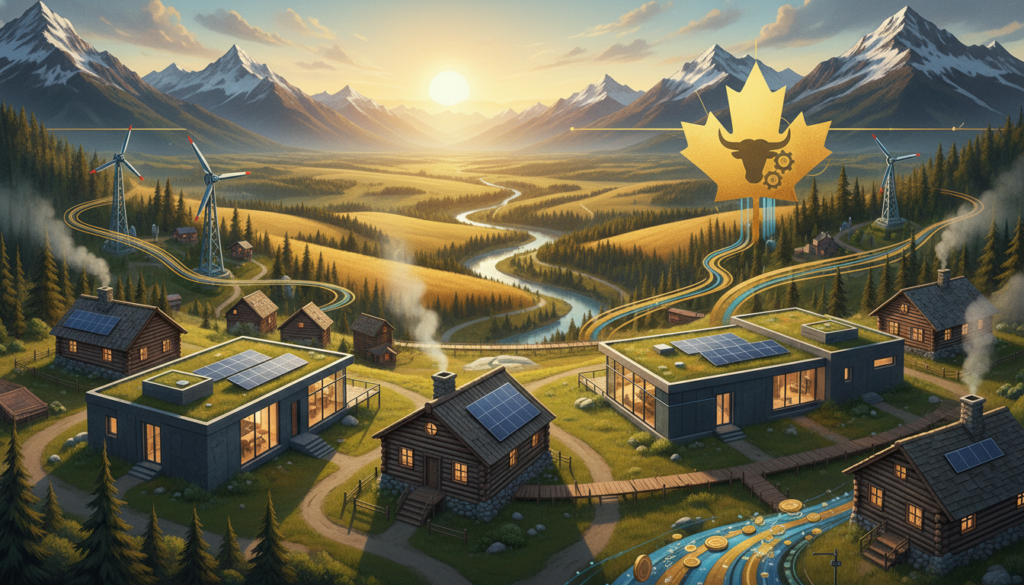
The “Work-from-Lodge” effect has fundamentally rewritten the economic destiny of rural Alberta. By bridging the gap between raw, untamed nature and the highest tiers of the global digital economy, low-earth-orbit satellite technology has created a new frontier of wealth and opportunity. For investors, entrepreneurs, and policymakers who understand the mechanics of this shift, the gentrification of the wilderness offers a masterclass in modern economic adaptation. The isolation of the Alberta wilderness is dead; long live the hyper-connected lodge.
Sources and References
- Alberta Ministry of Jobs, Economy and Trade: Reports on rural economic diversification and the influx of inter-provincial migration targeting non-urban centers.
- Provincial Real Estate Boards (Alberta): Data tracking the exponential increase in rural acreage valuations and the “cabin premium” in regions such as the Crowsnest Pass and central Alberta lake districts.
- Telecommunications Infrastructure Data: Industry specifications and deployment metrics for low-earth-orbit satellite constellations, detailing latency reductions and bandwidth capacities achieved by 2026.
- Rural Municipalities of Alberta (RMA): Policy papers regarding the strain on rural infrastructure, road maintenance, and emergency services driven by population increases in remote areas.
- Economic Multiplier Studies: Academic analyses on the impact of remote high-income earners on local rural service economies and the subsequent displacement of legacy labor forces.