
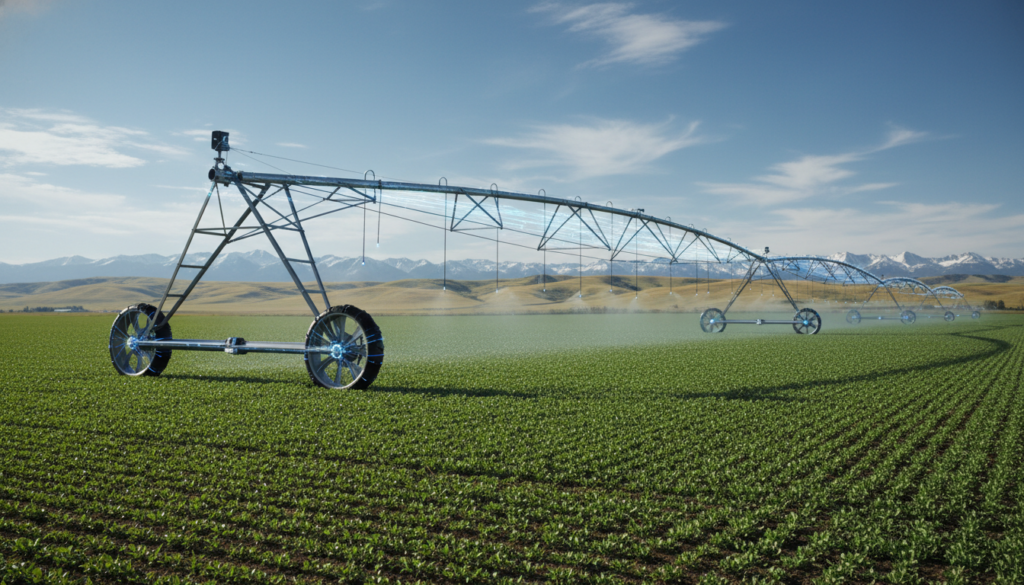

The agricultural landscape of Southern Alberta is undergoing a profound, silent transformation. For over a century, the region’s prosperity has been dictated by a delicate dance between the harsh realities of the Palliser Triangle—a historically arid expanse of the Canadian Prairies—and the sheer muscle of seasonal human labor. From the early days of hand-dug irrigation canals to the massive, diesel-powered pivot systems of the late twentieth century, water management has always been an intensely physical endeavor. Today, however, the heavy lifting is migrating from the fields to the cloud.
Faced with increasingly persistent and severe drought cycles, multi-generational farming operations in areas like Lethbridge, Taber, and Brooks are fundamentally rewriting their operational blueprints. They are abandoning traditional, labor-intensive water management strategies in favor of hyper-advanced, AI-driven predictive irrigation networks. This transition is not merely a technological upgrade; it is a permanent structural shift in the rural economy. By integrating Silicon Valley code with heavy agricultural machinery, Alberta’s irrigation districts are achieving historic, unprecedented crop yields while simultaneously engineering the permanent displacement of the seasonal field worker. This article explores the mechanics, the economics, and the long-term implications of the Automated Acre.
The following economic facts are based on current Alberta provincial data and market trends.
The Historical Context: Water, Weather, and the Alberta Advantage
To understand the economic mechanics driving the adoption of artificial intelligence in Alberta’s agricultural sector, one must first understand the historical context of water in the province.
A Legacy of Engineered Oases
Southern Alberta contains the largest concentration of irrigated land in Canada, accounting for nearly seventy percent of the nation’s total irrigated acreage. The St. Mary River Irrigation District (SMRID) and the Eastern Irrigation District (EID) are marvels of civil engineering, transforming what was once considered un-farmable semi-desert into some of the most productive agricultural land in North America. Historically, managing this water was a manual, reactive process. Farmers relied on visual inspections, rudimentary soil probes, and generalized weather forecasts to determine when and how much to irrigate.
This reactive approach required a massive deployment of seasonal labor. Workers were needed to physically move irrigation pipes, monitor pivot systems for blockages, check soil saturation levels across thousands of acres, and manually adjust water flow gates. The local economy was deeply intertwined with this seasonal influx of workers, many of whom arrived via the Seasonal Agricultural Worker Program (SAWP).
The Catalyst: Persistent Drought Cycles
The catalyst for the current technological revolution has been climate volatility. Over the past decade, Southern Alberta has experienced prolonged, multi-year drought cycles. The winter snowpacks in the Rocky Mountains, which feed the vital Bow, Oldman, and South Saskatchewan rivers, have become increasingly unpredictable. In recent years, the provincial government and local irrigation districts have been forced to implement unprecedented water-sharing agreements, legally capping the volume of water available to individual farms.
When water becomes a strictly rationed commodity, inefficiency becomes an existential threat. The traditional method of over-watering to guarantee crop survival is no longer mathematically or legally viable. Multi-generational farms realized that to survive, they needed to maximize the biological output of every single millimeter of water. Human intuition and manual labor, no matter how experienced, simply could not calculate the complex variables required for this level of precision.
The Mechanics of the Automated Acre
The solution to the water scarcity crisis arrived not from traditional agricultural equipment manufacturers, but from the software engineering hubs of Silicon Valley and emerging AgTech startups in Calgary and Edmonton. The “Automated Acre” is a conceptual and physical framework where irrigation is entirely predictive, continuous, and autonomous.
How AI-Driven Predictive Irrigation Works
The modern Alberta farm operates as a massive, localized Internet of Things (IoT) network. The mechanics of this system can be broken down into three distinct layers:
- The Sensory Layer: Fields are embedded with thousands of micro-sensors that measure soil moisture at multiple depths, soil temperature, and salinity. Above ground, hyper-local weather stations record wind speed, solar radiation, and ambient humidity. Additionally, drones and low-earth orbit satellites provide continuous Normalized Difference Vegetation Index (NDVI) imaging, assessing the exact chlorophyll levels and stress markers of the plants in real-time.
- The Processing Layer: This is where the Silicon Valley code takes over. The massive datasets generated by the sensory layer are fed into cloud-based machine learning algorithms. These AI models cross-reference the real-time field data with historical yield records, topographical maps, and predictive meteorological models from Environment Canada.
- The Actuation Layer: The AI does not simply provide a recommendation to a human operator; it directly controls the hardware. The algorithms calculate the exact Evapotranspiration (ET) rate of the crop—the precise amount of water the plant has lost to the atmosphere—and triggers Variable Rate Irrigation (VRI) pivot systems. These pivots can adjust the water pressure and flow rate of individual nozzles down to the square meter, applying water only where it is mathematically required, exactly when the plant’s biological absorption rate is optimal.
Integrating Legacy Systems with Modern Code
For technical engineers and AgTech investors, the primary challenge and opportunity in Alberta lies in retrofitting legacy hardware. Multi-generational farms have millions of dollars sunk into existing pivot systems and pumps. The current economic boom in agricultural technology involves deploying edge-computing modules—ruggedized microcomputers—that physically attach to twenty-year-old steel pivots, allowing them to receive API calls from cloud-based AI networks. This synthesis of heavy industrial iron and lightweight predictive code is the defining characteristic of the Automated Acre.

The Economic Data: Yields vs. Labor Costs
The transition to automated, predictive irrigation is capital-intensive, but the economic data overwhelmingly justifies the investment. The shift is driven by a ruthless optimization of the balance sheet, specifically concerning crop yields and labor overhead.
Achieving Historic Crop Yields
The implementation of AI-driven water management has resulted in a paradoxical economic phenomenon: Alberta farms are using significantly less water while achieving historic, record-breaking crop yields.
By eliminating the biological stress caused by both under-watering and over-watering, crops such as sugar beets, potatoes, and specialized seed canola are reaching their maximum genetic potential. The AI systems prevent nutrient leaching—a common problem where excess water washes expensive nitrogen and phosphorus fertilizers below the root zone. Consequently, farmers are seeing a double economic benefit: a reduction in input costs (water and fertilizer) and an increase in total revenue per acre due to higher yields and superior crop quality.
Current market trends indicate that farms utilizing predictive VRI systems are experiencing yield increases of fifteen to twenty-five percent, while simultaneously reducing total water consumption by twenty to thirty percent compared to manually managed adjacent plots.
The Structural Displacement of Seasonal Labor
The most profound, and perhaps most controversial, economic impact of the Automated Acre is the structural displacement of seasonal field labor. It is crucial to understand that this is not a cyclical layoff caused by a poor harvest; it is permanent structuralization. The jobs are being engineered out of existence.
Historically, a massive farming operation in the Taber region might require dozens of seasonal laborers to manage irrigation logistics, monitor soil conditions, and operate heavy machinery. Today, that same operation can be managed by a single technician monitoring a dashboard on a tablet from a pickup truck.
The economic rationale for this displacement is clear when analyzing the costs associated with the Seasonal Agricultural Worker Program and local hiring:
- Wage Inflation: The rising minimum wage in Alberta, combined with the general inflation of living costs, has made manual labor increasingly expensive.
- Logistical Overhead: Employing seasonal workers requires substantial secondary investments in housing, transportation, insurance, and administrative compliance.
- Error and Inefficiency: Human error in water management—such as leaving a manual gate open too long or misjudging soil saturation—can cost tens of thousands of dollars in lost crop yield or water penalties.
Conversely, while the initial Capital Expenditure (CapEx) for an AI irrigation network is high, the Operational Expenditure (OpEx) is remarkably low. Software as a Service (SaaS) subscription fees for the AI algorithms and the amortization of the sensory hardware cost a fraction of an annual human payroll. Once the system is installed, the marginal cost of monitoring an additional acre of land drops to near zero.
Guide for Investors and Technical Engineers
For those looking to participate in the Alberta economy, the digitization of the agricultural sector represents a massive, largely untapped frontier. The province is rapidly becoming a premier testing ground for global AgTech due to its unique combination of large-scale commercial farming, severe weather variables, and highly capitalized farming operations.
Opportunities in AgTech and Infrastructure
Investors should focus on the infrastructure that enables the Automated Acre. The current bottlenecks in the system provide lucrative opportunities:
- Rural Connectivity: AI models require continuous, high-bandwidth data streams. Investments in rural broadband, localized 5G networks, and low-earth orbit satellite integration are critical. Farms cannot deploy Silicon Valley code if they cannot reliably connect to the cloud.
- Cybersecurity: As farms transition into massive IoT networks, they become vulnerable to cyber-attacks. Ransomware targeting a farm’s automated irrigation system during a July heatwave could destroy a multi-million-dollar crop in days. There is a high demand for cybersecurity engineers who specialize in protecting agricultural and industrial control systems.
- Hardware Durability: Technical engineers face the unique challenge of designing delicate micro-sensors and edge-computing devices that can survive the extreme temperature fluctuations of an Alberta winter and the corrosive, dust-heavy environment of a summer harvest.
The New Agricultural Workforce
While traditional seasonal labor is being displaced, a new category of employment is emerging. The modern Alberta farm requires data scientists, hydrology specialists, and drone technicians. The farm manager of the future will rely less on agronomy and more on systems engineering. Educational institutions in Alberta, such as the University of Lethbridge and Olds College, are rapidly adapting their curricula to produce graduates who can bridge the gap between biological plant sciences and Python programming.
The Long-Term Economic Mechanics for Alberta
The adoption of Silicon Valley code over local field labor in Southern Alberta’s irrigation districts is a leading indicator of a broader macroeconomic shift. It demonstrates how traditional, resource-based industries can leverage artificial intelligence to decouple economic growth from resource consumption and manual labor.
Transforming the Rural Economy
The structural displacement of seasonal workers will undoubtedly challenge the traditional economic models of rural Alberta towns. Small municipalities that historically relied on the economic velocity generated by hundreds of seasonal workers buying groceries, fuel, and local services will need to adapt. However, the immense wealth generated by the increased efficiency and historic yields of the automated farms will create new avenues for rural prosperity. Capital previously spent on seasonal payrolls is being redirected into high-tech capital investments, specialized equipment maintenance, and advanced agronomic consulting services. The rural economy is not shrinking; it is becoming highly specialized and significantly more capital-intensive.
Future-Proofing the Food Supply
Ultimately, the Automated Acre is an economic necessity driven by environmental reality. As global populations rise and climate volatility threatens traditional breadbaskets worldwide, the ability to produce more food with less water is the most critical economic metric of the twenty-first century.
Alberta’s irrigation districts are proving that by embracing predictive algorithms, automated hardware, and rigorous data analysis, agriculture can become a highly predictable, mathematically optimized manufacturing process. The integration of Silicon Valley code into the soil of the Palliser Triangle ensures that Alberta will remain a dominant force in global food production, not through the brute force of human labor, but through the elegant, relentless efficiency of artificial intelligence. The farms of Southern Alberta have successfully coded their way out of the drought, forever changing the economic pulse of the prairie.
Sources and References
- Alberta Agriculture and Irrigation: Provincial data on water allocation, irrigation district infrastructure, and historical crop yield statistics.
- Environment and Climate Change Canada: Historical meteorological data, drought cycle tracking, and predictive climate modeling for the Palliser Triangle region.
- Statistics Canada: Employment trends in the agricultural sector, including data on the Seasonal Agricultural Worker Program (SAWP) and rural demographic shifts.
- Olds College of Agriculture and Technology: Smart Farm research data on the efficacy of Variable Rate Irrigation (VRI), edge computing in agriculture, and IoT sensor deployment.
- St. Mary River Irrigation District (SMRID): Public reports on water rationing protocols, infrastructure modernization, and regional water-sharing agreements.