


The concept of a first-year apprentice earning a six-figure income might seem like a mathematical anomaly or a relic of the mid-2000s oil boom. Yet, in the economic corridor of Grande Prairie, Alberta, this is rapidly becoming a baseline reality. Nestled in the heart of the Peace River region, Grande Prairie is currently operating as a high-pressure economic engine, driven by an unprecedented convergence of energy extraction, forestry, agriculture, and aggressive municipal infrastructure expansion. However, this engine is currently choking on its own growth, constrained by a severe bottleneck in the skilled trades sector.
For potential residents, investors, business owners, and technical engineers looking at northern Alberta, understanding the mechanics of this specific market is crucial. The region is currently exhibiting what economists refer to as a “Labour Paradox.” On paper, the unemployment rate hovers around a seemingly balanced 5.4%. To the untrained eye, this suggests a healthy reserve of available workers. In reality, industrial contractors, infrastructure developers, and local businesses are engaged in a fierce, escalating bidding war for talent, creating a massive wage spiral that is reshaping the local economy.
This article serves as a comprehensive educational guide to understanding the structural mechanics of the Grande Prairie skilled trade bottleneck. By deconstructing the regional economic drivers, the mathematics of the wage spiral, and the realities of the apprenticeship pathway, we will provide actionable insights for stakeholders looking to navigate, invest, or build a career in one of Alberta’s most dynamic and challenging economic zones.
The following economic facts are based on current Alberta provincial data and market trends.
The Anatomy of the Labour Paradox
To understand the Grande Prairie economy, one must first dismantle the illusion presented by the headline unemployment rate. How can a region with a 5.4% unemployment rate simultaneously experience a crippling labour shortage that forces companies to double their compensation packages? The answer lies in the fundamental economic principles of structural unemployment and the skills mismatch matrix.
Structural vs. Frictional Unemployment
In any economy, a baseline level of unemployment is natural. Frictional unemployment occurs when workers are temporarily between jobs or newly entering the workforce. Structural unemployment, however, is far more complex and is the primary driver of the Grande Prairie paradox. This occurs when there is a fundamental mismatch between the skills possessed by the available workforce and the skills demanded by employers.
In Grande Prairie, the 5.4% of the population that is unemployed largely consists of individuals seeking entry-level, administrative, or non-industrial service sector roles. Conversely, the open job vacancies require highly specific, heavily regulated certifications: Journeyman Red Seal Heavy Duty Mechanics, B-Pressure Welders, dual-ticketed Instrumentation Technicians, and High-Voltage Electricians.
The Skills Mismatch Matrix
The bottleneck is not a lack of human bodies; it is a lack of specialized training and certified hours. The educational mechanics of this mismatch can be broken down into several key factors:
- The Certification Lag: Producing a journeyman tradesperson in Alberta takes four to five years of combined technical schooling and on-the-job apprenticeship hours. The market cannot instantly respond to a spike in demand by producing more journeymen; the supply is inherently inelastic in the short term.
- The Lost Generation of Apprentices: During the economic downturns of 2015 and the global disruptions of 2020, many companies halted their intake of first-year apprentices to cut costs. We are currently experiencing the “echo” of that decision. The apprentices who should be graduating to journeyman status today simply do not exist in the required numbers.
- Geographic Immobility: While Grande Prairie offers premium wages, relocating skilled labour from other provinces (or even from southern Alberta) is difficult due to the localized cost of living, housing availability, and the harsh realities of northern industrial work.
This structural mismatch creates a closed ecosystem where employers are forced to aggressively compete for a stagnant, finite pool of qualified talent, igniting the wage spiral.
The Grande Prairie Economic Engine: Historical Context and Current Drivers
To educate oneself on the trajectory of this skilled trade bottleneck, it is necessary to examine the foundational pillars of the Grande Prairie economy. This region is not a one-industry boomtown; it is a diversified industrial hub that services a massive geographic footprint spanning northwestern Alberta and northeastern British Columbia.
Historical Context: A Tri-Pillar Economy
Historically, Grande Prairie’s resilience has been built on three distinct economic pillars:
- Agriculture: The Peace River region contains some of the most fertile and productive agricultural land in northern Canada, driving consistent demand for heavy equipment operation, transport, and processing infrastructure.
- Forestry: Deeply entrenched pulp, paper, and lumber operations have provided steady, year-round industrial employment, establishing a baseline demand for millwrights, electricians, and heavy-duty mechanics.
- Conventional Oil and Gas: For decades, conventional drilling provided the cyclical “boom” energy to the region, creating the initial blueprint for the high-wage, high-output northern workforce.
Current Drivers: The Montney Formation and Decarbonization
Today, the economic engine has evolved, supercharged by new, capital-intensive developments that require massive, immediate deployments of skilled trades.
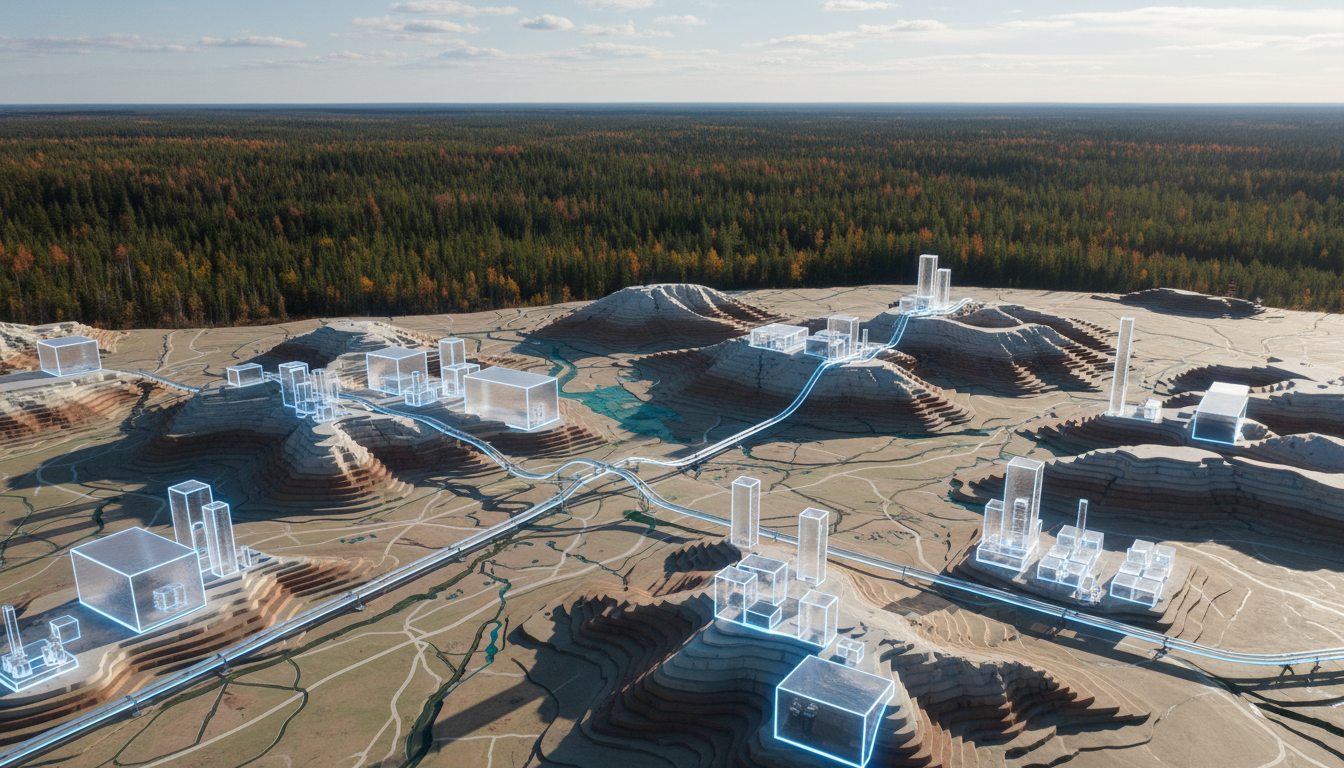
The Montney Formation Grande Prairie sits atop the Montney Formation, one of the most economically viable unconventional resource plays in North America. Unlike conventional oil, the Montney is rich in natural gas and natural gas liquids (NGLs). The extraction, processing, and transportation of these resources require highly complex, permanent infrastructure. This includes deep-cut gas plants, massive compressor stations, and extensive pipeline networks linking the region to coastal LNG (Liquefied Natural Gas) export terminals.
Municipal and Provincial Infrastructure Simultaneously, the city of Grande Prairie serves as the retail and medical hub for a trading area of nearly 300,000 people. This has necessitated urgent municipal infrastructure projects. The twinning of Highway 40, the expansion of the regional hospital, and the development of new industrial parks are all competing directly with the energy sector for the exact same pool of concrete finishers, ironworkers, and electricians.
Decarbonization and Grid Modernization Adding a new layer of complexity is the push for industrial decarbonization. Facilities are retrofitting to capture carbon, electrifying their operations to reduce emissions, and integrating renewable energy sources. These highly technical projects require specialized tradespeople who understand both legacy industrial systems and modern, high-tech grid integration.
The Mechanics of the Wage Spiral
When multiple multi-billion-dollar sectors require the same finite resource—skilled labour—at the exact same time, the fundamental economic laws of supply and demand trigger a wage-price spiral. For business owners and investors, understanding the mechanics of this spiral is vital for accurate cost forecasting and project management.
The Bidding War and Project Penalties
The catalyst for the wage spiral is often rooted in the structure of industrial contracts. Major infrastructure and energy projects carry severe financial penalties for delays. If a multi-million-dollar gas processing plant is delayed by a month due to a lack of pipefitters, the lost revenue and contractual penalties far exceed the cost of paying premium wages.
Consequently, engineering, procurement, and construction (EPC) firms will aggressively overbid for local talent. If the prevailing wage for a journeyman welder is $45.00 per hour, a contractor facing a critical deadline will offer $55.00 per hour, plus a daily living allowance, just to secure the personnel.
The Ripple Effect Across the Supply Chain
This localized wage inflation does not remain confined to the heavy industrial sector; it ripples outward, destabilizing the broader local economy.
- Tier 1 (Heavy Industrial): Energy companies and massive EPC firms set the ceiling. They offer the highest base wages, unlimited overtime, and substantial retention bonuses.
- Tier 2 (Commercial Construction and Light Industrial): Local home builders, municipal contractors, and agricultural equipment dealers must raise their wages to prevent their staff from defecting to Tier 1 projects. This increases the cost of building homes and servicing local infrastructure.
- Tier 3 (Service and Retail): Restaurants, retail stores, and hospitality businesses face an impossible challenge. They cannot match industrial wages, resulting in chronic understaffing. A young worker who might typically work in retail is highly incentivized to enter the industrial sector as a general labourer or first-year apprentice, further draining the service sector labour pool.
The Mathematics of Compensation
In this environment, base hourly wage becomes only one component of a complex compensation package. Employers utilize a variety of financial levers to attract and retain talent:
- Overtime Multipliers: In Alberta, overtime is strictly regulated. In a high-demand environment, tradespeople routinely work 10-to-12-hour days on shift rotations (e.g., 14 days on, 7 days off). The compounding effect of time-and-a-half or double-time pay drastically inflates gross earnings.
- Living Out Allowances (LOA): To attract workers from outside the immediate Grande Prairie area, companies offer daily tax-free allowances for food and lodging, often ranging from $150 to $200 per day.
- Vehicle and Tool Allowances: Heavy-duty mechanics and welders who provide their own specialized rig trucks are paid lucrative hourly rates for their equipment, separate from their personal wages.
- Completion Bonuses: To prevent workers from jumping to a competitor mid-project, companies now structure contracts with massive lump-sum payouts tied to project completion milestones.
Deconstructing the $100k Apprentice
To truly educate the reader on the scale of this bottleneck, we must break down the mathematics of the titular “$100k Apprentice.” How does an individual with less than a year of formal training achieve an income level typically reserved for senior management or highly specialized professionals?
The Alberta Apprenticeship System (AIT)
The foundation of trade certification in the province is managed by Alberta Apprenticeship and Industry Training (AIT). The system is designed as an “earn while you learn” model. A standard apprenticeship, such as an Electrician or Heavy Equipment Technician, requires four periods (years). Each period consists of approximately 1,500 hours of on-the-job training and 8 weeks of intensive classroom instruction at a technical college.
By regulation, apprentice wages are pegged to a percentage of the journeyman rate.
- 1st Year: 50% to 60% of journeyman wage.
- 2nd Year: 60% to 70% of journeyman wage.
- 3rd Year: 70% to 80% of journeyman wage.
- 4th Year: 80% to 90% of journeyman wage.
The Mathematical Breakdown
Let us examine a hypothetical, yet highly realistic, scenario for a 1st-Year Heavy Equipment Technician apprentice working in the Grande Prairie corridor during peak infrastructure demand.
The Base Rate: Assume the prevailing competitive journeyman rate in the region has been pushed to $50.00 per hour. A 1st-year apprentice (at 60%) earns a base rate of $30.00 per hour.
The Shift Schedule: The apprentice works a standard industrial rotation: 14 days on, 7 days off. They work 12-hour shifts. In a 21-day cycle, they work 168 hours. Over a year (allowing for time off for schooling), they work approximately 15 cycles, totaling 2,520 hours.
The Earnings Calculation:
- Regular Hours: 8 hours per day x 14 days = 112 hours per cycle.
- 112 hours x 15 cycles = 1,680 regular hours.
- 1,680 hours x $30.00 = $50,400 base salary.
- Overtime Hours: 4 hours per day x 14 days = 56 hours per cycle. (Paid at time-and-a-half: $45.00/hr).
- 56 hours x 15 cycles = 840 overtime hours.
- 840 hours x $45.00 = $37,800 overtime pay.
- Allowances and Bonuses:
- Living Out Allowance (LOA) or Camp Premium: $50 per day worked x 210 working days = $10,500.
- Year-end retention/safety bonus: $5,000.
Total Gross Compensation: $50,400 (Base) + $37,800 (Overtime) + $10,500 (Allowances) + $5,000 (Bonus) = $103,700.
This educational breakdown illustrates that the $100k figure is not achieved through exorbitant base hourly rates for unskilled labour, but rather through the sheer volume of hours worked, the compounding power of overtime, and the supplementary premiums required to staff remote or highly demanding projects.

Strategic Playbook for Business Owners and Investors
For business owners operating in Grande Prairie, or investors looking to allocate capital to the region, navigating this skilled trade bottleneck requires a sophisticated, multi-faceted strategy. Relying on traditional hiring practices or purely wage-based competition is a fast track to margin erosion.
1. Capital Substitution and Automation
When the cost of labour spirals, the economic response must be capital substitution—replacing expensive human hours with technology and machinery. Business owners must aggressively audit their operations to identify areas for automation.
- Construction: Utilizing prefabricated modular components manufactured off-site in lower-wage jurisdictions, reducing the need for on-site framing, welding, and electrical assembly.
- Heavy Equipment: Investing in GPS-guided earthmoving equipment and autonomous hauling systems. While the upfront capital expenditure is high, it drastically reduces the number of operators required and increases the efficiency of the remaining workforce.
- Administration: Automating dispatch, inventory management, and payroll through advanced ERP (Enterprise Resource Planning) software to minimize the need for administrative overhead.
2. Holistic Retention Strategies
If a business cannot win a bidding war against a multi-national energy conglomerate, it must compete on variables other than base pay. Educational and lifestyle incentives often yield higher long-term retention rates.
- Accelerated Apprenticeship Support: Companies that pay for their apprentices’ tuition, provide full wages during their 8-week technical schooling blocks, and offer dedicated mentorship programs build deep loyalty.
- Schedule Flexibility: While the industrial sector demands grueling 14/7 or 21/7 rotations, local businesses can attract skilled workers who are suffering from burnout by offering stable Monday-to-Friday schedules, allowing tradespeople to be home with their families every night.
- Comprehensive Benefits: Offering platinum-tier health benefits, robust RRSP matching, and extensive mental health support can attract older, highly experienced journeymen who value long-term stability over short-term cash grabs.
3. Real Estate and Infrastructure Investment Angles
For investors, the labour paradox presents unique opportunities outside of direct industrial participation. The influx of highly paid workers creates immediate, localized demand in specific real estate sectors.
- Workforce Housing: There is a critical shortage of high-quality, flexible housing for transient and semi-permanent workers. Developing purpose-built rental communities or premium RV/modular parks tailored to the needs of the industrial workforce offers exceptional yield potential.
- Industrial Warehousing: As companies attempt to mitigate supply chain risks and store prefabricated components, the demand for secure, climate-controlled industrial bay space in Grande Prairie is surging.
- Specialized Training Facilities: Private investment in technical training centers, welding testing facilities, and heavy equipment simulator labs can capitalize on the urgent need to rapidly upskill the local workforce.
Guidance for Potential Residents and Technical Engineers
The Grande Prairie corridor presents a unique value proposition for individuals willing to navigate its intense economic climate. For potential residents and highly educated technical professionals, understanding the local dynamics is the key to maximizing career growth and financial stability.
The Cost of Living vs. Wage Ratio
For individuals considering relocating to Grande Prairie, the primary attraction is the exceptional income potential. However, this must be carefully weighed against the local cost of living. While housing is generally more affordable than in major metropolitan centers like Vancouver or Toronto, the high average income in Grande Prairie drives up the cost of local services, dining, and discretionary spending.
The educational strategy for a new resident is aggressive financial defense. The “boomtown” psychology often encourages immediate, depreciating expenditures (such as expensive recreational vehicles or luxury trucks). Residents who successfully leverage the Grande Prairie economy use their high incomes to rapidly eliminate debt, acquire cash-flowing real estate, and build diversified investment portfolios, insulating themselves against future commodity price fluctuations.
The Role of the Technical Engineer
For mechanical, civil, and electrical engineers, the skilled trade bottleneck presents a specific operational challenge. The traditional hierarchy—where engineers design and tradespeople execute—is being disrupted by the sheer scarcity of experienced field executioners.
Engineers operating in the Peace River region must adapt their methodologies:
- Design for Constructability: Engineers must design systems that require the absolute minimum amount of field assembly. Complex pipe spools, electrical skids, and structural components must be designed for plug-and-play installation to minimize the need for scarce on-site journeymen.
- Cross-Disciplinary Literacy: A successful engineer in this environment must deeply understand the realities of the trades. An engineer who understands the precise physical limitations of a B-Pressure welder or the code requirements of a master electrician can design far more efficient, cost-effective projects.
- Bridging the Mentorship Gap: With a high ratio of first-year and second-year apprentices on job sites, engineers are increasingly required to step out of the office and provide direct, technical guidance in the field, ensuring that complex designs are interpreted correctly by an inexperienced workforce.
 Regenerate This Image
Conclusion: Will the Bottleneck Break?
The $100k apprentice is not a permanent fixture of the Grande Prairie economy, but rather a symptom of a highly specific, localized structural imbalance. The region is attempting to build the infrastructure of the future while relying on a demographic pipeline of skilled trades that was fractured during previous economic downturns.
For the bottleneck to break, several long-term macroeconomic shifts must occur. The provincial education system must continue to aggressively destigmatize and promote the skilled trades to high school graduates. Industry must commit to continuous, unbroken apprenticeship intakes, even during periods of commodity price weakness. Finally, technological advancements in automation and prefabrication must accelerate to reduce the absolute volume of human hours required for heavy industrial development.
Until these structural changes take root, the Grande Prairie corridor will remain a high-stakes, high-reward environment. For the educated investor, the strategic business owner, and the adaptable professional, understanding the mechanics of this labour paradox is the ultimate competitive advantage in one of Canada’s most vital economic engines.
Sources and References
- Alberta Labour and Immigration: Regional occupational demand outlooks and historical wage data.
- Alberta Apprenticeship and Industry Training (AIT): Trade certification requirements, period progression metrics, and historical enrollment statistics.
- Statistics Canada: Labour Force Survey data, regional unemployment rates, and demographic mobility reports for the Peace River economic region.
- BuildForce Canada: Construction and maintenance looking forward reports, detailing projected skilled trade deficits in the heavy industrial sector.
- City of Grande Prairie Economic Development: Municipal infrastructure project timelines and regional investment profiles.