
For decades, the economic narrative of Alberta has been dominated by the extraction of subterranean resources. The province has built a world-class engineering and financial ecosystem around pulling energy from the earth. However, a profound shift is occurring away from the heavy industrial corridors of the north and the corporate towers of Calgary. A new energy frontier is being pioneered in Alberta’s mid-sized municipalities. Cities like Red Deer and Lethbridge are quietly transforming from traditional urban centers into highly efficient “circular cities.” By leveraging advanced plasma gasification technology, these municipalities are attempting to solve two of the most pressing urban challenges of the twenty-first century: municipal solid waste management and sustainable base-load power generation.
This transition is not merely an environmental initiative; it is a complex, highly lucrative economic restructuring. For potential residents, it promises stabilized municipal tax rates. For investors, it offers a new asset class characterized by predictable, long-term returns. For technical engineers, it represents the ultimate optimization challenge: designing closed-loop systems where the concept of “waste” is entirely engineered out of existence. By converting everyday municipal garbage into electricity and high-value synthetic gas, Alberta’s mid-sized hubs are writing the blueprint for the municipal economy of the future.
The following economic facts are based on current Alberta provincial data and market trends.
The Historical Context: Moving Beyond the Linear Economy
To understand the magnitude of the shift occurring in Red Deer and Lethbridge, one must first understand the historical mechanics of waste management in Alberta. Historically, the province—like most of North America—has operated on a strictly linear economic model. This model is often summarized as “take, make, dispose.” Raw materials are extracted, manufactured into consumer goods, utilized for a fraction of their potential lifespan, and ultimately buried in municipal landfills.
From a macroeconomic perspective, landfills represent a massive inefficiency. Municipalities must purchase large tracts of land, engineer complex and expensive liners to prevent groundwater contamination, and fund perpetual monitoring systems long after the landfill has reached capacity. Furthermore, as populations in mid-sized Alberta cities grow, the geographic footprint required for waste disposal expands, encroaching on valuable agricultural and commercial real estate. The tipping fees—the cost charged to dispose of waste—have steadily increased, placing a heavy fiscal burden on municipal budgets and, by extension, the local taxpayer.
The circular economy proposes a radical alternative. In a circular system, the end-of-life stage of a product is simply the beginning of a new industrial process. Rather than burying potential energy, circular cities harvest it. Alberta is uniquely positioned to lead this transition. The province possesses a highly skilled workforce composed of chemical engineers, process operators, and energy economists who are actively looking to apply their expertise to new, sustainable industries. The pivot from managing oil reservoirs to managing municipal waste streams requires the exact same foundational skill sets: thermodynamics, fluid mechanics, and large-scale project management.
The Mechanics of Plasma Gasification: An Educational Primer
The technological cornerstone of this municipal revolution is plasma gasification. For technical engineers and investors evaluating the viability of these projects, it is critical to differentiate plasma gasification from traditional waste incineration. Incineration simply burns waste. It is a low-tech process that requires oxygen, produces significant greenhouse gas emissions, leaves behind toxic ash, and operates at relatively low thermal efficiencies.
Plasma gasification, conversely, is an advanced thermochemical process. It does not burn waste; it molecularly deconstructs it.
Here is a step-by-step breakdown of how this technology operates within the proposed municipal frameworks of Red Deer and Lethbridge:
- Feedstock Preparation: Municipal solid waste is collected, sorted to remove valuable recyclables like metals and glass, and shredded into a uniform feedstock. This homogenization ensures a consistent energy output.
- The Plasma Chamber: The feedstock is introduced into a sealed reactor vessel. Inside this vessel, plasma torches—created by passing an electrical current through a gas—generate sustained temperatures exceeding three thousand degrees Celsius. This environment is intentionally starved of oxygen, preventing combustion.
- Molecular Dissociation: At these extreme temperatures, the complex organic molecules within the waste break down into their elemental components. The intense heat tears apart the chemical bonds of plastics, food waste, and paper.
- Syngas Production: The primary output of this dissociation is synthetic gas, or “syngas.” Syngas is a highly valuable mixture composed primarily of hydrogen and carbon monoxide. This gas is captured, cooled, and scrubbed of any impurities.
- Vitrified Slag: The inorganic components of the waste—such as dirt, rocks, and unrecoverable glass—melt into a molten liquid. When cooled, this material forms a dense, glass-like substance known as vitrified slag. This slag is completely inert and non-toxic.
The elegance of plasma gasification lies in its dual outputs. The syngas can be combusted in high-efficiency turbines to generate electricity, which is then fed back into the Alberta grid. Alternatively, the syngas can be chemically processed into synthetic diesel, aviation fuel, or hydrogen. Meanwhile, the vitrified slag serves as a highly durable aggregate that can be sold to construction firms for use in road building and concrete production.

Red Deer: Prototyping the Circular Municipality
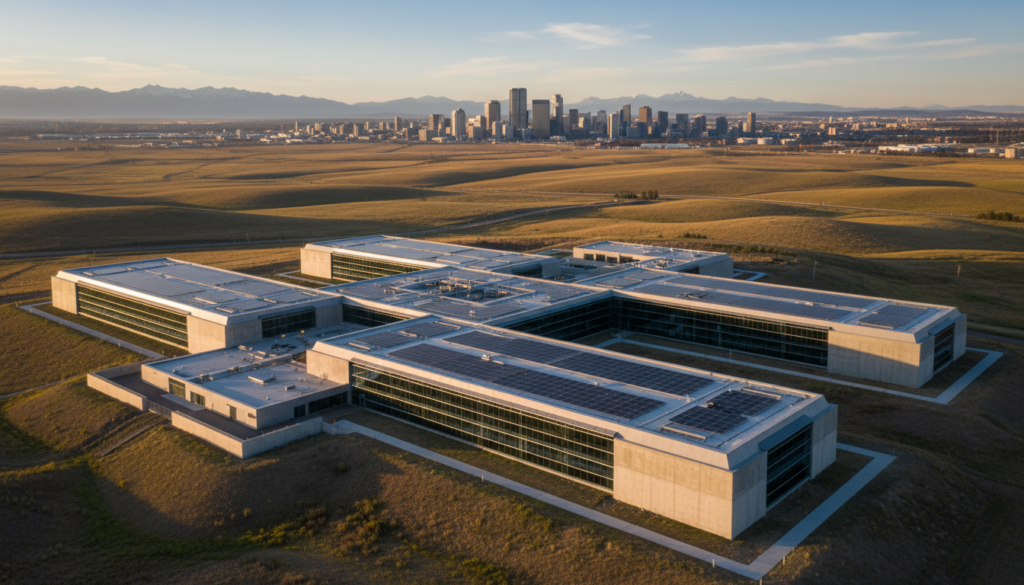
Red Deer, strategically located exactly halfway between Calgary and Edmonton, is serving as the ultimate proving ground for municipal plasma gasification. With a population hovering around one hundred thousand residents, Red Deer is large enough to generate the critical mass of waste required to feed a commercial-scale plasma facility, yet agile enough in its municipal governance to adopt disruptive technologies rapidly.
The city’s approach to the circular economy is rooted in fiscal pragmatism. Red Deer’s waste management infrastructure was facing the inevitable reality of capacity limits. Expanding traditional landfills would require millions of dollars in capital expenditure, alongside decades of operational liabilities. By pivoting toward waste-to-energy, Red Deer is actively restructuring its municipal balance sheet.
The economic model being prototyped in Red Deer relies on a “hub-and-spoke” logistics network. Rather than every small surrounding town managing its own inefficient landfill, Red Deer acts as the central processing hub. Surrounding municipalities pay tipping fees to Red Deer to offload their waste. Red Deer then processes this waste through gasification, generating revenue from two distinct streams:
- Energy Sales: The electricity generated from the syngas is sold into the Alberta power pool. Because municipal waste is a constant, reliable feedstock, the facility provides base-load power, which is highly valued in a grid increasingly reliant on intermittent renewables like wind and solar.
- Byproduct Monetization: The vitrified slag is sold to local infrastructure projects. By replacing traditional mined gravel with this recycled aggregate, the city lowers the carbon footprint of its public works projects while generating an ancillary revenue stream.
For business owners and investors, Red Deer’s model demonstrates how a municipality can transform a historic liability (garbage) into a profit-generating utility. This shift has the potential to stabilize property taxes, as the city becomes less reliant on residential and commercial taxation to fund its operations, relying instead on utility-style revenues.
Lethbridge: Agricultural Synergies and Synthetic Gas
While Red Deer is focusing on municipal solid waste and electricity generation, the city of Lethbridge is pioneering a slightly different, equally lucrative application of plasma gasification. Located in southern Alberta, Lethbridge is the undisputed epicenter of the province’s agricultural and agri-food processing industries. The region produces massive quantities of agricultural byproducts, ranging from crop residues to processing waste from massive food manufacturing plants.
Lethbridge’s circular economy strategy involves blending traditional municipal solid waste with these high-energy agricultural byproducts. This blended feedstock creates a highly potent syngas. However, rather than simply burning this syngas for electricity, engineers in the Lethbridge region are exploring the chemical applications of the gas.
Because syngas is rich in hydrogen and carbon monoxide, it serves as a foundational building block for the petrochemical industry. Through a process known as Fischer-Tropsch synthesis, the syngas generated from Lethbridge’s waste can be converted into high-value commodities:
- Synthetic Fertilizers: The hydrogen extracted from the syngas can be combined with atmospheric nitrogen to produce ammonia, the primary ingredient in agricultural fertilizers. This creates a perfect closed-loop system: agricultural waste is gasified to produce the very fertilizers needed to grow the next season’s crops.
- Clean Transportation Fuels: The syngas can be refined into synthetic diesel or sustainable aviation fuel (SAF). As global transportation networks face increasing pressure to decarbonize, fuels derived from municipal and agricultural waste command significant market premiums.
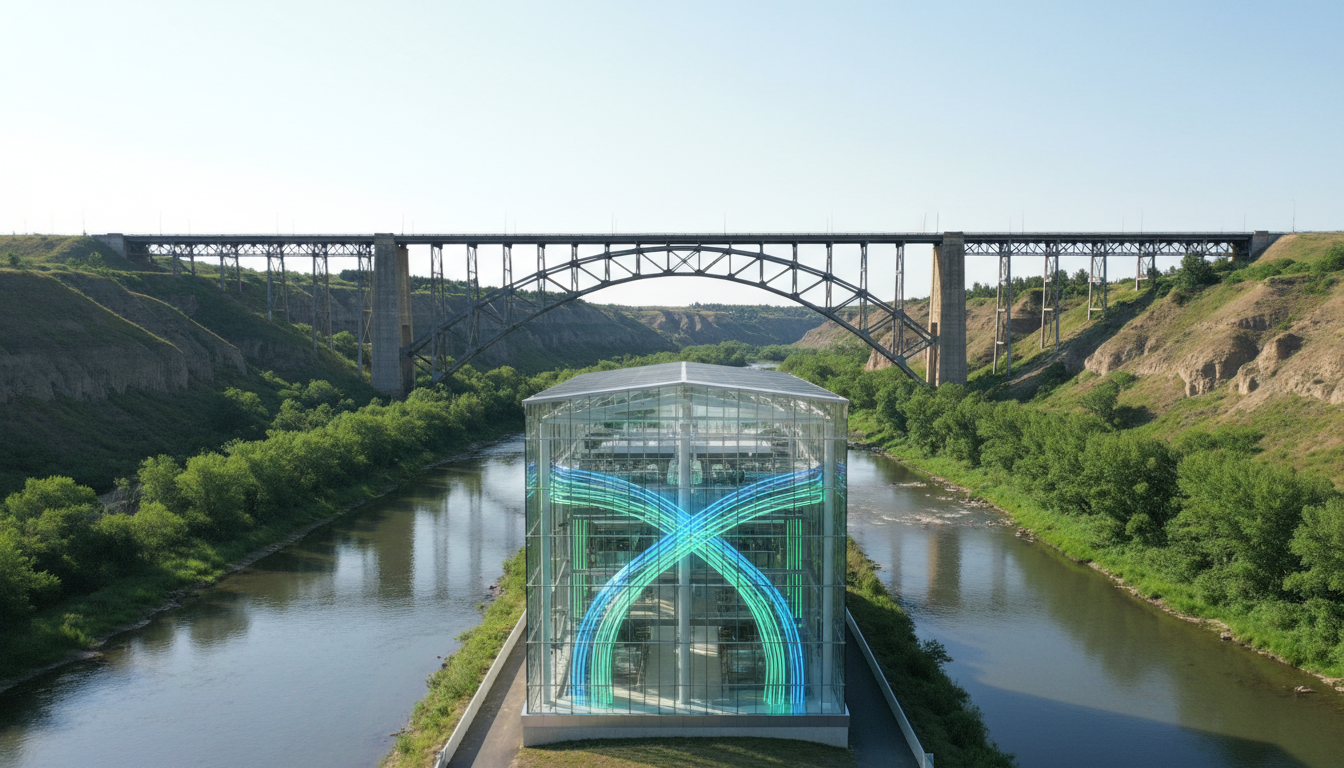
This agricultural synergy makes Lethbridge an incredibly attractive destination for green-tech investment. By co-locating waste-to-energy facilities near major agri-food processors, the city minimizes transportation costs and maximizes the thermal efficiency of the entire region. The waste heat generated by the plasma gasification process can even be piped into nearby commercial greenhouses, extending the growing season and further boosting local food production.
The Fiscal Mechanics: Taxpayer Benefits and Investor ROI
For potential residents and institutional investors, the most compelling aspect of Alberta’s waste-to-energy race is the underlying fiscal mechanics. The transition to a circular economy fundamentally alters the financial architecture of a city.
To understand the return on investment (ROI) and the taxpayer benefits, one must analyze the specific capital and operational expenditures involved in these mega-projects.
Capital Expenditures (CAPEX):
Constructing a commercial-scale plasma gasification facility requires significant upfront capital. These facilities are complex chemical plants requiring advanced metallurgy, precision control systems, and robust safety mechanisms. Historically, this high CAPEX was a barrier to entry for mid-sized cities. However, the financial landscape has evolved. Municipalities are increasingly utilizing green municipal bonds to fund these projects. These bonds attract institutional investors—such as pension funds and sovereign wealth funds—who are mandated to allocate capital toward sustainable, Environmental, Social, and Governance (ESG) compliant infrastructure. The long lifespan of a gasification plant (typically thirty to forty years) aligns perfectly with the long-term yield requirements of these investors.
Operational Expenditures (OPEX) and Revenue Generation:
Once operational, the economics of plasma gasification become highly favorable. The facility benefits from “negative cost feedstock.” Unlike a natural gas power plant, which must purchase its fuel, a waste-to-energy plant is paid to take its fuel in the form of municipal tipping fees. This dynamic creates a robust economic moat.
The revenue streams are highly diversified, insulating the municipality from single-market volatility:
- Tipping Fees: Guaranteed revenue from waste producers.
- Power Purchase Agreements (PPAs): Long-term contracts to sell electricity to the provincial grid at guaranteed rates.
- Carbon Credits: Under Canada’s carbon pricing framework, facilities that divert organic waste from landfills (preventing methane emissions) and generate low-carbon energy are eligible to generate and sell highly lucrative carbon offset credits.
- Commodity Sales: Revenue from the sale of recovered metals, vitrified slag, and synthetic fuels.
For the local taxpayer, the fiscal benefits are tangible. The revenues generated by the facility offset the costs of municipal services. Furthermore, by avoiding the massive future costs associated with landfill expansion and environmental remediation, the city avoids the need for sudden, steep property tax hikes. The municipality effectively becomes an energy exporter, keeping capital circulating within the local economy rather than paying external utility providers.
Navigating the Regulatory Framework
Integrating plasma gasification into Alberta’s infrastructure requires navigating a stringent regulatory environment. For engineers and developers, understanding the policies enforced by Alberta Environment and Protected Areas (EPA) is critical to project success.
Historically, waste management regulations were designed to govern static landfills, focusing on groundwater monitoring and methane flaring. Plasma gasification, however, sits at the intersection of waste management, power generation, and chemical manufacturing. This requires a modernized regulatory approach.
Alberta is actively streamlining the permitting process for advanced circular economy projects. The province requires comprehensive environmental impact assessments, focusing heavily on air quality. Because plasma gasification operates in an oxygen-starved environment, it avoids the creation of dioxins and furans—highly toxic compounds associated with traditional incineration. The emissions from a plasma facility are primarily composed of scrubbed, clean exhaust, heavily monitored by real-time sensor networks.
By establishing clear, science-based emission standards, Alberta is providing the regulatory certainty that institutional investors require before deploying hundreds of millions of dollars in capital. This transparent, rigorous framework ensures that as these facilities scale, they do not compromise the pristine air quality that Alberta residents value.
Long-Term Growth Mechanics: Scaling the Alberta Advantage
The experiments currently underway in Red Deer and Lethbridge are not isolated municipal projects; they represent the vanguard of a much larger macroeconomic strategy. If these mid-sized hubs successfully demonstrate the commercial viability of plasma gasification, the technology is primed for rapid scaling across the province and beyond.
The long-term growth mechanics rely on standardization. As engineering firms in Alberta gain experience designing and building these facilities, the cost of construction will inevitably decrease. This “learning curve” effect will make the technology accessible to even smaller municipalities, such as Medicine Hat, Grande Prairie, and Fort McMurray.
Furthermore, Alberta has the opportunity to become a global exporter of circular economy expertise. The engineering firms, software developers, and project managers who successfully deploy plasma gasification in Alberta will possess highly sought-after skills. As municipalities across North America and Europe grapple with their own waste and energy crises, Alberta-based firms will be perfectly positioned to design, build, and operate these facilities internationally. This represents a massive opportunity to diversify Alberta’s intellectual property exports, moving beyond oil and gas extraction into the lucrative global market for sustainable urban infrastructure.
The integration of artificial intelligence and machine learning will further optimize this growth. Future facilities will utilize predictive algorithms to analyze the incoming waste stream in real-time, automatically adjusting the plasma torch intensity and chemical scrubbing processes to maximize syngas yield and minimize energy consumption. This continuous optimization will drive the operational costs down, further increasing the profit margins for municipal operators and their investment partners.
Conclusion: The New Energy Vanguard
Alberta’s identity has always been intertwined with energy. For over a century, that energy was pulled from the deep sedimentary basins beneath the prairies. Today, the definition of energy in Alberta is expanding. The mid-sized cities of Red Deer and Lethbridge are proving that the most valuable resources are not always found underground; sometimes, they are found in the very waste we discard.
By embracing plasma gasification and the principles of the circular economy, these municipalities are achieving a rare trifecta: they are solving an environmental crisis, generating sustainable base-load power, and creating highly profitable, taxpayer-friendly economic models. For potential residents seeking forward-thinking communities, investors looking for stable ESG assets, and engineers eager to solve complex global challenges, Alberta’s mid-sized hubs represent the ultimate opportunity. The circular city is no longer a theoretical concept; it is being actively engineered, funded, and built right here in the heart of the Canadian west.