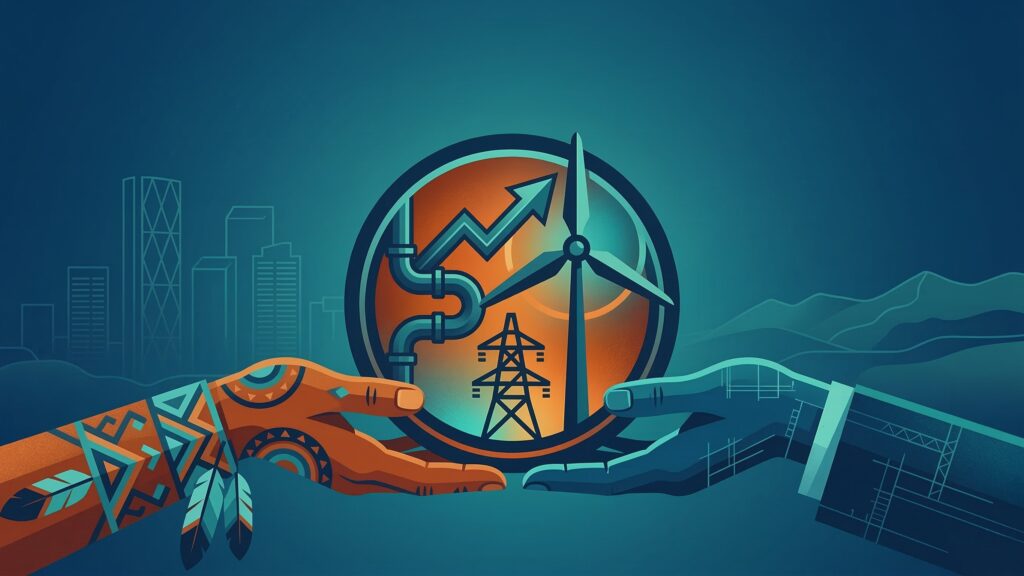

The landscape of the Alberta wilderness is changing, but not just in terms of the steel pipes and concrete foundations being laid across its vast horizons. A more profound shift is occurring within the boardrooms of Calgary’s skyscrapers and the council chambers of First Nations across the province. We are witnessing the sunset of the “consultation era”—a period defined by regulatory boxes to be checked and community investment grants—and the dawn of the “equity era.” By 2026, the standard for any major infrastructure project in Alberta will no longer be “How much did you consult?” but “What percentage do the Indigenous partners own?”
This transition represents one of the most significant structural shifts in the history of the Canadian economy. It is a move from passive observation to active participation, from being a stakeholder to being a shareholder. For investors, engineers, and business leaders, understanding this shift is not just a matter of social responsibility; it is a fundamental requirement for project viability, risk mitigation, and long-term capital stability in the 21st-century Alberta economy.
The following economic facts are based on current Alberta provincial data and market trends.
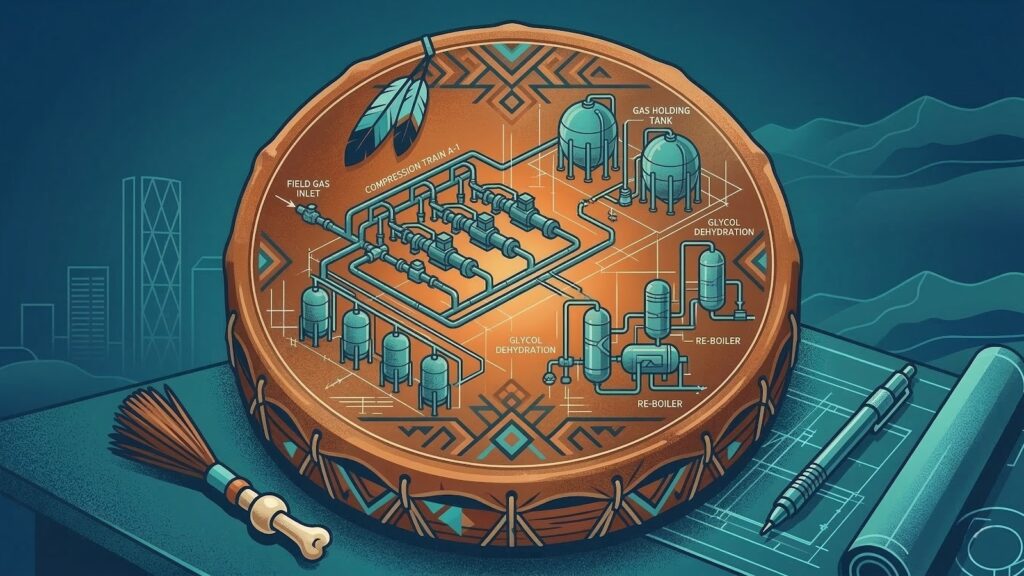
1. The Historical Pivot: From Section 35 to the Boardroom
To understand where we are going in 2026, we must understand the legal and social friction that brought us here. For decades, the relationship between industry and Indigenous communities was governed by the “Duty to Consult and Accommodate,” rooted in Section 35 of the Constitution Act, 1982.
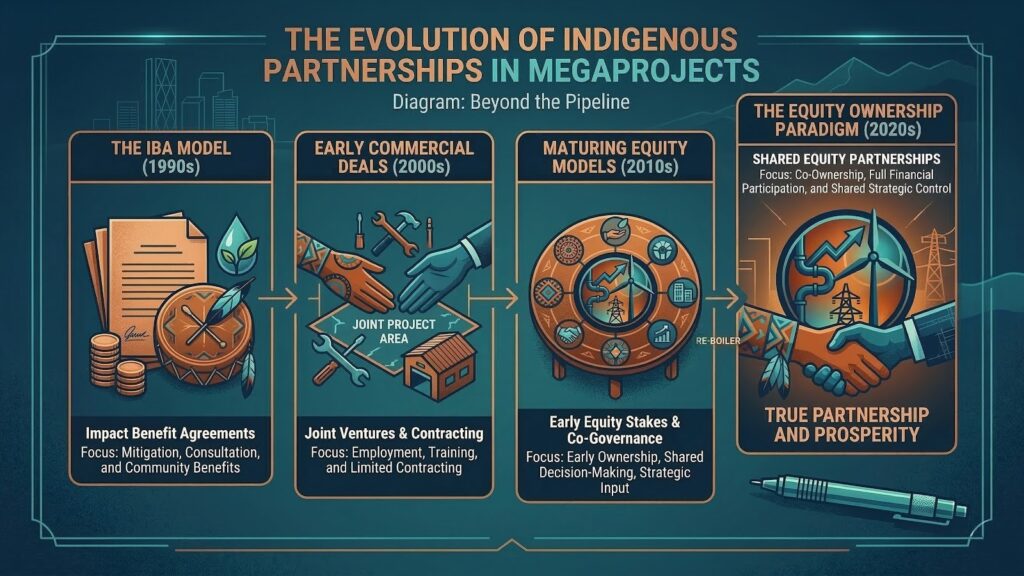
The Limits of Consultation
Historically, consultation often felt like a bureaucratic hurdle for industry and a tokenistic exercise for Nations. Projects were frequently delayed by years of litigation, as the definition of “meaningful consultation” was hammered out in the courts. This created:
- Capital Flight: Investors grew wary of the “regulatory purgatory” associated with Canadian energy projects.
- Economic Exclusion: While projects moved through traditional territories, the economic benefits often bypassed the local communities, leading to systemic poverty and social tension.
The Emergence of the Equity Model
The shift began when both industry and Indigenous leaders realized that the most effective way to ensure project success was through shared skin in the game. When a Nation owns 10%, 20%, or even 50% of a project, the dynamic shifts from adversarial to collaborative.
2. The Financial Engine: The Alberta Indigenous Opportunities Corporation (AIOC)
The primary catalyst for this economic revolution in Alberta has been the Alberta Indigenous Opportunities Corporation (AIOC). Established in 2019, this provincial Crown corporation provides the financial “bridge” that allows Indigenous communities to access large-scale capital.
How the AIOC Functions
Indigenous communities often face systemic barriers to accessing traditional debt markets, primarily due to the Indian Act’s restrictions on using reserve land as collateral. The AIOC solves this through:
1.Loan Guarantees: The AIOC provides government-backed guarantees for loans ranging from $20 million to $250 million (and higher for massive consortiums).
2.Lower Interest Rates: Because the loans are backed by the province, Nations can borrow at rates typically reserved for AA-rated corporations.
3.Capacity Grants: Providing the funds necessary for Nations to hire the legal and financial experts required to vet complex megaprojects.
The 2026 Outlook
By 2026, the AIOC’s portfolio is expected to exceed several billion dollars in guaranteed debt, supporting projects in:
- Natural Gas Pipelines
- Electrical Transmission Lines
- Carbon Capture and Storage (CCS) Hubs
- Renewable Energy (Solar and Wind)
3. Case Study: The Landmark Enbridge-Athabasca Deal
In late 2022, a deal was struck that sent shockwaves through the global investment community. Enbridge Inc. sold an 11.57% interest in seven operating pipelines in Northern Alberta to Athabasca Indigenous Investments (Aii)—a consortium of 23 First Nation and Métis communities.
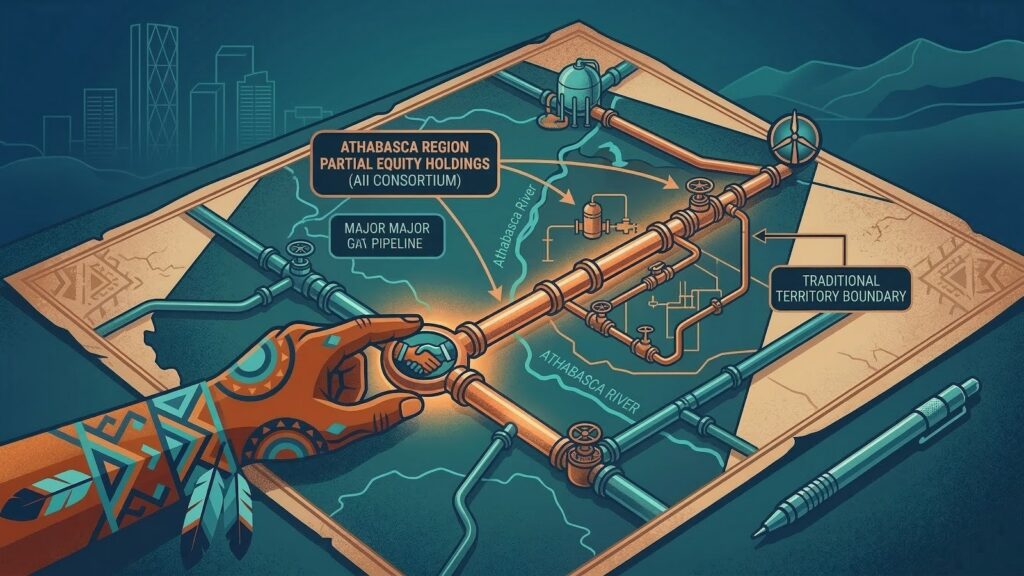
Key Metrics of the Deal
- Transaction Value: $1.12 Billion.
- Asset Type: Regional oil sands pipelines with long-term, predictable cash flows.
- Structure: A historic partnership where the 23 communities share in the revenue generated by the very infrastructure that traverses their traditional lands.
Why This Matters for Investors
This deal proved that Indigenous equity is “bankable.” It demonstrated that large-scale divestment to Indigenous partners can:
- Strengthen ESG Profiles: Institutional investors (pension funds, etc.) are increasingly mandating high Environmental, Social, and Governance (ESG) standards. Indigenous ownership is the “gold standard” for the ‘S’ and ‘G’ components.
- Ensure Operational Stability: When the local community is an owner, the risk of blockades, legal challenges, and political opposition drops precipitously.
4. The New Frontier: Carbon Capture and Energy Transition
As Alberta pivots toward a net-zero future, the next wave of megaprojects is focused on decarbonization. The Pathways Alliance—a group of Canada’s largest oil sands producers—is planning a massive $16.5 billion carbon capture and storage (CCS) network.
The Equity Requirement in CCS
For these projects to proceed, Indigenous participation is no longer optional; it is foundational.
- Pore Space Rights: The Alberta government has been clear that the development of “pore space” (the underground reservoirs where CO2 is injected) must involve Indigenous consultation and, increasingly, ownership opportunities.
- The 2026 CCUS Hubs: By 2026, several “Open Access” carbon hubs will be under construction. These projects are being designed from day one with Indigenous equity tranches built into the capital structure.
Technical Implications for Engineers
For engineers and project managers, this shift means:
- Integrated Environmental Monitoring: Projects are now incorporating Traditional Environmental Knowledge (TEK) alongside Western science.
- Co-Management Protocols: Engineering firms must now report to boards that include Indigenous technical representatives, ensuring that reclamation and water safety are prioritized from the design phase.
5. Economic Impacts: Wealth Creation and Sovereignty
The rise of equity partnerships is fundamentally an exercise in economic sovereignty. For First Nations and Métis communities, the dividends from these projects provide “own-source revenue”—funds that are not tied to federal grants or restricted by government oversight.
Where the Money Goes
Data from early equity-sharing models shows that revenue is being reinvested in:
1.Housing Infrastructure: Building modern, sustainable homes on-nation.
2.Education and Training: Creating scholarships and trades training programs specifically for the energy sector.
3.Healthcare: Funding community-led mental health and elder care facilities.
4.Diversification: Indigenous economic development corporations are using pipeline dividends to invest in retail, technology, and tourism.
The Multiplier Effect
For every dollar of dividend income earned by an Indigenous partner, there is a significant multiplier effect within the Alberta economy. Indigenous businesses are more likely to hire local workers and contract local services, keeping capital within the province.
6. Risks, Challenges, and Market Volatility
While the trend is overwhelmingly positive, it is not without risks. An educational analysis must address the potential pitfalls of the equity model.
1. Market Exposure
Unlike Impact Benefit Agreements (IBAs), which usually provide fixed annual payments, equity means sharing the risk. If commodity prices crash or a pipeline’s throughput drops, the dividends for the Nation may decrease.
- Mitigation: Many deals are now structured with “preferred equity” or “guaranteed minimums” to protect the Nations’ baseline revenue.
2. Debt Servicing
If a project faces massive cost overruns (as seen in the Trans Mountain expansion), the debt taken on to purchase the equity stake can become a burden.
- Mitigation: Rigorous third-party due diligence and the use of the AIOC’s expertise are critical before any deal is signed.
3. Political Risk
Changes in provincial or federal government could alter the mandate of the AIOC or change the regulatory requirements for Indigenous ownership.
- Mitigation: Ensuring these deals are “market-driven” rather than purely “policy-driven” makes them more resilient to political shifts.
7. The Engineer’s Perspective: Designing for Partnership
In the 2026 era, the role of the technical engineer is expanding. It is no longer enough to design for the shortest route or the lowest cost; one must design for stewardship.
Indigenous-Led Environmental Standards
Many Nations are now setting environmental standards that exceed provincial requirements. Engineers must integrate:
- Advanced Leak Detection: Using AI and satellite monitoring to ensure zero-impact operations.
- Biodiversity Corridors: Designing pipeline rights-of-way that facilitate caribou migration and protect traditional medicinal plants.
- Water Management: Implementing closed-loop systems in industrial processes to protect local watersheds.
Capacity Building in STEM
A crucial part of these equity deals is the “Labour Component.” Companies are increasingly required to provide pathways for Indigenous youth to enter STEM (Science, Technology, Engineering, and Math) fields. By 2026, we expect to see a surge in Indigenous-owned engineering and environmental consulting firms leading these megaprojects.
8. Conclusion: Alberta as a Global Blueprint
The “Alberta Model” of Indigenous equity is being watched by the world. From the mining sectors of Australia to the offshore wind projects of the North Sea, global players are looking at how Alberta has managed to reconcile resource development with Indigenous rights.
By moving beyond the pipeline and into the boardroom, Alberta is creating a more stable, ethical, and prosperous investment climate. In 2026, the success of a megaproject will be measured not just by its barrels per day or its megawatt-hours, but by the strength of the partnership that sustains it. This is not just the future of Alberta; it is the future of the global energy economy.
Sources and References
1.Alberta Indigenous Opportunities Corporation (AIOC): Annual Reports and Project Finance Guidelines (2020-2024).
2.Enbridge Inc.: Investor Relations – Athabasca Indigenous Investments Partnership Case Study.
3.National Energy Board (CER): Evolution of Indigenous Engagement in Energy Infrastructure.
4.Pathways Alliance: Technical Reports on CCUS and Indigenous Collaboration.
5.University of Calgary School of Public Policy: Research Paper on “The Impact of Equity Ownership on Project Approval Timelines.”
6.Statistics Canada: Indigenous Economic Trends in Western Canada (2023 Update).
7.Conference Board of Canada: The Economic Multiplier of Indigenous Business Growth.