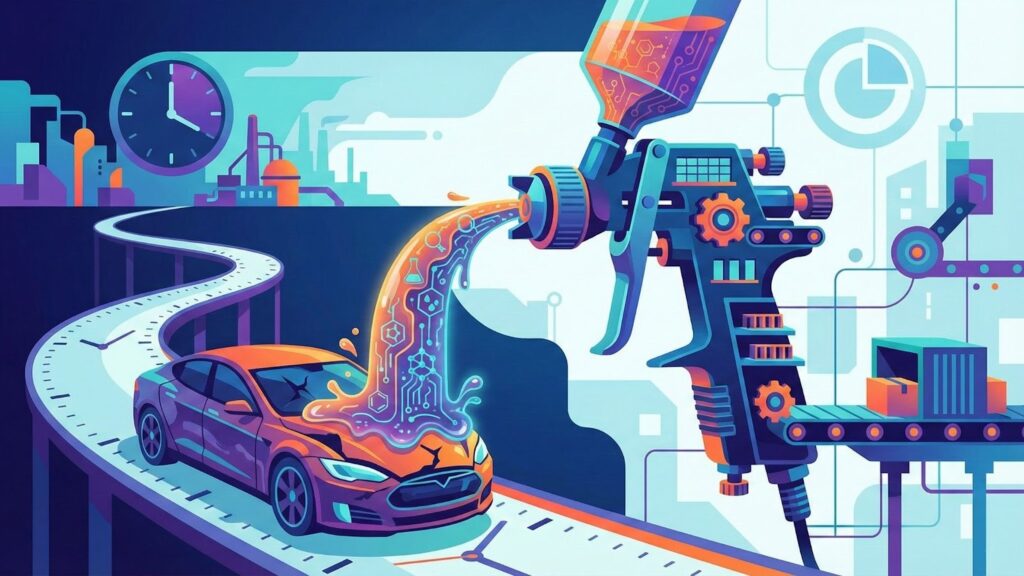

In the bustling corridors of Calgary’s industrial parks and Edmonton’s sprawling auto-rows, a silent transformation has occurred. What was once a fragmented landscape of “mom-and-pop” body shops has evolved into a high-stakes arena of global corporate consolidation. For the average Albertan, this shift isn’t noticed until the moment of impact—a fender bender on the Deerfoot or a hail claim in Red Deer. Suddenly, a repair that took two weeks a decade ago now stretches into two months.
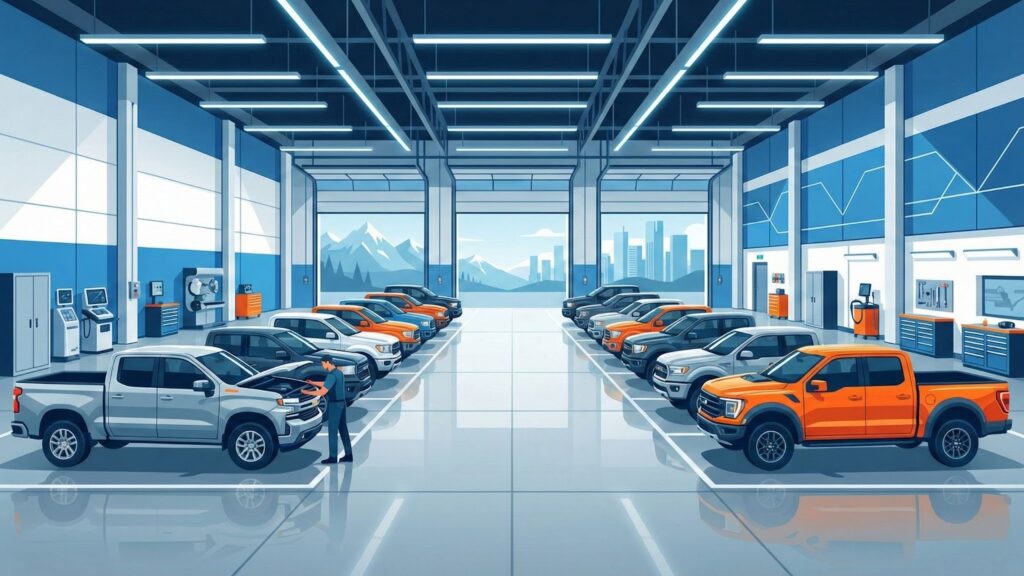
The frustration felt by vehicle owners is not merely a byproduct of “supply chain issues”—a phrase that has become a convenient catch-all for systemic inefficiency. Instead, it is the result of a profound economic tightening within the “Paint & Coatings” sector and the rise of Multi-Shop Operators (MSOs). This article deconstructs the vertical and horizontal integration of the collision repair industry and explains why the “simple” insurance claim has become an economic odyssey.
The following economic facts are based on current Alberta provincial data and market trends.
1. The Illusion of Choice: The Paint & Coatings Monopoly
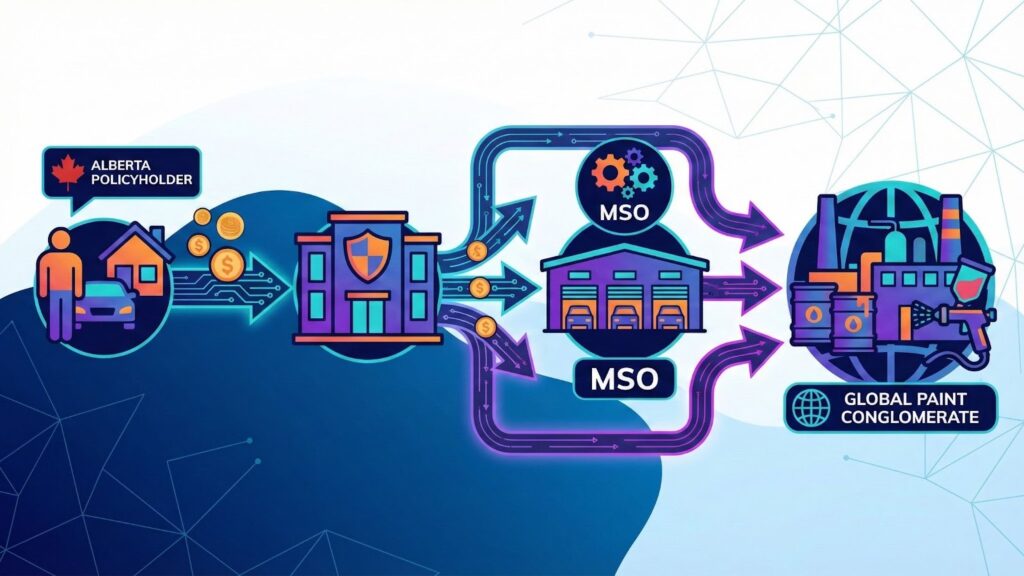
To understand why your repair is delayed, one must look past the garage door and into the chemical vats of global conglomerates. The automotive refinish market is dominated by a “Big Four” oligopoly: Axalta, PPG, BASF, and AkzoNobel.
The Vertical Lock-In
In Alberta, most high-volume collision centers operate under “Supply Agreements.” These are long-term contracts where a paint manufacturer provides the shop with expensive mixing banks, spray booths, and computerized color-matching hardware—often at a subsidized upfront cost—in exchange for 5 to 10 years of exclusive purchasing.
- Market Share Concentration: These four companies control over 75% of the global automotive refinish market.
- Proprietary Systems: Modern paint is no longer just pigment and binder. It is a complex chemical system. If a shop uses BASF’s Glasurit line, they cannot simply swap to a cheaper clear coat from a competitor if a shortage occurs. The warranties provided by insurance companies (Direct Repair Programs) mandate the use of consistent, branded systems.
- Price Inelasticity: Because the shops are locked into multi-year contracts, the manufacturers have significant “pricing power.” When raw material costs rise—or when they simply wish to increase margins—the Alberta shop owner has no choice but to pay. These costs are then passed to the insurer, who passes them to the Alberta driver via increased premiums.
2. The Rise of the MSO: Consolidation on the Ground
Alberta has become a primary battleground for Multi-Shop Operators (MSOs). Companies like Boyd Group Services (operating as Gerber Collision in the US), Lift Auto Group, and Simplicity Car Care have been aggressively acquiring independent shops across the province.
Why Consolidation Happens
1.Insurance Leverage: Large insurance companies (Intact, Aviva, Desjardins) prefer dealing with one corporate entity that owns 50 shops rather than 50 individual owners. This streamlines their “Direct Repair Programs” (DRPs).
2.Capital Intensity: A modern repair stall now requires calibration equipment for ADAS (Advanced Driver Assistance Systems) that can cost upwards of $100,000. Independent shops often lack the capital to keep up, making them prime targets for acquisition.
3.The “Alberta Premium”: Alberta has the highest number of high-value pickup trucks per capita in Canada. These vehicles (F-150s, RAM 1500s) utilize aluminum bodies and complex sensors, requiring specialized (and expensive) repair certifications that MSOs are better positioned to fund.
3. The Technical Bottleneck: More Than Just Paint
The “educational” reality of modern collision repair is that a car is now a rolling supercomputer. This has fundamentally changed the “Paint & Coatings” requirement.
ADAS and Coating Thickness
Modern vehicles utilize radar and ultrasonic sensors hidden behind bumpers and emblems.
- Radar Transparency: If a technician applies a layer of paint or clear coat that is even a few microns too thick, it can interfere with the vehicle’s Blind Spot Monitoring or Automatic Emergency Braking.
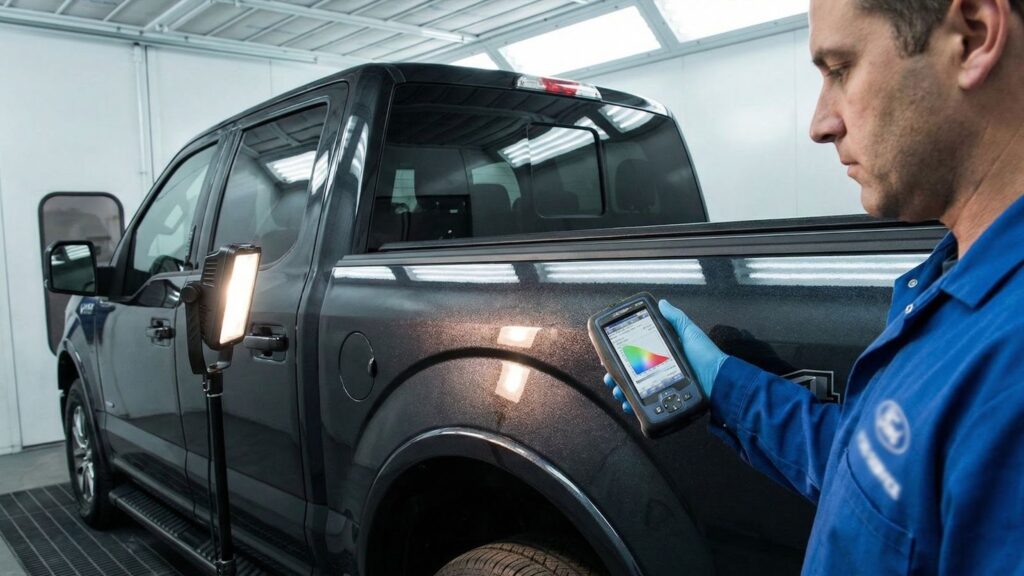
- The Refinish Mandate: Manufacturers (OEMs) now issue strict “Position Statements.” For example, if a Tesla or a high-end GMC Denali is being repaired in an Edmonton shop, the technician must use a specific, OEM-approved paint brand and follow a documented “mil-thickness” (measurement of paint depth) to ensure safety sensors function.
- The Delay Factor: If the specific OEM-approved paint tint is backordered due to global consolidation issues, the shop cannot substitute it. The car sits.
4. The Alberta Labor Crisis: The Human Element
While the “Paint Monopoly” controls the materials, the Alberta labor market controls the application.
The Competition with the Patch
Collision repair shops in the Wood Buffalo or Edmonton regions often lose their best “Red Seal” painters and technicians to the industrial coating sectors of the oil sands.
- Wage Pressure: An experienced automotive painter in Calgary might earn $35–$45 per hour. However, an industrial painter in Fort McMurray can often command significantly more with overtime.
- Training Gap: As consolidation increases, the “apprenticeship” model has suffered. MSOs focus on “efficiency” and “cycle time,” often leaving little room for the slow, hands-on mentorship required to produce master refinishers.
5. Why Your Claim Takes Months (The “Cycle Time” Reality)
The industry metric for how long a car is in the shop, known as “Cycle Time,” has significantly increased in Alberta, with an estimated rise of 40-60% since 2019.
The following table summarizes the key factors contributing to these delays, their impact, and the underlying economic drivers:
| Factor | Impact on Delay | Economic Driver |
| Parts Availability | High | Failures in just-in-time manufacturing models. |
| Insurance Approval | High | Negotiation disputes over “standardized” labor rates between Multi-Shop Operators (MSOs) and insurers. |
| Calibration | High | Shortage of specialized electronic sublet technicians, particularly in rural parts of Alberta. |
| Paint Mixing | Medium | Market consolidation among pigment suppliers, affecting the availability of specific materials (e.g., pearls/metallics). |
The “Supplement” Trap
When a shop begins a repair, they often find “hidden damage.” In the old days, an independent owner would call the adjuster and get a verbal “OK.” Today, in the consolidated MSO environment, every “supplement” must go through a centralized digital portal, often reviewed by an adjuster in a different province or an AI algorithm. This adds days or weeks to the process.
6. Investor Perspective: The “Moat” of Collision Repair
For investors looking at the Alberta economy, the collision repair sector represents a “recession-resistant” utility.
- High Barriers to Entry: The cost of specialized paint booths and ADAS equipment prevents new small players from entering the market.
- Consistent Demand: Alberta’s climate (hail, ice, deer strikes) ensures a steady stream of “inventory” (damaged cars).
- Consolidation Upside: As MSOs continue to swallow smaller shops, they gain “economies of scale” in purchasing paint and parts, though these savings are rarely passed down to the consumer.
7. Advice for the Alberta Consumer
How do you navigate this consolidated landscape?
1.Check for OEM Certification: Ensure the shop is certified by your vehicle’s manufacturer. This overrides some of the “cheaper” mandates an insurer might try to impose.
2.Understand the “Paint Brand”: Ask what refinish system they use. High-end European systems (like Spies Hecker or Glasurit) often have better color-match databases, reducing the “trial and error” time.
3.Be Proactive with Insurance: In Alberta, you have the legal right to choose your repair provider. Don’t be pressured into a “preferred” MSO shop if you have a trusted independent specialist, though be aware that independent shops may face longer parts-ordering lead times.
Conclusion: The New Economic Normal
The consolidation of the collision repair industry is a microcosm of the broader global economy—a move toward efficiency and scale at the expense of agility and local autonomy. As the “Paint & Coatings” monopoly continues to tighten its grip on the chemical side, and MSOs continue to dominate the storefronts, the Alberta consumer must adjust their expectations. The “simple” insurance claim is a relic of the past; the future is a high-tech, highly-consolidated, and unfortunately, slower process.
Sources and References
- International Desalinization and Coatings Association (IDCA) – 2023 Market Report
- Alberta Automotive Service Association (AASA) – 2024 Labor Shortage Survey
- Collision Repair Magazine – “The State of the MSO in Canada”
- Statistics Canada – Consumer Price Index: Vehicle Maintenance and Repairs (Alberta Data)
- Original Equipment Manufacturer (OEM) Position Statements, including Refinish Standards from Ford, GM, and Tesla